
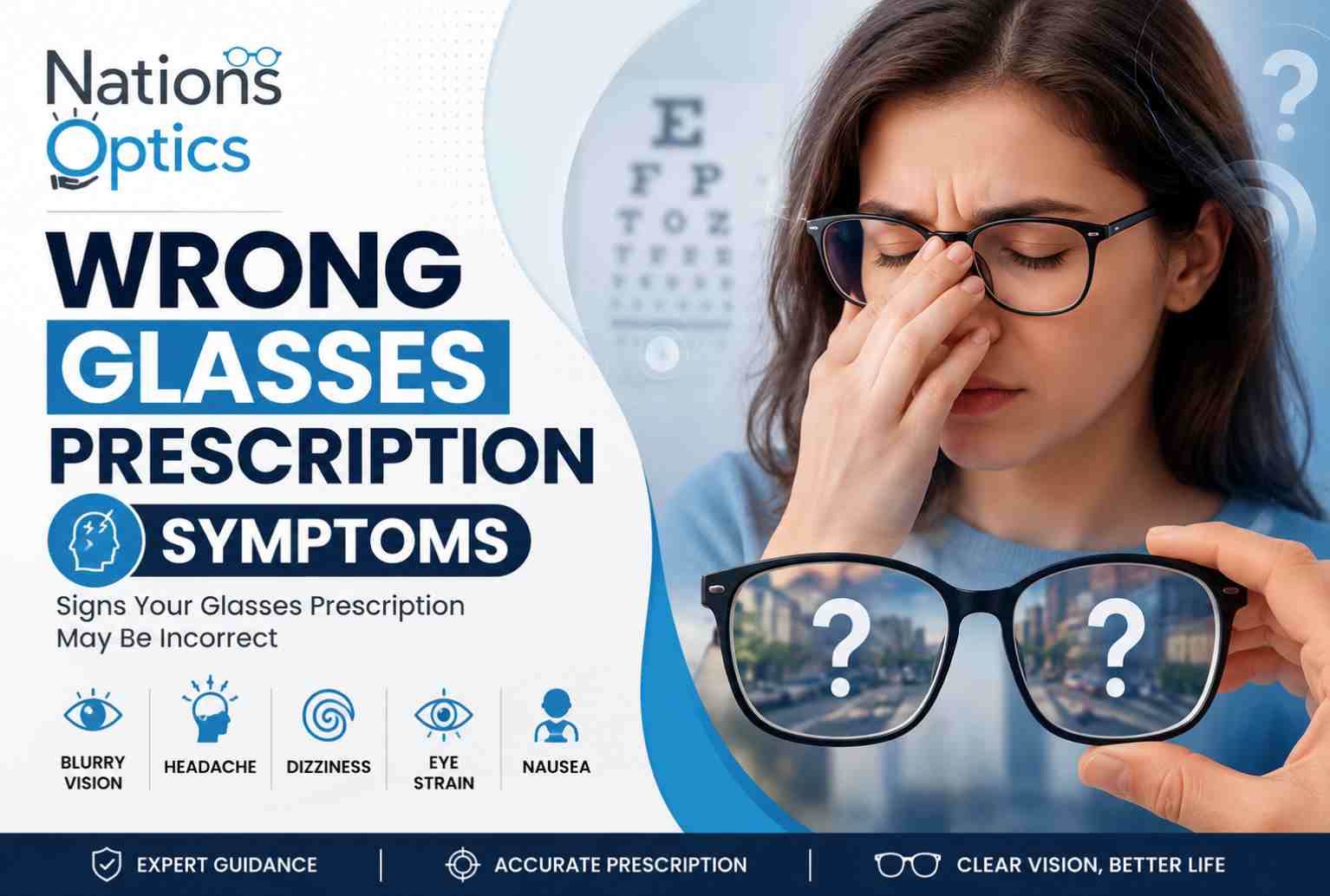
Wrong Glasses Prescription Symptoms: 10 Warning Signs to Watch
Jul 22, 2026
By Rahul Jain
0 comment(s)
Prescription & Eye Health
Wrong Glasses Prescription Symptoms: Signs Your Glasses Prescription May Be Incorrect
Headaches, dizziness, or blurry vision with new glasses? Here's how to tell if it's normal adjustment — or a prescription that needs to be checked.
Getting a new pair of glasses should make your vision clearer and more comfortable. But sometimes people experience headaches, dizziness, blurry vision, eye strain, or discomfort after wearing new glasses. While some symptoms are part of a normal adjustment period, persistent or severe discomfort may mean your prescription, pupillary distance (PD), lens alignment, or fitting needs to be checked.
In this guide, we explain the most common wrong glasses prescription symptoms, the signs your prescription is wrong, the difference between a strong and weak prescription, and what to do if your new glasses don't feel right.
Pupillary Distance Lens Centration Adjustment Period Eye Strain Prescription Check
What Are Wrong Glasses Prescription Symptoms?
Wrong glasses prescription symptoms are vision or comfort problems that occur when your eyeglass lenses don't correctly match your visual needs or aren't properly aligned with your eyes.
An incorrect prescription isn't the only possible cause. Similar symptoms can also occur because of:
- An incorrect sphere power
- An incorrect cylinder or astigmatism correction
- An incorrect axis measurement
- An incorrect pupillary distance (PD)
- Poor lens centration or optical center placement
- Poor frame fitting
- An inaccurate or outdated eye examination
- A significant change in prescription
- Problems with lens manufacturing or fitting
If your glasses consistently make your vision or comfort worse instead of better, it's important to have the prescription and lens measurements checked.
10 Common Symptoms of a Wrong Glasses Prescription
Symptoms can vary depending on whether the prescription is too strong, too weak, incorrectly measured, or improperly positioned in front of your eyes.
1
Frequent Headaches
One of the most common signs. If your lenses provide incorrect correction, your visual system works harder to focus.
- Forehead headaches
- Pain around the eyes
- Pressure near the temples
- Discomfort that improves once glasses are removed
2
Blurry Vision
Objects may appear blurry at a distance, reading may become difficult, or one eye may seem clearer than the other. Blurry vision with new glasses can also happen when lenses aren't properly centered.
3
Dizziness or Feeling Unbalanced
Lightheadedness, unsteadiness while walking, or discomfort turning your head can signal an incorrect prescription, lens alignment, or optical center problem.
4
Eye Strain and Tired Eyes
Tired, burning, or aching eyes, difficulty focusing, and increased discomfort during computer use may point to a prescription recheck being needed.
5
Nausea
Can happen when the lenses create an unusual visual experience — especially with a big prescription change, altered cylinder/axis, or poor centration.
6
Double Vision or Ghost Images
Seeing two images, a shadow around letters, or ghosting while reading may relate to an incorrect prescription, astigmatism correction, or lens alignment.
7
Difficulty Adjusting to New Glasses
A short adjustment period can be normal, especially with a significant prescription change. Severity and persistence are what separate normal adjustment from a real issue.
8
Distorted or Warped Vision
Objects appearing bent, tilted, slanted, curved, or an unexpected size can occur temporarily with a big prescription change, but persistent distortion needs professional verification.
9
Difficulty Focusing
Trouble focusing while reading, using a computer, or switching between near and far distances may mean the correction isn't quite right — though age-related changes can also play a role.
10
Your Vision Feels Better Without the Glasses
An important warning sign. Some adjustment time is normal, but glasses should ultimately improve your vision and comfort — not make it worse.
Signs Your Glasses Prescription Is Wrong
- Vision remains blurry after wearing them
- Frequent headaches
- Dizziness or nausea
- Eyes feel tired quickly
- Double vision or ghost images
- One eye clearer than the other
- Difficulty focusing
- Unusual visual distortion
- General discomfort wearing them
- Symptoms continue instead of improving
The most important factor is whether symptoms are persistent and interfere with daily activities.
How to Tell If Your Glasses Prescription Is Wrong
Did your symptoms begin after getting new glasses?
If symptoms started immediately after receiving a new pair, the prescription, lens measurements, or fitting may need to be checked.
Is your vision clearer with your old glasses?
If your old glasses feel clearer or more comfortable, this may indicate a problem with the new prescription or lenses.
Are your symptoms getting better or worse?
A mild adjustment issue usually improves gradually. Worsening headaches, dizziness, blurry vision, or eye strain should be professionally checked.
Are both eyes seeing comfortably?
Sometimes one eye's prescription is correct while the other isn't — this can create discomfort, eye strain, and difficulty focusing.
Are your lenses properly centered?
Even a correct prescription can feel wrong if the lenses aren't positioned correctly. Incorrect PD or lens centration affects how you see through them.
Can a Glasses Prescription Be Too Strong or Too Weak?
Yes to both — a prescription can provide more or less correction than your eyes actually need.
Too Strong — Symptoms
- Headaches
- Eye strain
- Dizziness
- Nausea
- Difficulty focusing
- Objects seeming an unusual size
Too Weak — Symptoms
- Persistent blurry vision
- Squinting
- Eye strain
- Difficulty seeing distant objects
- Difficulty reading clearly
- Headaches from visual effort
Can the Wrong PD Cause Symptoms?
Yes. Your pupillary distance (PD) positions the optical centers of your lenses correctly in front of your eyes. If it's incorrect, the lenses may not align properly with your pupils — contributing to headaches, eye strain, blurry vision, dizziness, difficulty focusing, and general visual discomfort.
Good to know: Even a correct prescription can feel uncomfortable if the lenses aren't properly centered. This is why accurate PD measurement matters just as much as the prescription itself.
Can Incorrect Lens Alignment Cause Wrong Prescription Symptoms?
Yes. Sometimes the prescription is correct, but the lenses aren't properly positioned — due to incorrect PD, lens decentration, incorrect frame adjustment, uneven frame positioning, or optical center misalignment. This creates symptoms similar to an actual prescription error, which is why a professional should check both the prescription power and the physical positioning of the lenses.
How Long Does It Take to Adjust to a New Prescription?
The adjustment period varies from person to person. Some adapt quickly, while others need more time — especially when:
- The prescription has changed significantly
- Astigmatism correction has changed
- There's a large difference between the two eyes
- You've switched to a different lens design
- You've started wearing progressive lenses
- The frame shape or size is significantly different
Mild unfamiliarity can be normal during adjustment. But severe or persistent symptoms should not be ignored — if your vision remains uncomfortable or blurry, your glasses should be checked.
Wrong Prescription vs Normal Adjustment
Not every unusual feeling means your prescription is wrong.
Normal Adjustment
- Mild temporary visual unfamiliarity
- Slight awareness of a prescription change
- Minor discomfort that gradually improves
- A short period adapting to a new lens design
Possible Wrong Prescription
- Persistent headaches
- Severe dizziness
- Continuous blurry vision
- Nausea or double vision
- Vision that feels worse than before
- Symptoms that don't improve
The key difference is whether your symptoms gradually improve or continue to interfere with your daily vision.
What Should You Do If Your Glasses Prescription Feels Wrong?
Don't continue struggling with them indefinitely. Instead:
1
Stop and assess when the symptoms started.
2
Compare your vision with your previous glasses, if available.
3
Check whether the frame is sitting correctly on your face.
4
Have the prescription verified.
5
Check the pupillary distance and lens centration.
6
Consult an eye-care professional if symptoms continue.
If your symptoms are severe, sudden, or associated with significant vision changes, professional medical evaluation is important.
Can Wrong Glasses Damage Your Eyes?
In most cases, wearing glasses with an incorrect prescription doesn't permanently damage healthy eyes. However, it can cause significant discomfort, headaches, eye strain, dizziness, and difficulty seeing clearly. Children and people with specific eye conditions may require particularly careful prescription management. If your glasses consistently feel wrong, have them checked instead of forcing yourself to continue wearing them.
Frequently Asked Questions
What are the most common wrong glasses prescription symptoms?
Headaches, blurry vision, dizziness, eye strain, nausea, difficulty focusing, double vision, and visual discomfort.
How do I know if my glasses prescription is wrong?
If your vision remains blurry, your glasses cause persistent headaches or dizziness, or you see better without them, your prescription or lens measurements may need to be checked.
Can a wrong glasses prescription cause headaches?
Yes. An incorrect prescription can make your eyes work harder to focus, contributing to headaches and eye strain.
Can a wrong prescription cause dizziness?
Yes. Dizziness can occur when the prescription, lens alignment, optical center, or other lens measurements don't feel visually correct.
Why are my new glasses blurry?
This can be caused by an incorrect prescription, an adjustment period, incorrect PD, lens alignment issues, or other factors.
How can I tell if my glasses are too strong or too weak?
Too strong often causes headaches, dizziness, eye strain, and nausea. Too weak often causes persistent blurry vision, squinting, and difficulty seeing clearly. A professional prescription check confirms which applies.
Can wrong PD cause headaches?
Yes. Incorrect pupillary distance can affect lens alignment and may contribute to headaches, eye strain, blurry vision, or discomfort.
Should I continue wearing glasses if they feel wrong?
If they cause persistent or severe discomfort, they should be checked by a qualified eye-care professional rather than forcing yourself to continue wearing them.
Get Your Prescription Verified
At Nations Optics, accurate prescription details and proper lens fitting are core to comfortable eyewear. If your new glasses don't feel right, let's find out why.
- Prescription and PD verification
- Lens centration & fitting checks
- Guidance on strong vs. weak correction
- Support comparing old vs. new prescriptions
- Properly fitted, accurately measured eyewear
Understanding wrong glasses prescription symptoms can help you identify when your glasses may need professional verification. While mild adjustment to a new prescription is normal, persistent headaches, dizziness, blurry vision, eye strain, nausea, double vision, and other discomfort should not be ignored.
Clear vision starts with the right prescription, accurate measurements, and properly fitted lenses.
Exclusive Offers
Sitewide
33%
OFF
Flat 33% off on all products
Already applied on every price · no coupon needed
Auto-applied
10%
OFF
On orders ₹1,200 – ₹1,799
No coupon needed · saves automatically
Auto-applied
15%
OFF
On orders ₹1,800 – ₹3,199
No coupon needed · saves automatically
Best Deal 🔥
20%
OFF
On orders above ₹3,200
No coupon needed · saves automatically
Pay Advance
₹50
SAVED
Pay advance amount at checkout
Flat ₹50 off · pay balance on delivery
Pay Full ✓
₹100
SAVED
Pay full amount at checkout
Maximum saving · instant confirmation
N
Nations Optics Assistant
● Online
👋 Hi! I'm your Nations Optics assistant. Ask me anything about lenses, frames, or prescriptions!