
Do You Need a Second Pair of Glasses? 6 Situations | Nations Optics
Oct 17, 2026
By Rahul Jain
0 comment(s)
Eyewear Guide
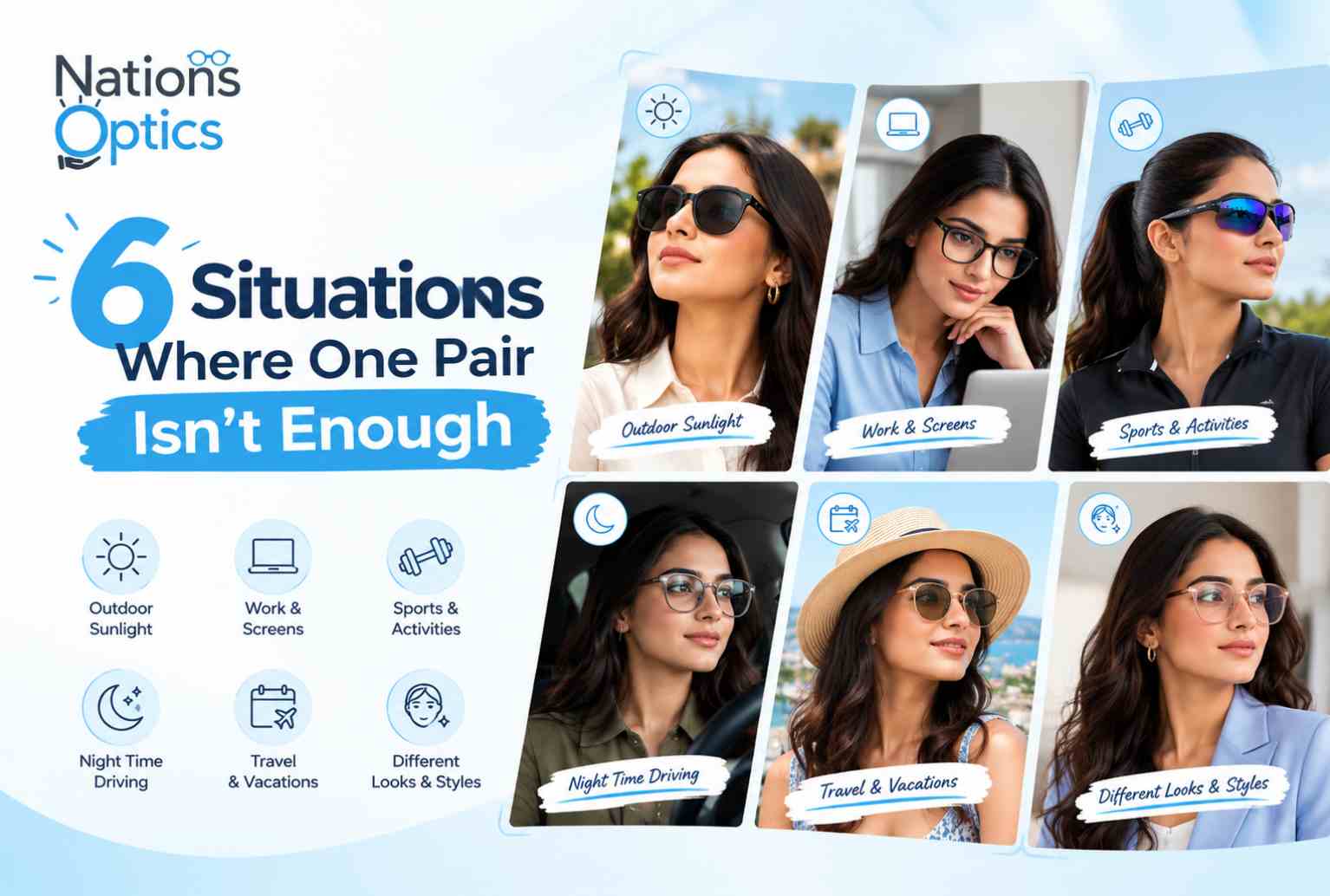
Do You Need a Second Pair of Glasses? 6 Situations Where One Pair Isn't Enough
One pair is fine until it snaps, slides off mid-run or leaves your eyes sore after a day at the laptop. Here's when a second pair is worth it.
Most of us buy one pair and use it for everything. Office, driving, the gym, family functions, a late movie. It works, mostly, until the day it doesn't. A broken hinge, a lost pair, a badly scratched lens, and you can't see properly while a replacement takes days.
You don't need a second pair just because someone says you should. But in some situations one pair really can't cover it. Here are six. See if any of them sounds like you.
Backup Glasses Computer Glasses Driving Sports Prescription Sunglasses
Why one pair often isn't enough
Your glasses have a lot to do. Stay comfortable for ten hours, cope with bright sun and dim rooms, survive being thrown in a bag, and look right for whatever's on the day. One frame and lens can't be the best at all of that.
That doesn't mean five pairs. For most people it's one extra, picked for the thing their main pair is worst at.
6 situations where a second pair makes sense
1
You need a backup
If your glasses are the only way you see clearly, losing or breaking them is a real problem. A week waiting for a replacement can mean headaches, missed work, no driving. A spare in your bag, desk or car solves it. It can be a simple frame, as long as it has your current prescription.
2
You spend hours at a screen
Long days on a laptop or phone can leave eyes tired, dry or sore. A pair set up for screen distance, in a comfortable frame, can make the day easier. If you wear progressives or bifocals, ask your eye-care professional about a dedicated computer pair, because desk work can feel awkward with the near and middle zones.
3
You drive a lot, especially at night
Glare and reflections get worse after dark. Clear lenses with an anti-reflective coating can cut distracting reflections from the lens surfaces. Our post on night driving glasses covers what they can and can't do. If you drive at night a lot, a pair that lives in the car is worth thinking about.
4
You play sport or work out
Regular frames slip when you sweat and can break if you take a knock. Sports and gym glasses are built to stay put. Look for a secure fit, a light frame and impact-resistant lenses. Our guide to glasses for the gym and sports has more.
5
You spend a lot of time in bright sun
If you need glasses to see, ordinary sunglasses mean swapping pairs or squinting. Prescription sunglasses let you see clearly outdoors with just one pair. Go for good UV protection, because bright sun is hard on your eyes.
6
You want a dressier or festive pair
Your everyday frame may be perfect for the office and a bit plain for a wedding. A second pair in another colour or shape gives you something for functions and festivals. Our festive styling guide has ideas for sarees, kurtas and lehengas.
How to pick a second pair that isn't just a copy of the first
A good second pair does something the first one can't. Before buying, ask yourself: when does my main pair let me down?
- Same prescription, different frame. Most second pairs use your current prescription. What changes is the frame and what it's for.
- Different lens features. Anti-reflective coating for driving, a screen-friendly setup for work, impact-resistant lenses for sport. Choose what suits the pair's job.
- Different look. If your first pair is black rectangular, try tortoiseshell, transparent or metal. More choice for different outfits.
- Similar fit. Check the frame width and bridge so the second pair feels as comfortable as the first one. Our post on glasses for small or narrow faces has sizing tips.
Getting the prescription right
Whatever you buy, both pairs need a current prescription. If your last eye test was a couple of years back, get one before you order. A new pair made to an old prescription is just another pair that doesn't work well.
A good habit: get your eyes tested, then update both pairs together. If the two pairs have different prescriptions, switching between them can feel odd.
Our post on why a yearly eye exam matters helps you work out how often you need one.
Watching your budget?
- Keep the backup simple. A spare doesn't need to be a premium pair.
- Start with your biggest problem. Drive every night? Start there. At a desk all day? Start there.
- Keep your old pair only if the prescription still works. If not, update the lenses.
- Pay for lens features you'll actually use. Skip the extras that don't fit your day.
If you're buying online, check the frame measurements, enter your prescription carefully and compare lens options for each use. You can browse frames at Nations Optics and compare a few side by side.
Who probably doesn't need one
Plenty of people. If you only wear glasses lightly, rarely drive at night, don't play sport and could get a replacement quickly, one good pair is probably fine. A second pair is a convenience, not a rule.
Frequently Asked Questions
Do I really need a second pair of glasses?
Not everyone does. But if you use your glasses for very different things, like long screen hours, driving at night, sport and daily wear, or if losing your only pair would leave you stuck, a second pair is worth considering.
Can I use my old glasses as a backup?
Only if the prescription is still right for you. An old pair with an outdated prescription can cause strain or headaches. Get your eyes tested and update the lenses if needed.
Should my second pair have the same prescription?
Usually yes, unless your eye-care professional has advised otherwise. Some people get a separate prescription for computer work or reading, which should come from an eye test.
What is the best second pair for screen work?
A comfortable frame with lenses made for your screen distance. If you wear progressives or bifocals, ask your eye-care professional whether a dedicated computer pair would help.
Do I need a separate pair for night driving?
Not always. But clear lenses with an anti-reflective coating can cut distracting reflections from the lens surfaces. If you drive at night a lot, it may be worth having a pair set up for that.
What should I look for in glasses for sport or the gym?
A secure fit, a lightweight frame that won't slip when you sweat, and impact-resistant lenses. Ask about lens materials that suit active use.
Are prescription sunglasses worth it?
If you rely on your glasses to see outdoors, yes. They let you see clearly in bright light without swapping glasses, and good UV protection is important for your eyes.
How often should I update the prescription on both pairs?
Whenever your eye-care professional advises, which is often yearly or every couple of years depending on your age and eyes. Update both pairs together so they don't drift apart.
How do I keep a spare pair safe?
Keep it in a hard case in a place you'll remember, such as your bag, your car or your office drawer. Check it now and then so you know it still fits and works.
Is buying two pairs online a good idea?
It can be. Check the frame measurements, enter your prescription carefully and compare lens options for each use. If you are not sure about any of it, ask your eye-care professional first.
Final thoughts
One pair can do a lot, but not everything. If you've ever been stuck without your glasses, ended a screen-heavy day with tired eyes, or squinted through a night drive, a second pair might be the easy fix you've been putting off.
Think about when your current pair lets you down and pick the extra one for that. Check your prescription first, and keep it simple.
One pair for most days. Another for the days that aren't.
Looking for Your Next Pair?
Browse frames and lens options, all made to your prescription.
Explore Eyewear at Nations OpticsExclusive Offers
Sitewide
33%
OFF
Flat 33% off on all products
Already applied on every price · no coupon needed
Auto-applied
10%
OFF
On orders ₹1,200 – ₹1,799
No coupon needed · saves automatically
Auto-applied
15%
OFF
On orders ₹1,800 – ₹3,199
No coupon needed · saves automatically
Best Deal 🔥
20%
OFF
On orders above ₹3,200
No coupon needed · saves automatically
Pay Advance
₹50
SAVED
Pay advance amount at checkout
Flat ₹50 off · pay balance on delivery
Pay Full ✓
₹100
SAVED
Pay full amount at checkout
Maximum saving · instant confirmation
N
Nations Optics Assistant
● Online
👋 Hi! I'm your Nations Optics assistant. Ask me anything about lenses, frames, or prescriptions!