
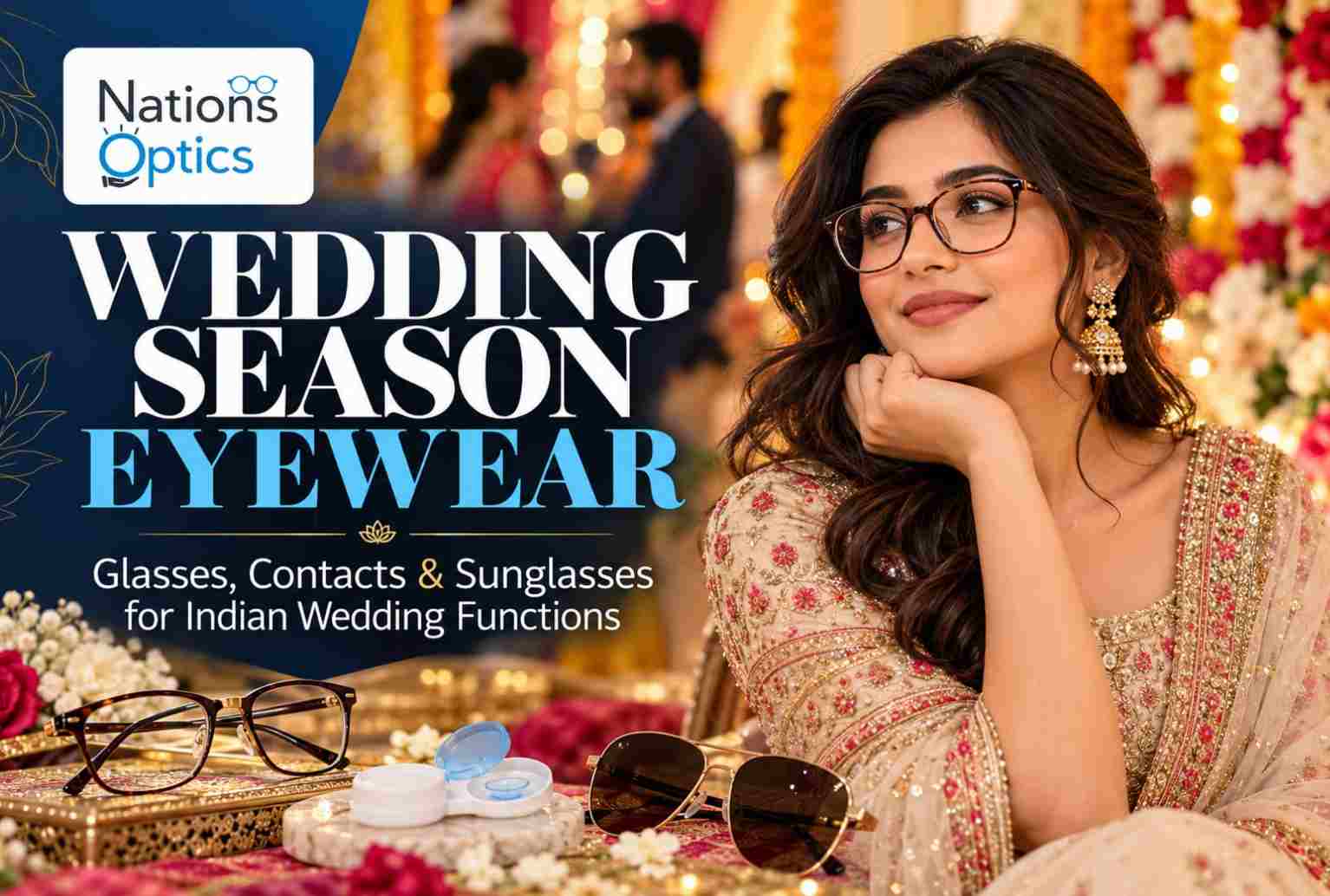
Wedding Season Eyewear: How to Wear Glasses, Contacts or Sunglasses at Indian Wedding Functions
Oct 15, 2026
By Rahul Jain
0 comment(s)
Wedding Season
Wedding Season Eyewear: How to Wear Glasses, Contacts or Sunglasses at Indian Wedding Functions
Mehendi to reception, it's days of being on your feet. Here's how to keep your eyes comfortable and your photos looking good.
Please note: This article is general information and doesn't replace advice from a qualified eye-care professional. If you wear contact lenses, follow the instructions you were given for your own eyes.
Indian weddings go on for days. Mehendi, haldi, sangeet, the pheras, the reception, each with its own clothes, lights, crowds and smoke. If you wear glasses or lenses, that's a lot of hours to stay comfortable.
So which one: glasses, contacts or sunglasses? Honestly, it depends on the function, the outfit and your eyes. We'll go through all three, plus a few small things that save the day.
Glasses Contact Lenses Sunglasses Wedding Photos
The wedding-day dilemma: glasses, contacts or sunglasses?
A quick comparison first.
| Option | Good for | Watch out for |
|---|---|---|
| Glasses | Long days, smoke, dust, late nights, dry eyes | Reflections in flash photos, frames that slip when you dance |
| Contact lenses | Photos, dancing, a cleaner look without frames | Dryness, irritation from smoke and dust, makeup and hygiene |
| Sunglasses | Bright daytime events outdoors, the baraat | Not for indoors, the ceremony or close family photos |
One rule: don't try anything new on the big day. Stick with what your eyes are used to.
Wearing glasses at wedding functions
For most people, glasses are the easy choice. You can wear them from the first function to the last, and smoke from the havan or a dusty venue won't bother them the way it bothers a contact lens.
Choose a frame that stays put
Dancing at the sangeet with frames sliding down your nose is no fun. Look at the nose pads, the temple tips and the weight. A light frame that fits well beats a heavy one you keep pushing up.
Match it to the outfit
Your everyday pair will usually go fine with a kurta, saree or lehenga. Our guide on styling glasses with festive outfits has colour ideas for each one.
Think about the photos
Flash and bright lights bounce off lenses. An anti-reflective coating can cut down those reflections. Tilting your face slightly down, or angling the frame a touch, also helps.
Keep the lenses clean
Wedding venues mean dust, smoke, hugs and hot food. Wipe your lenses with a clean microfibre cloth, not the end of your dupatta or kurta.
If you haven't had your eyes tested in a while, do it before the season starts, not the week before. A yearly eye exam is a good habit anyway.
Contact lenses on a wedding day
Plenty of people prefer contacts at weddings. No frames in photos, nothing sliding while you dance, nothing getting in the way of heavy jewellery or a pinned dupatta. The catch is that a wedding day is rough on lenses.
Smoke and dust
Havan smoke, firecrackers, incense and dusty grounds can irritate your eyes and make lenses uncomfortable. Be ready to take them out.
Dry halls and late nights
AC, long hours and less blinking dry out your eyes, and lenses feel worse when your eyes are dry.
Makeup
Put your lenses in before makeup and take them out before you remove it. Keep your hands clean and keep eye products off the lens.
Hygiene
Wash and dry your hands before touching your lenses. Don't use tap water on them, don't share them and don't sleep in them unless your eye-care professional has told you it's fine.
- Stick to the wearing time your eye-care professional gave you.
- Carry your case, fresh solution and a spare pair of glasses.
- Take your lenses out if your eyes feel red, gritty, painful or blurry.
- Ask your eye-care professional which lubricating drops are safe to use with your lenses.
About coloured or costume lenses:
- Only wear them if an eye-care professional has fitted and prescribed them for you.
- Lenses bought without a prescription can scratch the eye surface or cause infection.
- If you want to try contacts for the first time, plan it weeks before the wedding, not the week of.
Sunglasses at weddings
Sunglasses have their place at a wedding, mostly outdoors in daylight: the baraat, a garden mehendi, a morning haldi or a lawn lunch. Look for UV protection and a comfortable fit. They also help if bright sun bothers your eyes.
Manners are simple. Take them off when you greet elders, during the ceremony, at the pheras and for family photos. Skip them indoors and at night. Our post on eyewear etiquette has more on this.
Different functions, different needs
Mehendi
Usually in the daytime and relaxed. Everyday glasses are fine, and sunglasses work outdoors. If you have fresh mehendi on, keep your hands away from your eyes.
Haldi
Turmeric paste and splashing are the whole point. Glasses can get stained or lost, so wear an older pair or keep a spare. Close your eyes when you're being smeared, and rinse gently with clean water afterwards if anything gets close.
Sangeet
Dancing, crowds and flashing lights. Choose a secure frame, or contacts if you're used to them. Bring a cloth for sweat and smudges.
The ceremony
Havan smoke, long hours of sitting, heavy outfits. Glasses are often more comfortable here.
Reception
Stage lights and lots of photos. An anti-reflective coating helps with glare in pictures. If you wear contacts, keep drops and a spare pair close.
What to keep in your wedding bag
- A spare pair of glasses, or your backup option
- A hard case that fits in a clutch or pocket
- A microfibre cloth
- Your lens case and solution, if you wear contacts
- Lubricating drops, only if your eye-care professional recommended them
- Sunglasses with UV protection for daytime events
Tips for the bride, groom and family
If you're the one getting married, or close family who'll be in hundreds of photos, plan a bit earlier.
- Decide on your look at least a few weeks ahead and wear it a few times first.
- Check the fit of your frames, especially if you'll wear heavy jewellery, a turban or a veil.
- Talk to your photographer about angles if your glasses catch the light.
- Don't try contact lenses for the first time right before the event.
- Keep a spare pair with someone you trust.
Do you need new glasses for wedding season?
Not really. If your current pair fits well, still suits your eyes and goes with your outfits, you're set. A new pair makes sense if your prescription has changed, the frame is damaged, or you want one style that works across several functions. If you buy online, check the frame measurements and make sure your prescription is current. You can browse frames at Nations Optics and choose something that works for everyday life as well as the wedding season.
Frequently Asked Questions
Should I wear glasses or contact lenses to a wedding?
Either works. Glasses are easier for long days with smoke, dust and late nights. Contacts can feel better in photos and while dancing, but they need more care. Pick what you already wear comfortably, and don't try a new type on the wedding day.
How do I stop glare from my glasses in wedding photos?
An anti-reflective coating can reduce reflections from the lens surfaces. You can also tilt your head slightly down or angle the frame a little so the flash doesn't bounce straight back at the camera.
Can I wear contact lenses for a whole wedding day?
Many people wear them for long days, but follow the wearing time your eye-care professional gave you. Carry a spare pair of glasses, and take your lenses out as soon as your eyes feel dry, red or uncomfortable.
Is it okay to wear coloured or costume contact lenses to a wedding?
Only if you have them fitted and prescribed by an eye-care professional. Lenses bought without a prescription can damage your eyes.
Why do my eyes feel dry at wedding halls?
Air conditioning, smoke, dust, dry heat from decorations, late nights and less blinking can all dry your eyes. Take short breaks, blink fully and ask an eye-care professional about suitable lubricating drops.
Can I wear sunglasses at daytime wedding events?
Yes, outdoors. Sunglasses with UV protection help with bright sun at a baraat or a daytime function. Take them off for greetings, photos with family and the ceremony itself.
What should a guest who wears glasses carry to a wedding?
A spare pair or backup option, a cleaning cloth, a hard case, and any lubricating drops your eye-care professional recommended. If you wear contacts, also bring your lens case and solution.
Do I need a new pair of glasses for wedding season?
No, not unless your prescription has changed or your frame doesn't suit your outfit. A well-fitting everyday pair often works fine.
What happens if my contact lens gets irritated during the function?
Take it out, wash your hands first, and switch to your glasses. If the eye stays red or painful, or your vision is blurry, see an eye-care professional.
How can brides and grooms who wear glasses prepare for the big day?
Try your look with the frames or lenses you'll actually wear, check the fit well before the event, and plan for photos. Ask your eye-care professional if you're thinking of trying contacts, and do it weeks ahead.
Final thoughts
The best wedding eyewear is the kind you forget you're wearing. Glasses for long days, contacts if you're used to them, sunglasses for the sun, and a spare in case something goes wrong. Wear what your eyes know, carry a backup, and give your eyes a rest between functions.
Enjoy the wedding. Your eyes shouldn't be what you're thinking about.
Ready for Wedding Season?
Find everyday and festive-ready frames, with lenses made to your prescription.
Explore Eyewear at Nations OpticsExclusive Offers
Sitewide
33%
OFF
Flat 33% off on all products
Already applied on every price · no coupon needed
Auto-applied
10%
OFF
On orders ₹1,200 – ₹1,799
No coupon needed · saves automatically
Auto-applied
15%
OFF
On orders ₹1,800 – ₹3,199
No coupon needed · saves automatically
Best Deal 🔥
20%
OFF
On orders above ₹3,200
No coupon needed · saves automatically
Pay Advance
₹50
SAVED
Pay advance amount at checkout
Flat ₹50 off · pay balance on delivery
Pay Full ✓
₹100
SAVED
Pay full amount at checkout
Maximum saving · instant confirmation
N
Nations Optics Assistant
● Online
👋 Hi! I'm your Nations Optics assistant. Ask me anything about lenses, frames, or prescriptions!