
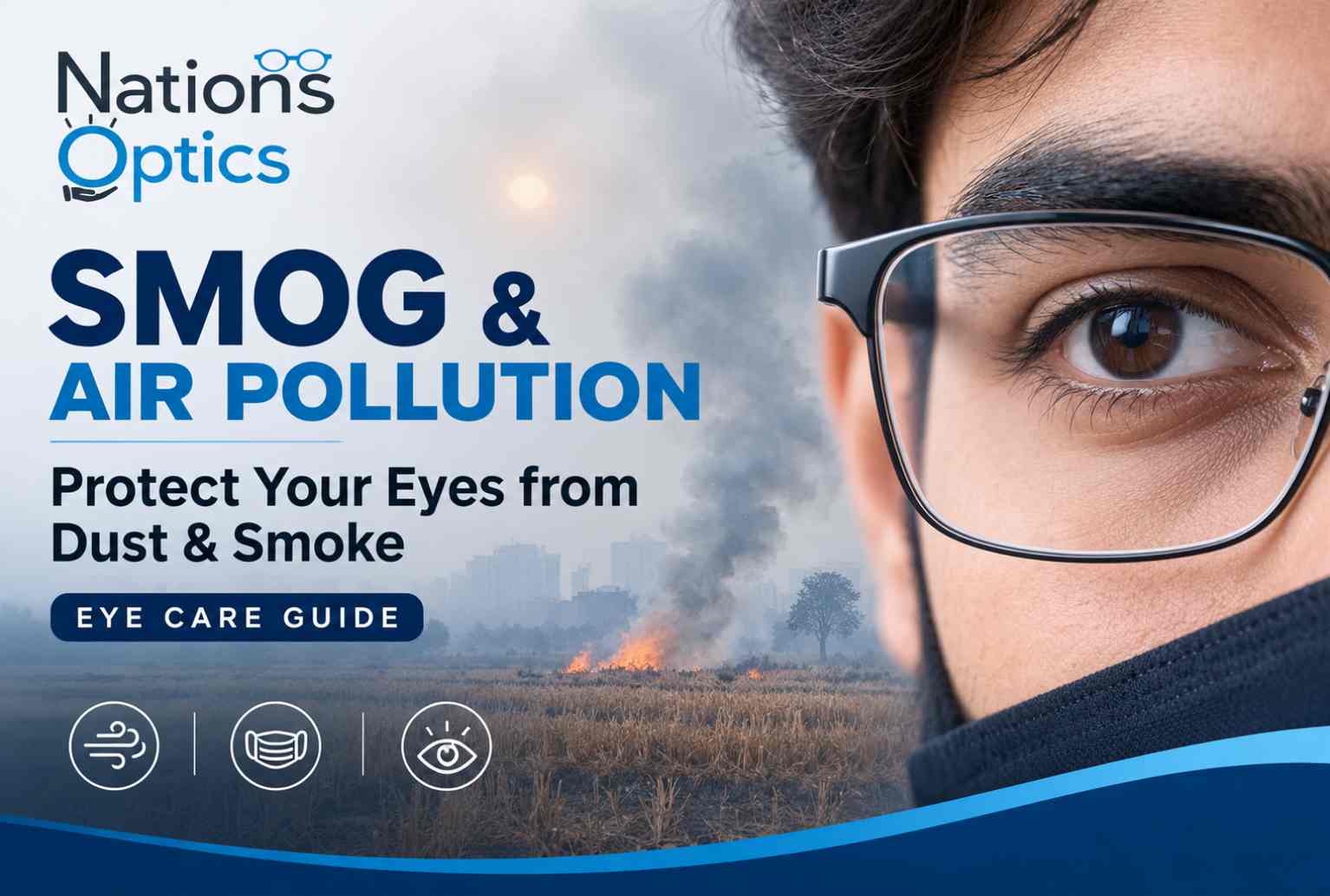
Smog & Pollution Eye Care: Protect Your Eyes in India | Nations Optics
Oct 10, 2026
By Rahul Jain
0 comment(s)
Seasonal Eye Care
Smog & Air Pollution Eye Care: How to Protect Your Eyes from Pollution, Dust and Stubble Smoke
Smog season is here. Here is how pollution affects your eyes, what actually helps, and when burning, watery eyes need a professional look.
A quick note: This article is for general educational purposes and is not a substitute for professional medical advice, diagnosis or treatment. Please consult a qualified eye-care professional for persistent symptoms or concerns about your vision.
Air pollution is a growing concern across India, particularly in winter, when smog, road dust, vehicle emissions and agricultural stubble-burning smoke affect daily life. Many people think about protecting their lungs, but eye care during pollution matters just as much. Polluted air can irritate the delicate surface of the eyes, causing redness, burning, itching, excessive watering and dryness.
If your eyes feel uncomfortable after travelling through traffic, spending time outdoors or being around smoky air, you may be dealing with pollution-related eye irritation. In this guide, Nations Optics explains the effects of smog on eye health and shares practical tips for people living in Delhi NCR, Uttar Pradesh and other polluted regions of India.
Smog AQI Stubble Smoke Dry & Irritated Eyes
How Does Air Pollution Affect Your Eyes?
Your eyes have a natural protective layer called the tear film, which keeps the surface lubricated, comfortable and protected. In polluted air, airborne particles and irritating gases can disturb it. Fine particulate matter such as PM2.5 and PM10, along with other pollutants, may contribute to eye irritation and worsen existing dry-eye or allergy symptoms. The effects vary with pollution level, how long you're exposed and how sensitive you are.
Redness and Irritation
Eyes may look red or feel uncomfortable after exposure to smog and smoke.
Burning Sensation
Irritating gases and airborne particles can cause a stinging or burning feeling.
Watery Eyes
Your eyes may make extra tears in response to irritants.
Itching
Polluted air can aggravate allergies and make eyes itchy.
Dry Eyes
Pollution may disturb the tear film, leading to dryness and a gritty feel.
Commute Discomfort
Dust, vehicle emissions and dry wind can make outdoor travel uncomfortable.
Pollution isn't always the culprit. Allergies, infections, dry-eye disease and other eye conditions can look the same, so don't assume smog is the only cause.
How to Protect Your Eyes from Air Pollution
If you live in a city where air quality often drops, small daily habits can cut your exposure and keep your eyes more comfortable.
1
Check the AQI Before Going Out
Look at the air quality forecast before outdoor exercise, long commutes or children's activities. When pollution is high, cut unnecessary outdoor time. Air quality changes through the day, so don't rely on how hazy the sky looks.
2
Wear Glasses as a Dust Barrier
Glasses outdoors can block some windblown dust and larger particles, which helps on dusty roads or two-wheelers. Wider lenses or frames with more side coverage, including wraparound styles, give extra cover. But ordinary glasses and sunglasses don't seal around the eyes, so they can't filter fine particles or gases.
3
Don't Rub Your Eyes
Rubbing increases irritation and can scratch the eye surface if particles are present. Keep hands away, wash them before touching your face, gently rinse eyelids and surrounding skin with clean water, and try a clean, cool compress over closed eyes.
4
Wash Your Face After Coming Home
Dust settles on your face, lashes and eyelids. Gently wash your face and the skin around your eyes with clean water, without a forceful stream or hard scrubbing. After long smoky or dusty exposure, change clothes and wash exposed skin too.
5
Limit Outdoor Time in Severe Pollution
When AQI is poor or worse, spend less time outside and move exercise indoors. Keep vehicle windows closed when appropriate. An N95 respirator can reduce inhaled particles when used correctly, but it doesn't protect your eyes. Eye and respiratory protection do different jobs.
6
Keep Eyes Comfortable Indoors
AC, heating and low humidity can worsen dry eyes. Take screen breaks, blink fully, avoid sitting right in front of fans or vents, reduce indoor smoke and dust, and consider a well-maintained air purifier if indoor particles are a concern.
7
Use Eye Drops Wisely
Lubricating drops (artificial tears) may relieve dryness, but the right product depends on your eyes. Ask an eye-care professional or pharmacist, and ask whether preservative-free drops suit you if you need them often.
Avoid these:
- Rose water, lemon juice, homemade mixtures or any unprescribed substance in your eyes
- Antibiotic, steroid or redness-relief drops without medical advice
If irritation continues despite basic precautions, get an eye exam instead of repeatedly treating the symptoms yourself.
Protecting Your Eyes from Dust and Smoke While Travelling
Daily commuting exposes your eyes to road dust, vehicle emissions, construction debris and smoke, especially if you ride a motorcycle or scooter.
- Wear a properly fitted helmet with a clean, clear visor on a two-wheeler
- Use suitable protective eyewear where dust exposure is heavy
- Avoid dense smoke or heavily polluted areas if there's another route
- Keep your hands clean and don't touch or rub your eyes while travelling
- Clean your glasses and helmet visor regularly in a suitable way
- Replace scratched or damaged visors that affect visibility
If you need prescription correction, well-fitted prescription glasses keep your vision clear while giving some protection from wind and dust. If you need more protection, ask an eye-care professional about protective eyewear that can be worn over your prescription glasses.
Stubble Burning Smoke and Eye Health
Stubble burning is a seasonal source of smoke and particulate pollution in parts of northern India, and the smoke can travel into nearby towns and cities. Depending on how much smoke there is, how long you're exposed and how sensitive you are, it may cause or aggravate:
- Burning and watery eyes
- Redness and itching
- Dryness and a gritty sensation
- Existing eye allergies or dry-eye symptoms
- Nose and throat irritation alongside eye discomfort
How to protect your eyes during stubble burning season
- Monitor local AQI readings and official health advisories
- Reduce unnecessary outdoor activity when air quality is poor
- Keep windows closed when outdoor smoke is entering the home
- Use indoor air filtration if you have it
- Wear suitable glasses or protective eyewear outdoors, remembering ordinary eyewear can't block all pollutants
- Wash your face and hands after coming indoors
- Seek medical advice if irritation persists or becomes severe
Children, older adults and people with existing eye or respiratory conditions should take extra care during heavy pollution.
Can Sunglasses Protect Your Eyes from Pollution?
To a degree. Sunglasses can give some physical protection from wind and airborne dust, especially when the frame offers good coverage, but it depends on the frame design, fit and exposure. Look for appropriate UV protection and a comfortable fit. UV protection reduces ultraviolet exposure, but it doesn't mean the lenses filter out PM2.5, smoke or harmful gases.
| Eyewear | What it can do |
|---|---|
| Regular prescription glasses | Correct vision and may reduce exposure to some windblown dust. |
| Sunglasses | Reduce glare and protect against UV when appropriately rated. Frame coverage may also cut some dust exposure. |
| Wraparound eyewear | More coverage around the sides, which may reduce exposure to wind and larger airborne particles. |
| Sealed protective goggles | Can give better protection against particles when properly selected and fitted for the task. |
No ordinary pair of glasses is a complete solution for severe smog or fine-particle pollution. For most people, the best approach combines less exposure, suitable protective gear and good eye hygiene.
How to Recognise Eye Irritation Due to Air Pollution
Mild irritation may include temporary redness, watering, itching, dryness or a gritty feeling after being outdoors. But not every red or watery eye is caused by pollution. Allergic conjunctivitis, infections, corneal injuries and other conditions can look similar. See a professional if symptoms persist, keep coming back or get worse despite lower exposure.
Get urgent medical attention if you have:
- Severe eye pain
- Sudden blurred or reduced vision
- Marked sensitivity to light
- Significant swelling or an eye injury
- A painful red eye while wearing contact lenses
Eye Care Tips for Children During Pollution Season
Children travel to school, play outdoors and join in sports, so parents can take a few practical steps when air quality is poor.
- Check AQI forecasts before outdoor activities
- Move outdoor games indoors when pollution is high
- Have children wash their hands and face after coming home
- Discourage eye rubbing, especially with unwashed hands
- Make sure prescription glasses fit comfortably and stay clean
- Get professional advice for persistent redness, watering, pain or vision changes
Children with allergies or other eye conditions may need an individual care plan from a healthcare professional.
A Daily Eye Protection Routine for Winter Smog
A simple routine makes this easier to stick to. Consistency helps more than any single product or home remedy.
Morning
- Check local air quality
- Carry clean prescription glasses or suitable protective eyewear
- Adjust outdoor plans when pollution is high
During the day
- Avoid rubbing your eyes
- Take breaks from screens
- Limit time near traffic, dust and smoke
- Follow local health advisories
After coming home
- Wash your hands and face
- Clean your glasses properly
- Avoid more smoke, dust or irritating products
- Use recommended lubricating drops only when appropriate
At night
- Notice whether symptoms ease indoors
- Don't ignore recurring irritation, redness or vision changes
- Book an eye exam when symptoms warrant it
When Should You Consult an Eye Doctor?
- Persistent burning or redness
- Repeated watery or itchy eyes
- Ongoing dryness or a gritty sensation
- Eye discharge or eyelid swelling
- Symptoms that don't improve after reducing exposure
- Blurred vision, eye pain or unusual sensitivity to light
Sudden vision changes, severe pain or a painful red eye need urgent assessment. An eye-care professional can work out whether your symptoms come from pollution, dry-eye disease, allergies, infection or something else, and suggest the right treatment.
Frequently Asked Questions
How can I protect my eyes from air pollution?
Monitor local AQI, reduce unnecessary outdoor exposure when pollution is high, wear suitable glasses or protective eyewear, avoid rubbing your eyes and wash your face after outdoor travel. Seek medical advice if symptoms persist.
Can air pollution cause burning and watery eyes?
Yes. Airborne particles and irritating gases can disturb the eye surface and trigger burning, redness, watering and discomfort. Allergies and other eye conditions can cause similar symptoms, so persistent problems should be assessed.
Does smog damage eyesight?
Smog can cause eye irritation and worsen existing ocular-surface problems. Effects vary with exposure and individual health. Persistent symptoms or any change in vision should not be ignored.
Can stubble burning smoke cause eye irritation?
Yes. Smoke and particulate pollution can irritate the eyes, causing redness, burning, watering or dryness. Reduce exposure in smoky conditions and follow local health advisories.
Do sunglasses protect eyes from pollution?
Sunglasses can reduce glare, give UV protection when appropriately rated and offer some physical protection from wind and dust. They don't completely block fine particulate matter or harmful gases.
Are prescription glasses useful during high pollution?
They correct vision and may reduce exposure to some windblown particles. But they don't seal around the eyes and can't give complete protection from smog. More protective eyewear may suit certain exposure conditions.
What should I do if my eyes burn after travelling through polluted air?
Avoid rubbing, wash your hands and face, and use a clean, cool compress over closed eyes if comfortable. Suitable lubricating drops may help some people. Seek medical advice if symptoms persist or worsen, and urgent care for severe pain or vision changes.
How can I protect my child's eyes during winter pollution?
Limit outdoor activities when air quality is poor, encourage hand and face washing, discourage eye rubbing and make sure prescription glasses fit properly. Consult an eye-care professional for persistent symptoms.
Is it safe to use eye drops every day during pollution season?
Some lubricating drops may be fine for regular use, but the right choice depends on your eyes and symptoms. Avoid self-medicating with antibiotic, steroid or redness-relief drops. Ask an eye-care professional for personal advice.
When should I seek medical attention for pollution-related eye irritation?
See a professional for persistent redness, burning, itching or watering. Severe eye pain, sudden vision changes, marked light sensitivity or a painful red eye in a contact lens wearer needs urgent medical assessment.
Conclusion: Protect Your Eyes During Smog Season
Smog, road dust, vehicle emissions and stubble-burning smoke make eye care harder, especially in India's winter pollution season. Protecting your eyes starts with reducing exposure, watching air quality, wearing suitable eyewear and keeping good eye hygiene.
Remember that ordinary prescription glasses and sunglasses give only limited physical protection from airborne particles. They can't replace pollution-reduction measures or medical care when symptoms continue. At Nations Optics, we believe comfortable, well-fitted eyewear should go hand in hand with informed eye-care habits. Explore options for your vision needs and daily routine, and see a qualified eye-care professional whenever symptoms call for it.
Comfortable Eyewear for Every Commute
Find well-fitted frames suited to your prescription, face shape and daily routine.
Explore Eyewear at Nations OpticsExclusive Offers
Sitewide
33%
OFF
Flat 33% off on all products
Already applied on every price · no coupon needed
Auto-applied
10%
OFF
On orders ₹1,200 – ₹1,799
No coupon needed · saves automatically
Auto-applied
15%
OFF
On orders ₹1,800 – ₹3,199
No coupon needed · saves automatically
Best Deal 🔥
20%
OFF
On orders above ₹3,200
No coupon needed · saves automatically
Pay Advance
₹50
SAVED
Pay advance amount at checkout
Flat ₹50 off · pay balance on delivery
Pay Full ✓
₹100
SAVED
Pay full amount at checkout
Maximum saving · instant confirmation
N
Nations Optics Assistant
● Online
👋 Hi! I'm your Nations Optics assistant. Ask me anything about lenses, frames, or prescriptions!