
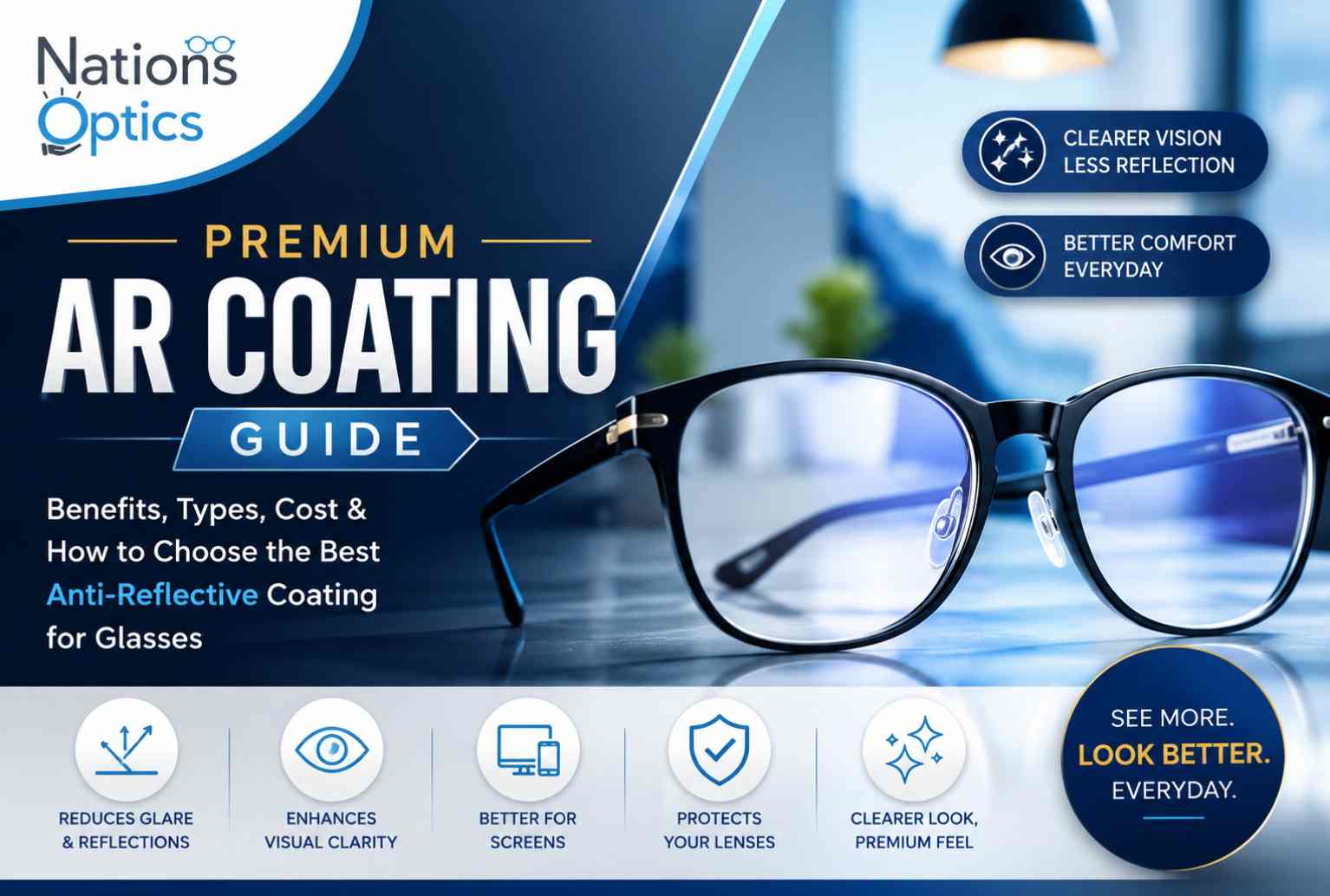
Premium AR Coating Guide: Benefits, Cost & Care for Glasses
Jul 25, 2026
By Rahul Jain
0 comment(s)
Lens Coatings & Care
Premium AR Coating Guide: Benefits, Types, Cost, Care & How to Choose the Best Anti-Reflective Coating
Frames and lens power get most of the attention — but the coating on your lenses shapes how you actually see through them every day.
When choosing new prescription glasses, most people focus on the frame, lens power, and lens material. But the right lens coating can make a significant difference to your everyday visual comfort and the overall appearance of your glasses.
One of the most popular and valuable lens upgrades is an anti-reflective coating, also known as AR coating, anti-reflection coating, or anti-glare coating. A high-quality anti-reflective coating helps reduce unwanted reflections from the front and back surfaces of your lenses — making it easier to see under digital screens, bright lights, or while driving at night, and letting people see your eyes more clearly.
Anti-Reflective CoatingAR CoatingAnti-Glare CoatingAnti-Reflective LensesAnti-Glare Lenses
Night Driving Screen Comfort High-Index Lenses Scratch Resistance Lens Care
What Is Anti-Reflective Coating for Glasses?
Anti-reflective coating is a specially engineered, ultra-thin lens treatment designed to reduce reflections from the surface of eyeglass lenses. Every lens reflects a small amount of light — these reflections can create glare, reduce visual comfort, and make it harder to see clearly in certain lighting. AR coating uses multiple thin layers of optical materials to reduce reflected light and let more light pass through the lens, resulting in fewer distracting reflections and improved visual clarity.
Although people often use "anti-glare" and "anti-reflective" interchangeably, a professional anti-reflective coating is specifically engineered to reduce reflections from the lens surfaces.
How Does Anti-Reflective Coating Work?
The surface of an uncoated lens reflects light. When that reflected light reaches your eyes, it creates distracting glare and reduces the amount of light passing through the lens. An AR coating consists of carefully engineered thin layers that reduce reflections through optical interference, allowing more light to transmit through the lens.
The benefits are especially noticeable when strong light sources create reflections, such as:
- Headlights during night driving
- Bright office lighting
- Computer and laptop screens
- Smartphone and tablet screens
- Windows and strong sunlight
- Photography and video calls
A premium multi-layer AR coating can also include additional protective layers designed to make lenses easier to clean and more resistant to everyday wear.
10 Important Benefits of Anti-Reflective Coating
1
Reduces Glare and Reflections
The primary benefit — reducing distracting reflections from headlights, overhead lights, windows, and digital screens for a cleaner view through your lenses.
2
Helps Improve Visual Clarity
Less distracting reflected light means clearer overall vision, especially noticeable for wearers of high-prescription or high-index lenses.
3
More Comfortable Night Driving
Reduces reflections from headlights and streetlights. Note: AR coating doesn't correct an incorrect prescription or eliminate every night-driving issue — see an eye doctor if you notice significant halos or starbursts.
4
Better Comfort During Screen Use
Helps reduce reflections from computer, laptop, and phone screens. It's not a cure for digital eye strain on its own — good screen habits and breaks matter too.
5
Makes Lenses Look Clearer
Without AR coating, bright reflections can hide your eyes from others. With it, lenses appear more transparent — great for meetings, calls, and everyday conversations.
6
Reduces Reflections in Photos and Videos
Cuts down on the reflections camera flashes and studio lighting create on uncoated lenses — useful for anyone who's frequently on camera.
7
Especially Useful for High-Index Lenses
High-index materials can produce more noticeable reflections, making AR coating an important part of choosing thinner lenses for stronger prescriptions.
8
Helps Maintain a More Premium Appearance
A cleaner, more refined lens appearance that complements premium frames for a more polished overall look.
9
Premium Coatings Can Be Easier to Clean
Modern premium treatments often combine anti-reflective properties with layers resistant to smudges and water — easier daily maintenance.
10
Improves the Overall Lens-Wearing Experience
Works as part of a complete lens experience — reduced reflections, better appearance, and greater comfort, especially for all-day wearers.
Premium AR Coating vs Standard AR Coating
Not all anti-reflective coatings are the same. Performance depends on the coating technology, the number and design of layers, the manufacturing process, and the additional protective treatments included.
Basic AR Coating
- Primarily reduces reflections
- Fewer coating layers
- Limited additional protection
Premium AR Coating
- Multi-layer anti-reflective treatment
- Improved reflection reduction
- Scratch-resistant hard coating
- Water & smudge-resistant properties
- Easier cleaning, better durability
When comparing coatings, don't look only at the name — ask what features are actually included and whether the coating suits your lens material and lifestyle.
Anti-Reflective Coating vs Anti-Glare Coating
Many people search for "anti-glare coating" when they mean anti-reflective coating — in everyday conversation, the terms describe similar treatments. "Anti-reflective coating" is simply the more technically precise term. What matters most is understanding what the coating actually provides, not just its name.
Is Anti-Reflective Coating Worth It?
Particularly valuable if you:
- Drive regularly at night
- Work long hours on a computer
- Use digital screens frequently
- Work under bright office lighting
- Wear high-index lenses
- Have a stronger prescription
- Attend frequent video meetings
- Want your lenses to look clearer
If you rarely wear glasses, spend most of your time outdoors, or have very specific requirements, the value depends on your individual needs. The best coating isn't necessarily the most expensive one — it should match your prescription, lens material, daily routine, and expectations.
Is AR Coating Good for Night Driving and Computer Use?
Night driving: AR coating can reduce reflections from headlights and other bright sources, making night viewing more comfortable for some wearers. It's not a fix for every night-vision problem — an outdated prescription, uncorrected astigmatism, eye conditions, or poor lighting can all play a role. If night driving stays difficult, get your prescription and eye health checked.
Computer use: AR coating reduces reflections from monitors, windows, and overhead lights for a more comfortable viewing environment. Your prescription and working distance still matter — a coating can't compensate for a prescription that's not suited to your visual needs.
Can AR Coating Be Added to Any Prescription?
AR coating is compatible with many common lens designs, including:
- Single vision lenses
- Bifocal lenses
- Progressive lenses
- High-index lenses
- CR-39 lenses
- Polycarbonate lenses
Exact coating options can depend on the lens material and manufacturing process. If ordering online, always provide an accurate prescription and correct pupillary distance (PD), particularly for lenses requiring precise optical positioning.
Does AR Coating Have Any Disadvantages?
AR coating offers real benefits, but it requires proper care — the coating is applied to the lens surface, so improper cleaning or unsuitable conditions can damage it over time.
Common Causes of Coating Damage
- Cleaning lenses with clothing
- Using abrasive materials
- Wiping dry lenses with dust present
- Exposure to excessive heat
- Unsuitable household chemicals
- Storing glasses without protection
How to Clean Anti-Reflective Coated Glasses
1
Rinse your glasses with clean, lukewarm water to remove dust and loose particles.
2
Use a lens-safe cleaning solution or a mild cleanser recommended for eyewear.
3
Gently clean both sides of the lenses with clean fingers.
4
Rinse thoroughly.
5
Dry using a clean, soft microfiber cloth.
Avoid: paper towels, tissues, clothing, abrasive materials, harsh household cleaners, and unapproved chemical products. Don't aggressively rub a dry lens if dust or grit is present — this increases the risk of scratching.
How Long Does Anti-Reflective Coating Last?
Lifespan depends on coating quality, lens material, frequency of use, cleaning habits, heat exposure, storage, and general handling. A premium coating that's properly maintained can offer long-term performance — but no coating is completely immune to damage. If you notice peeling, cracking, significant cloudiness, or widespread deterioration, replacing the lenses is usually more practical than trying to repair the coating.
Can scratched AR coating be repaired? In most cases, no — not at home. Attempting to remove or alter the coating yourself can damage the underlying lens and affect optical performance. If your coating has severe scratches, peeling, or visible deterioration, consult an optical professional about your options.
Does AR Coating Block Blue Light?
No — anti-reflective coating and blue-light filtering are different treatments. AR coating is primarily designed to reduce reflections from lens surfaces, while blue-light filtering selectively filters certain wavelengths of light. Some lens packages combine both, but always check the exact features included in the lens you're choosing.
What Is the Best Anti-Reflective Coating for Glasses?
The best AR coating depends on your lifestyle and lens requirements. Consider a premium AR coating if you wear glasses every day, use screens for long periods, drive at night, wear high-index lenses, have a stronger prescription, want clearer-looking lenses, or prefer easier maintenance. Look at the complete lens package — material, prescription accuracy, hard coating, cleaning properties, and overall optical quality — not just the "anti-glare" label.
Frequently Asked Questions
What is anti-reflective coating for glasses?
A thin, multi-layer treatment applied to eyeglass lenses to reduce unwanted reflections and improve the amount of light passing through the lens.
Is anti-reflective coating the same as anti-glare coating?
The terms are often used interchangeably in everyday eyewear conversations. "Anti-reflective coating" is the more technically precise term for reducing reflections from lens surfaces.
Is anti-reflective coating worth it?
For many people, yes — especially regular glasses wearers, night drivers, computer users, and those with high-index lenses.
Does AR coating help with night driving?
It can reduce reflections from headlights and bright sources, but it doesn't correct an incorrect prescription or eliminate every cause of night-vision difficulty.
How do I clean anti-reflective coated glasses?
Rinse to remove dust, use a lens-safe cleaning solution, and dry gently with a clean microfiber cloth. Avoid clothing, tissues, and harsh chemicals.
How long does anti-reflective coating last?
It depends on coating quality, lens material, cleaning routine, heat exposure, and general care — a well-maintained premium coating can last a long time.
What's the difference between premium and basic AR coating?
Premium coatings often add multi-layer reflection reduction plus scratch resistance, water repellency, smudge resistance, and easier cleaning.
Does anti-reflective coating block blue light?
Not necessarily — they're different treatments, though some lens options combine both features.
Limited Lens Upgrade
See Clearer. Look Sharper. Every Day.
Upgrade any prescription lens with Nations Optics' Premium AR Coating — engineered for glare-free screens, comfortable night drives, and clearer-looking lenses in every photo.
✓ Multi-layer glare reduction
✓ Scratch-resistant hard coat
✓ Water & smudge resistant
✓ Works with high-index lenses
For most regular prescription glasses wearers, premium anti-reflective coating is a worthwhile lens upgrade. It reduces glare and reflections, improves visual comfort, makes lenses look clearer, improves your appearance in photos and video calls, supports more comfortable screen use and night driving, and often adds easier cleaning through advanced coating layers.
If you're choosing new prescription glasses, don't focus only on the frame — the right lens material and coating can make a meaningful difference to your daily eyewear experience.
Exclusive Offers
Sitewide
33%
OFF
Flat 33% off on all products
Already applied on every price · no coupon needed
Auto-applied
10%
OFF
On orders ₹1,200 – ₹1,799
No coupon needed · saves automatically
Auto-applied
15%
OFF
On orders ₹1,800 – ₹3,199
No coupon needed · saves automatically
Best Deal 🔥
20%
OFF
On orders above ₹3,200
No coupon needed · saves automatically
Pay Advance
₹50
SAVED
Pay advance amount at checkout
Flat ₹50 off · pay balance on delivery
Pay Full ✓
₹100
SAVED
Pay full amount at checkout
Maximum saving · instant confirmation
N
Nations Optics Assistant
● Online
👋 Hi! I'm your Nations Optics assistant. Ask me anything about lenses, frames, or prescriptions!