
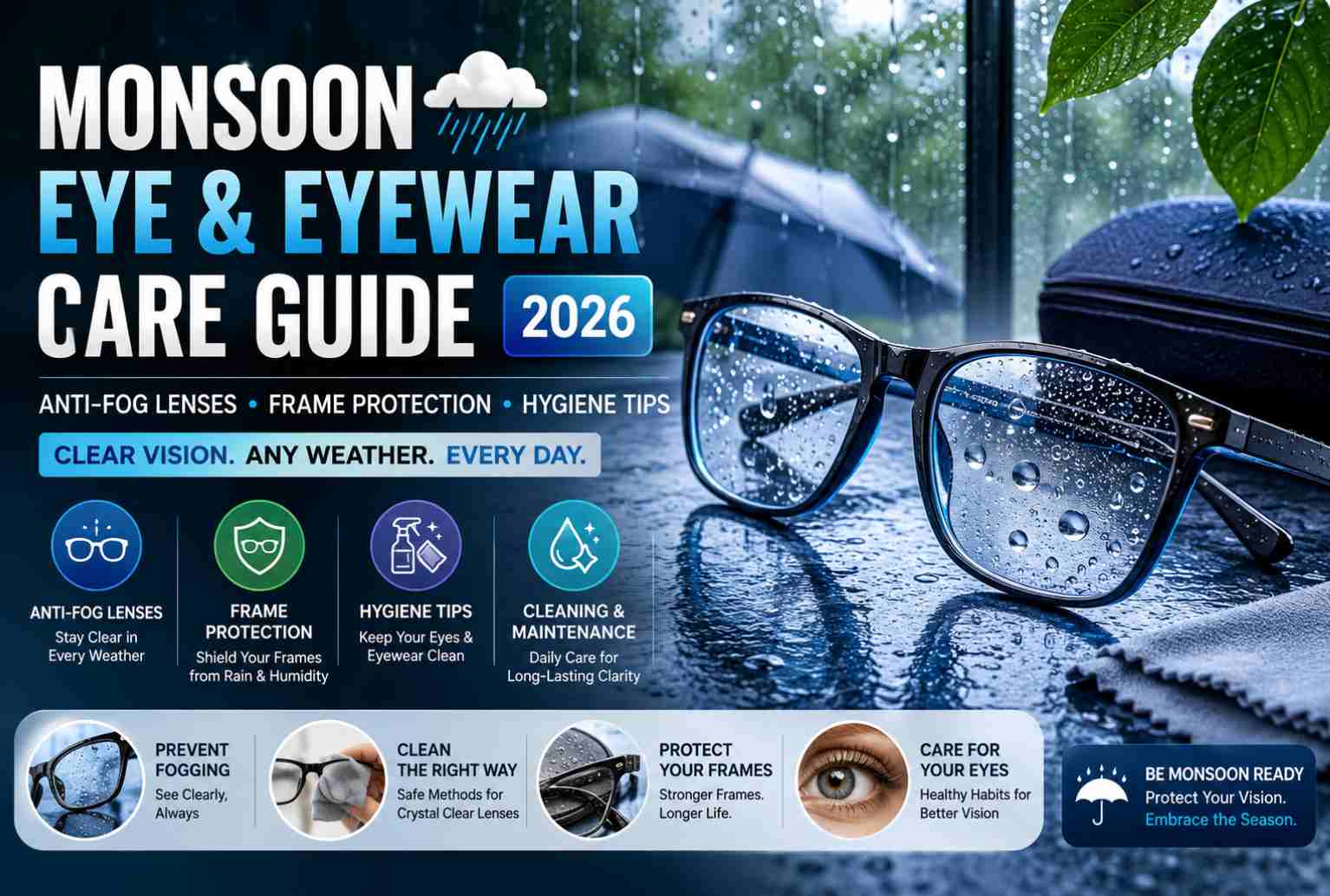
Monsoon Eyewear Care Guide 2026: Anti-Fog Lenses & Frame Tips
Jul 29, 2026
By Rahul Jain
0 comment(s)
Seasonal Eyewear Care · 2026
Monsoon Eye & Eyewear Care Guide 2026: Anti-Fog Lenses, Frame Protection & Hygiene Tips
Foggy lenses, water spots, and frame corrosion don't have to come with the rainy season. Here's how to keep your eyes and eyewear in top shape.
The monsoon season brings welcome relief from the summer heat, but it also introduces unique challenges for your eyes and eyewear. Increased humidity, sudden rain showers, temperature changes, and airborne bacteria can affect both your vision and the lifespan of your glasses. Foggy lenses, water spots, frame corrosion, and eye infections become much more common during this time of year.
Whether you wear prescription glasses, sunglasses, blue light glasses, or photochromic lenses, following the right monsoon eye care routine can help you maintain clear vision and keep your eyewear in excellent condition throughout the rainy season.
Anti-Fog Lenses Frame Protection Lens Cleaning Eyewear Hygiene Metal Frame Care
Why Monsoon Weather Affects Your Eyes and Glasses
Humidity is the biggest reason your eyewear behaves differently during the rainy season. When warm, moist air meets cooler lenses, condensation forms on the surface, fogging up your glasses instantly. Beyond fogging, monsoon also increases:
- Dust mixed with rainwater
- Airborne bacteria and fungi
- Higher chances of eye allergies
- Moisture damage to frames
- Lens smudges and water stains
- Increased risk of eye infections
Without proper eyewear care during monsoon, these issues can shorten the lifespan of your glasses and compromise your vision.
Common Problems Glasses Wearers Face
- Foggy glasses entering A/C rooms
- Blurry vision from condensation
- Water droplets staining lenses
- Dirty nose pads and temples
- Metal frames developing corrosion
- Loose hinges from moisture
- Increased fingerprints and smudges
- Mold buildup inside spectacle cases
Fortunately, all of these are preventable with proper care.
Why Do Glasses Fog During the Rainy Season?
The Simple Answer
Whenever warm humid air touches a cooler lens surface, tiny water droplets form instantly. This layer of condensation blocks light, making your lenses appear cloudy.
Fogging is even worse when: wearing a face mask, entering an air-conditioned building, drinking hot beverages, traveling in cars, riding motorcycles, or walking in heavy rain.
How Anti-Fog Lenses Keep Your Vision Clear
If you're tired of constantly wiping your glasses, anti-fog lenses are one of the best upgrades you can make. Anti-fog technology helps prevent moisture from forming visible droplets — instead, the moisture spreads evenly across the lens, maintaining clearer vision.
- Clear vision in humid weather
- Reduced condensation
- Better visibility while driving
- Comfortable mask usage
- Fewer interruptions throughout the day
- Less frequent lens cleaning
For daily commuters, outdoor workers, or anyone frequently moving between air-conditioned and humid environments, anti-fog lenses are an excellent investment.
Common misconception: Anti-reflective coatings don't prevent fogging. AR lenses reduce glare and improve clarity by minimizing reflections; anti-fog lenses are specifically designed to reduce condensation from humidity. Many premium lenses combine both technologies for the best of each.
Best Lenses for Rainy Season
How to Prevent Glasses Fogging
If you don't already own anti-fog lenses, these practical tips can help reduce condensation:
- Keep your lenses clean — dirty lenses trap moisture more easily
- Use an anti-fog cleaning solution — specialized sprays create a temporary anti-condensation coating
- Avoid wiping with clothing — shirts and tissues carry dust that scratches lenses; use a clean microfiber cloth
- Allow glasses to adjust to temperature — avoid sudden transitions between humid outdoors and cold indoor air where possible
- Improve mask fit — adjust masks so warm air doesn't escape upward toward your lenses
Eyeglass Cleaning Tips During Monsoon
Rainwater contains dust, pollutants, and minerals that leave residue on lenses. Here's the safest cleaning routine:
1
Rinse glasses under clean lukewarm water.
2
Apply a mild lens-safe cleaning solution.
3
Gently clean both sides of each lens.
4
Dry using a clean microfiber cloth.
5
Store glasses only after they're completely dry.
Eyewear Hygiene Tips Everyone Should Follow
Monsoon increases bacterial growth, making eyewear hygiene more important than ever. Clean regularly:
- Nose pads
- Temple tips
- Hinges
- Lens edges
- Frame bridge
These areas collect sweat, dust, skin oils, and moisture every day. Good hygiene habits also help reduce acne around the nose and prevent eye irritation.
How to Protect Eyeglass Frames During the Rainy Season
Water itself rarely damages quality frames immediately — the real problem is prolonged moisture.
General Frame Protection
- Dry frames immediately — never let water sit on them
- Store in a hard protective case, not loose in bags or pockets
- Inspect and tighten loose screws every few weeks
- Keep frames away from extreme heat — never use a hair dryer on wet glasses
Metal Frame Protection
- Dry immediately after rain exposure
- Clean regularly to prevent corrosion
- Store in a dry case
- Avoid leaving them inside wet bags
- Remove sweat after workouts
Rimless Glasses Care
- Never twist the frame while cleaning
- Dry screws carefully after rain
- Use both hands while wearing or removing
- Store inside a rigid protective case
- Avoid placing heavy objects on top
Full-Rim Frame Maintenance
- Weekly cleaning
- Tightening hinges
- Inspecting nose pads
- Removing trapped moisture
- Cleaning frame grooves
Can Rain Damage Eyeglasses?
Rain alone won't usually ruin your glasses. However, repeated exposure without proper care can lead to water spots, mineral buildup, lens coating deterioration, rust on low-quality metal parts, loose hinges, and mold inside the case. That's why protecting your eyeglasses during monsoon should become part of your daily routine.
How to Store Glasses During Monsoon
Proper storage is often overlooked. Always:
- Use a ventilated hard case
- Keep the case dry
- Avoid storing wet glasses
- Place glasses with lenses facing upward
- Clean the case every week
Good storage significantly extends the life of your eyewear.
Lens Cleaning Mistakes to Avoid
- Cleaning dry lenses without rinsing
- Using tissues or paper towels
- Wiping lenses with clothing
- Using household glass cleaners
- Leaving glasses wet
- Using hot water
- Forgetting to clean the nose pads
Daily Monsoon Eyewear Maintenance Checklist
- Clean lenses with lens-safe solution
- Dry frames after rain exposure
- Wipe nose pads and temples
- Store glasses in a clean hard case
- Use a microfiber cloth only
- Check for loose screws
- Avoid placing glasses face-down
- Replace worn-out cleaning cloths regularly
Monsoon Vision Care Tips
Your eyes need attention too. Practice these rainy season eye care habits:
- Wash hands before touching your eyes
- Avoid rubbing itchy eyes
- Wear UV-protective sunglasses when outdoors
- Stay hydrated
- Eat foods rich in Vitamin A, C, Omega-3 fatty acids, and zinc
- Replace old contact lenses on schedule
- Schedule regular eye examinations
- Seek medical advice if redness, pain, or blurred vision persists
Healthy eyes complement healthy eyewear.
Frequently Asked Questions
Are anti-fog lenses worth buying?
Yes. If your glasses frequently fog up from humidity, rain, face masks, or temperature changes, anti-fog lenses offer a noticeable improvement in comfort and visibility.
Can humidity damage eyeglass lenses?
Humidity itself doesn't usually damage lenses, but prolonged moisture can affect coatings, encourage mold growth in cases, and contribute to corrosion on certain frame components.
How often should I clean my glasses during monsoon?
Clean lenses whenever they get dirty, and wipe moisture from frames after every rain exposure. A thorough cleaning at least once daily is recommended.
Are photochromic lenses good during monsoon?
Yes. While they may darken less under cloudy skies, they still provide UV protection and remain a convenient option for changing light conditions.
What is the best cloth for cleaning eyeglasses?
A clean microfiber cloth is the safest option because it removes dirt without scratching your lenses.
☔ Monsoon Forecast: Humid, with a chance of foggy lenses
Shop Monsoon-Ready Eyewear
Gear Up for the Rainy Season
Nations Optics offers anti-fog and anti-reflective lens options, plus durable frames built to handle monsoon humidity.
✓ Anti-fog lens technology
✓ Anti-reflective coatings
✓ Photochromic & UV protection
✓ Durable, corrosion-resistant frames
The rainy season doesn't have to mean foggy lenses, uncomfortable vision, or damaged frames. By following a consistent monsoon eye care routine, investing in anti-fog lenses when needed, and maintaining good eyewear hygiene, you can enjoy clear vision and extend the life of your glasses.
Whether you're commuting to work, studying, driving in heavy rain, or simply spending more time indoors, a few preventive habits make a significant difference to both your eyesight and your investment in quality eyewear.
Exclusive Offers
Sitewide
33%
OFF
Flat 33% off on all products
Already applied on every price · no coupon needed
Auto-applied
10%
OFF
On orders ₹1,200 – ₹1,799
No coupon needed · saves automatically
Auto-applied
15%
OFF
On orders ₹1,800 – ₹3,199
No coupon needed · saves automatically
Best Deal 🔥
20%
OFF
On orders above ₹3,200
No coupon needed · saves automatically
Pay Advance
₹50
SAVED
Pay advance amount at checkout
Flat ₹50 off · pay balance on delivery
Pay Full ✓
₹100
SAVED
Pay full amount at checkout
Maximum saving · instant confirmation
N
Nations Optics Assistant
● Online
👋 Hi! I'm your Nations Optics assistant. Ask me anything about lenses, frames, or prescriptions!