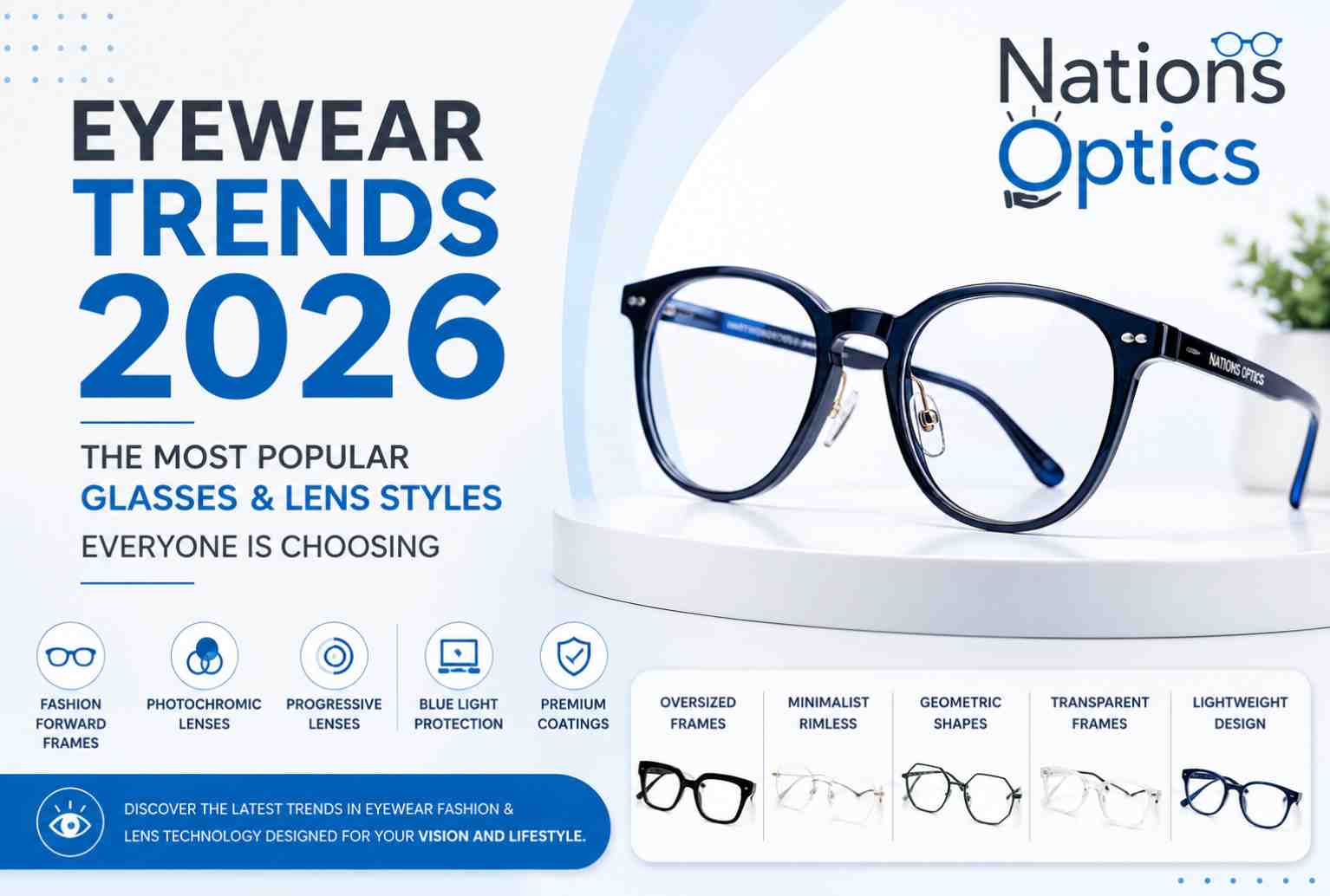
Eyewear Trends 2026: The Most Popular Glasses & Lens Styles Everyone Is Choosing
Jun 8, 2026
By Rahul Jain
0 comment(s)
Eyewear Trends 2026: The Most Popular Glasses & Lens Styles Everyone Is Choosing
Discover the latest eyewear trends, innovative lens technologies, and fashionable frame styles that are transforming the optical industry in 2026.
Eyewear has evolved far beyond simple vision correction. In 2026, glasses have become a powerful combination of fashion, technology, comfort, and lifestyle enhancement. Whether you wear prescription glasses daily, rely on progressive lenses, or want stylish frames that complement your personality, the latest eyewear trends offer something for everyone.
Consumers today expect more from their eyewear. They want lightweight frames, advanced lens coatings, blue light protection, photochromic technology, and modern designs that seamlessly fit into their daily lives. As optical innovation continues to advance, eyewear manufacturers are introducing products that combine superior vision performance with exceptional style.
At Nations Optics, we continuously follow emerging eyewear trends to provide customers with premium prescription lenses and advanced optical solutions that meet modern visual demands.
Why Eyewear Trends Matter in 2026
The eyewear industry has become one of the fastest-growing sectors in fashion and healthcare. Today's consumers spend hours working on computers, using smartphones, and switching between indoor and outdoor environments. As a result, glasses must do more than improve vision—they must enhance comfort, reduce eye strain, and complement personal style.
2026 Consumer Priorities:
- Lightweight eyewear
- Blue light protection
- Photochromic lenses
- Progressive lenses
- Fashion-forward frame designs
- Premium anti-reflective coatings
- Durable lens materials
1. Oversized Frames Continue to Dominate Fashion
Oversized glasses remain one of the most popular eyewear trends of 2026. These bold and sophisticated frames offer a larger field of vision while making a strong style statement. Available in acetate, titanium, and lightweight materials, oversized frames appeal to both professionals and fashion enthusiasts.
Many wearers prefer oversized glasses because they provide better lens coverage and work exceptionally well with progressive lenses. Their versatility makes them suitable for both casual and professional environments.
2. Transparent and Crystal-Clear Frames
Transparent eyewear continues to gain popularity due to its clean and versatile appearance. Clear frames complement nearly every skin tone and face shape while creating a modern and minimalist look.
These frames are particularly appealing because they blend effortlessly with any wardrobe, making them a favorite choice among both men and women.
3. Geometric Eyewear Shapes
Traditional frame designs are being replaced by unique geometric styles. Hexagonal, octagonal, and angular frames are becoming increasingly popular among individuals seeking a distinctive appearance.
Geometric eyewear offers a modern aesthetic while helping wearers express their individuality. These styles have become particularly popular among younger professionals and trend-conscious consumers.
4. Rimless and Minimalist Eyewear
Minimalist eyewear continues to attract consumers looking for a sophisticated and lightweight solution. Rimless glasses provide exceptional comfort while maintaining a professional and elegant appearance.
Thanks to advancements in lens technology, modern rimless eyewear offers improved durability without sacrificing style.
5. Photochromic Lenses Are Becoming Essential
Photochromic lenses remain one of the fastest-growing lens categories in 2026. These lenses automatically darken outdoors and return to a clear state indoors, eliminating the need to switch between prescription glasses and sunglasses.
For individuals who frequently transition between indoor and outdoor environments, photochromic lenses provide unmatched convenience and protection.
Looking for Photochromic Lenses?
Experience lenses that automatically adapt to changing light conditions while providing UV protection and all-day comfort.
Shop Photochromic Lenses6. Progressive Lenses Continue to Grow in Popularity
Progressive lenses have become the preferred solution for individuals requiring multiple vision corrections. These no-line multifocal lenses allow users to see clearly at near, intermediate, and distance ranges without visible segments.
Modern progressive lens technology provides wider viewing zones and smoother transitions than ever before, making adaptation easier and visual performance more comfortable.
Upgrade to Premium Progressive Lenses
Enjoy seamless vision correction for reading, computer use, and distance viewing with advanced progressive lens technology.
Explore Progressive Lenses7. Blue Light Protection Remains in High Demand
With screen time continuing to increase globally, blue light filtering lenses remain one of the most requested lens features. These specialized lenses help reduce digital eye strain and improve visual comfort during prolonged computer and smartphone use.
Students, office professionals, gamers, and remote workers increasingly choose blue-cut lenses to support healthier visual habits.
8. High-Index Lenses for Strong Prescriptions
High-index lenses offer thinner and lighter alternatives to traditional lenses. They are particularly beneficial for individuals with stronger prescriptions who want improved comfort and aesthetics.
By reducing lens thickness, high-index lenses create a more attractive appearance while maintaining exceptional optical performance.
9. Premium Lens Coatings Are Becoming Standard
Modern lens coatings have evolved significantly. Today's premium lenses often include anti-reflective coatings, scratch resistance, water repellency, dust resistance, and UV protection.
These advanced coatings improve lens durability, visual clarity, and overall user satisfaction.
10. Sustainable Eyewear Is Growing Rapidly
Environmental awareness continues to influence consumer purchasing decisions. Many eyewear brands now offer frames made from recycled materials and eco-friendly acetate.
Sustainable eyewear allows consumers to enjoy stylish and durable products while supporting environmentally responsible manufacturing practices.
Eyewear Trends Comparison Table
| Trend | Benefits | Best For |
|---|---|---|
| Photochromic Lenses | Automatic light adjustment | Outdoor & Indoor Use |
| Progressive Lenses | Multiple vision zones | Presbyopia Users |
| Blue Light Lenses | Reduced screen fatigue | Computer Users |
| High Index Lenses | Thin & Lightweight | Strong Prescriptions |
| Oversized Frames | Fashion & Coverage | Trend-Conscious Wearers |
Frequently Asked Questions
What are the most popular glasses styles in 2026?
Oversized frames, transparent eyewear, geometric designs, and rimless glasses are among the leading eyewear trends of 2026.
Are photochromic lenses worth buying?
Yes. Photochromic lenses automatically adapt to changing light conditions, providing convenience, UV protection, and enhanced comfort.
Who should use progressive lenses?
Progressive lenses are ideal for individuals who require near, intermediate, and distance vision correction in a single lens.
Do blue light lenses reduce eye strain?
Blue light filtering lenses can improve visual comfort for people who spend extended hours using digital screens.
Ready to Upgrade Your Eyewear?
Explore premium prescription lenses, progressive lenses, photochromic lenses, blue-cut lenses, and advanced coatings designed for superior vision and comfort.
Shop Premium Lenses Browse Lens CollectionsConclusion
The eyewear industry in 2026 is defined by innovation, style, and functionality. Consumers are increasingly choosing eyewear that combines fashion-forward designs with advanced optical technologies such as progressive lenses, photochromic lenses, blue light protection, and premium coatings.
Whether you're searching for modern frames, advanced prescription lenses, or complete visual comfort solutions, staying informed about the latest eyewear trends can help you make a smarter purchasing decision. Nations Optics continues to provide premium-quality optical lenses designed to meet the evolving needs of today's eyewear users.
Exclusive Offers
Sitewide
33%
OFF
Flat 33% off on all products
Already applied on every price · no coupon needed
Auto-applied
10%
OFF
On orders ₹1,200 – ₹1,799
No coupon needed · saves automatically
Auto-applied
15%
OFF
On orders ₹1,800 – ₹3,199
No coupon needed · saves automatically
Best Deal 🔥
20%
OFF
On orders above ₹3,200
No coupon needed · saves automatically
Pay Advance
₹50
SAVED
Pay advance amount at checkout
Flat ₹50 off · pay balance on delivery
Pay Full ✓
₹100
SAVED
Pay full amount at checkout
Maximum saving · instant confirmation
N
Nations Optics Assistant
● Online
👋 Hi! I'm your Nations Optics assistant. Ask me anything about lenses, frames, or prescriptions!