
Designer vs Generic Eyewear: Is the Price Worth It?
Sep 7, 2026
By Rahul Jain
0 comment(s)
Buying Guide
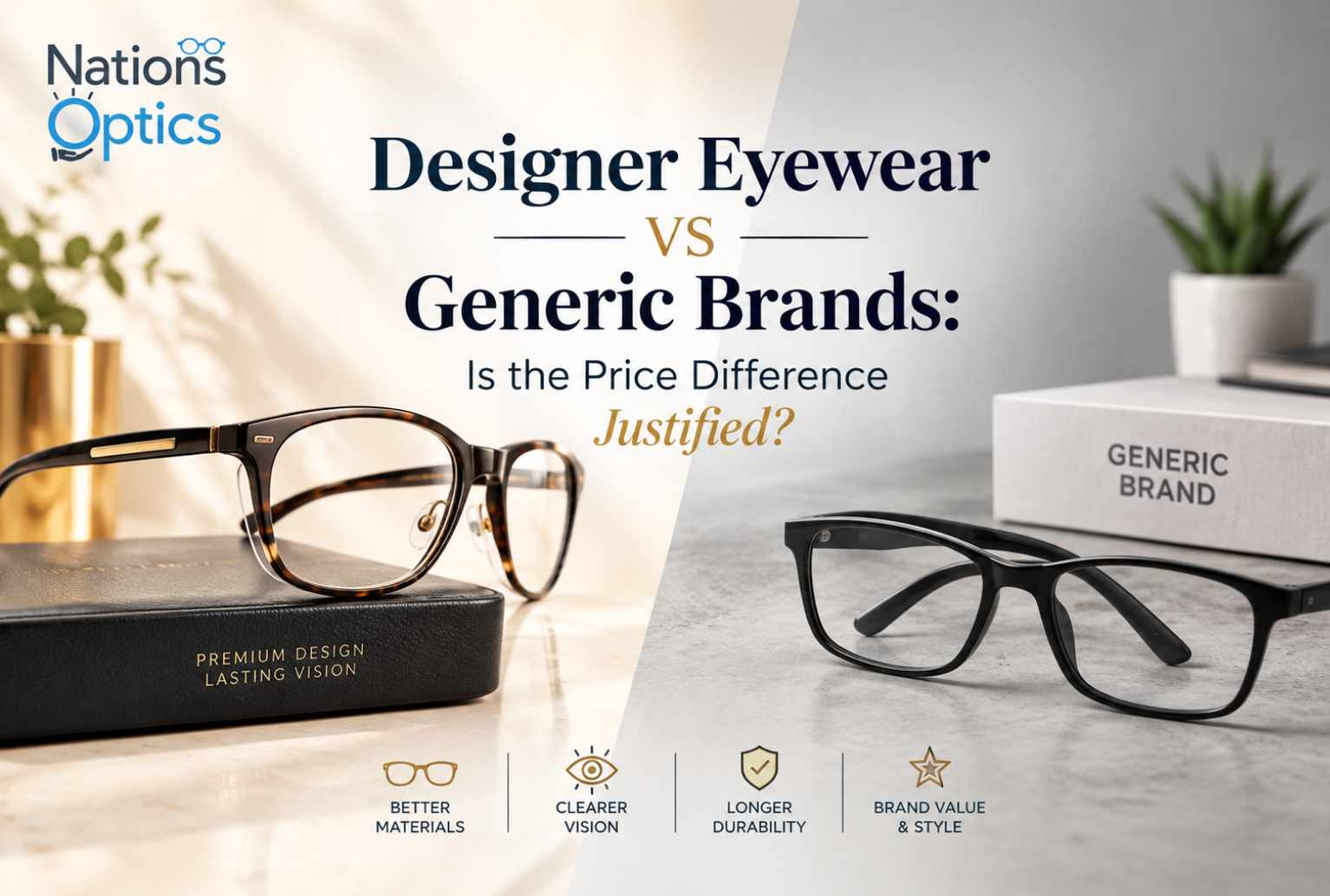
Designer Eyewear vs Generic Brands: Is the Price Difference Justified?
A ₹15,000 logo and a ₹1,500 frame can use nearly identical materials. Here's what you're actually paying for — and when it's worth it.
Stand in front of an optical store display and the price range can feel arbitrary. Two frames that look almost identical — same acetate, similar shape, comparable weight — can be separated by ten times the price, and the only obvious difference is a name printed on the temple. So is that markup buying you something real, or just a logo?
The honest answer is: a bit of both, depending on the brand and the specific pair. This guide breaks down where designer eyewear pricing actually comes from, what part of that price buys genuine quality versus pure brand value, and how to decide when paying more is worth it for you.
Brand Premium
Frame Materials
Manufacturing Quality
Resale Value
Smart Buying
Where Does the Price of Designer Eyewear Actually Go?
Eyewear pricing isn't a single number reflecting one thing — it's a stack of separate costs, and the mix shifts significantly depending on whether you're buying a designer name or a lesser-known brand.
For many well-known designer names, brand value and marketing make up the single largest share of the retail price — not the materials or the construction. That's not necessarily a scam; brand licensing, design royalties, advertising campaigns, and celebrity endorsements are real costs that get built into the price. But it does mean the connection between price and physical quality is looser than most buyers assume.
What You're Actually Paying For
1
Brand Licensing and Design Royalties
Most designer eyewear isn't made by the fashion house itself — it's produced under license by a small number of large eyewear manufacturing groups, who pay the designer brand a royalty on every pair sold. That royalty is baked directly into the retail price before materials or labor are even factored in.
2
Marketing and Advertising
Campaigns, celebrity partnerships, runway placements, and retail store design all cost money — and that spend is recovered through the price of every pair sold, regardless of whether it improves the physical product at all.
3
Genuine Material and Construction Differences
Some of the price gap is real: premium acetate, hand-polished edges, reinforced hinges, and tighter manufacturing tolerances do cost more to produce, and some designer lines genuinely use them. This varies enormously by brand and even by specific collection within a brand.
4
Retail Experience and Service
Boutique environments, in-store styling advice, and premium packaging all add cost — value that's real for some buyers and irrelevant for others, depending on how much the shopping experience itself matters to you.
5
Resale and Perceived Status Value
A recognizable designer logo can carry social signaling value that a generic frame simply doesn't, for buyers who care about that. This is a genuinely subjective factor — not a quality metric, but not nothing either.
Designer vs Generic Brands: Side-by-Side
| Factor | Designer Eyewear | Generic / Independent Brands |
|---|---|---|
| Typical Price Range | High | Low to moderate |
| Brand Recognition | Strong | Minimal to none |
| Material Quality | Varies by brand and line | Varies by manufacturer |
| Manufacturing Origin | Often the same factories as generic brands | Often the same factories as designer brands |
| Warranty & Support | Generally strong | Varies significantly by retailer |
| Style Options | On-trend, seasonal collections | Wide range, less trend-driven |
| Value for Money | Moderate | Often higher |
An open secret in the industry: A large share of both designer and generic eyewear is manufactured in the same countries, sometimes by the very same factories, using similar acetate, hinges, and manufacturing processes. The finishing, quality control standards, and brand markup are frequently what separates the final retail price, not a fundamentally different production process.
When Is Paying for Designer Eyewear Actually Worth It?
Worth Considering If
- You genuinely value the brand's design aesthetic and it's hard to find elsewhere
- You want a specific collection with distinctive, hard-to-replicate detailing
- Brand recognition or status signaling matters to you personally
- You've verified the specific pair uses genuinely premium materials
- Strong warranty and service backing matters for your situation
Skip It If
- You're paying primarily for the logo, not a specific design you can't find elsewhere
- You haven't compared materials and construction against lower-priced options
- You lose or damage glasses frequently and want to minimize replacement cost
- A well-made independent or generic frame meets your style needs just as well
- Budget matters more to you than brand recognition
Red Flags When Evaluating Any Frame's Value
- No specifics given about frame material — just vague "premium" language
- Weak or vague warranty terms despite a high price tag
- Hinges that feel loose or flimsy regardless of brand name
- A price that seems disconnected from any visible construction quality
- Pressure to buy based purely on logo recognition rather than fit or comfort
How to Evaluate Any Pair of Glasses on Its Actual Merits
1
Check the frame material directly — acetate, titanium, TR90, or stainless steel — rather than trusting a vague "premium materials" claim.
2
Test the hinges in person if possible — spring hinges, smooth movement, and tight construction are indicators of quality regardless of brand.
3
Compare the same style across price points — try a designer frame and a similarly shaped generic frame side by side to feel the actual difference, if any.
4
Ask about country of manufacture and warranty terms — these tell you more about durability and support than the logo does.
5
Decide what you're actually buying — a design you love, a brand you want to be associated with, or simply a functional, comfortable frame — and price-match your decision to that honest answer.
Frequently Asked Questions
Is designer eyewear actually better quality than generic brands?
Not automatically. Quality varies by specific brand and collection on both sides — some designer lines use genuinely premium materials, while some generic brands offer comparable or better construction at a fraction of the price.
Why is designer eyewear so much more expensive?
Brand licensing royalties, marketing and advertising costs, and retail experience typically make up a larger share of the price than materials or manufacturing — though some of the price does reflect genuine construction differences.
Are designer and generic glasses made in the same factories?
Often, yes. A significant share of eyewear manufacturing globally is concentrated among a relatively small number of large producers who make frames for many different brands, including both designer and generic labels.
How can I tell if a frame is genuinely well made?
Check the frame material directly, test the hinges for smooth movement and tight construction, and ask about country of manufacture and warranty terms — these matter more than the brand name alone.
Is it ever worth paying more for a designer name?
Yes, if the specific design genuinely appeals to you, you've verified real material or construction differences, or brand recognition matters to you personally. It's a personal value judgment, not a universal rule.
Quality You Can See and Feel
At Nations Optics, we focus on genuine material quality and craftsmanship — not a logo markup — so you know exactly what you're paying for.
- Transparent frame material information
- Acetate, TR90 & metal frame options
- Quality construction at fair pricing
- Strong warranty and support
- Styles across a range of aesthetics
The price difference between designer and generic eyewear is real, but it isn't always proportional to a real difference in quality. Some of what you're paying for with a designer name is genuine — better materials, tighter construction, stronger warranties — and some of it is brand value, marketing, and the story printed on the case.
Neither choice is automatically the smart one or the foolish one. The best approach is simply to know which part of the price you're actually buying, and decide honestly whether that's worth it to you.
Exclusive Offers
Sitewide
33%
OFF
Flat 33% off on all products
Already applied on every price · no coupon needed
Auto-applied
10%
OFF
On orders ₹1,200 – ₹1,799
No coupon needed · saves automatically
Auto-applied
15%
OFF
On orders ₹1,800 – ₹3,199
No coupon needed · saves automatically
Best Deal 🔥
20%
OFF
On orders above ₹3,200
No coupon needed · saves automatically
Pay Advance
₹50
SAVED
Pay advance amount at checkout
Flat ₹50 off · pay balance on delivery
Pay Full ✓
₹100
SAVED
Pay full amount at checkout
Maximum saving · instant confirmation
N
Nations Optics Assistant
● Online
👋 Hi! I'm your Nations Optics assistant. Ask me anything about lenses, frames, or prescriptions!