
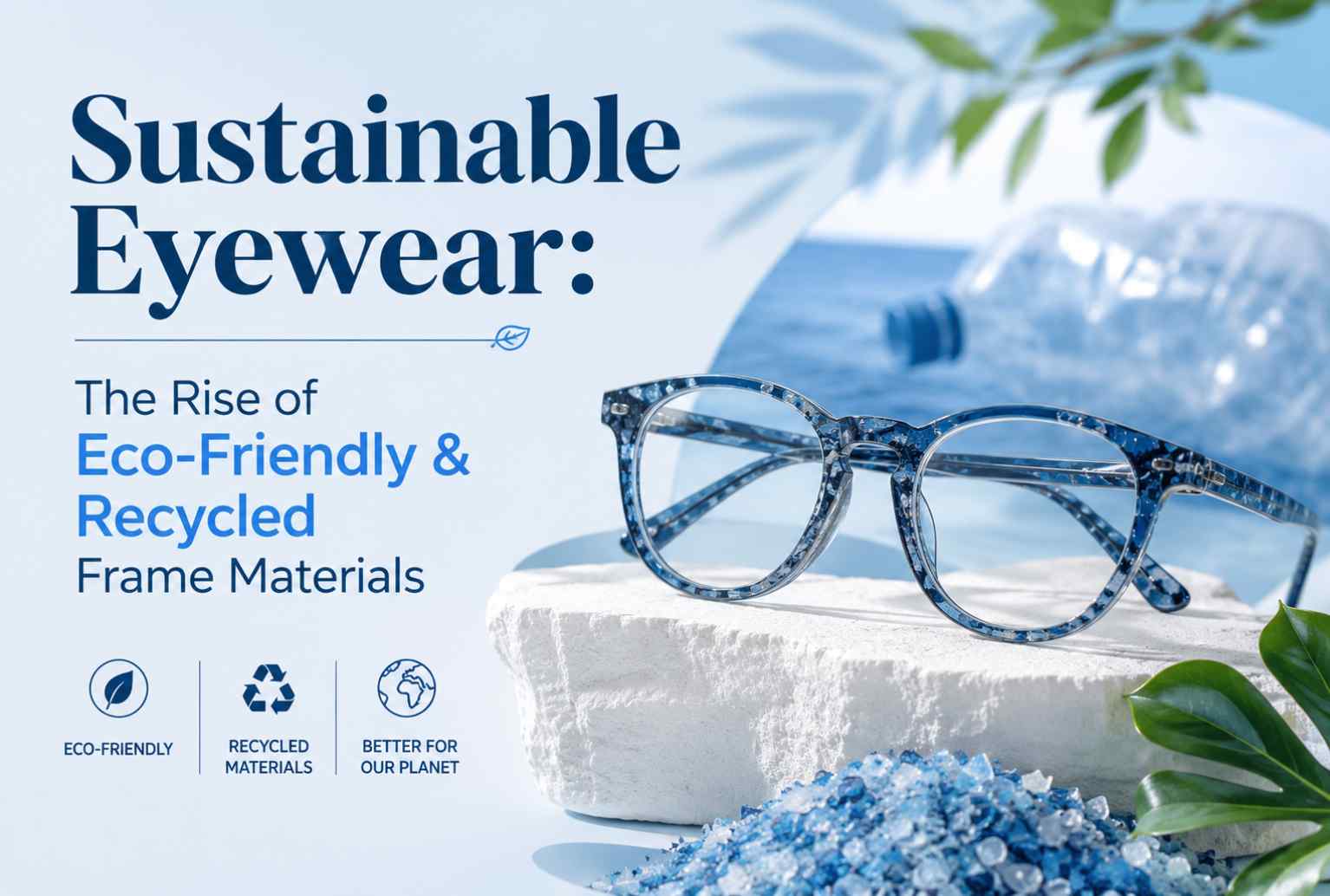
Sustainable Eyewear: Recycled & Eco-Friendly Frame Materials
Aug 19, 2026
By Rahul Jain
0 comment(s)
Trending in Eyewear · 2026
Sustainable Eyewear: The Rise of Eco-Friendly & Recycled Frame Materials
Recycled acetate, bio-based plastics, ocean waste, reclaimed metal — your next pair of glasses might be made from something you'd never expect.
Sustainability has already reshaped how people shop for clothing, packaging, and everyday products. Eyewear is now having its own version of that shift. A growing number of frame manufacturers are moving away from virgin plastic and freshly mined metal, replacing them with recycled acetate, bio-based materials, reclaimed ocean plastic, and other lower-impact alternatives — without asking buyers to compromise on style or durability.
This guide explains what sustainable eyewear actually means, which materials are leading the shift, how to tell genuine sustainability claims from marketing, and what to actually look for if this matters to your next purchase.
Recycled Acetate Bio-Based Materials Ocean Plastic Recycled Metal Conscious Consumers
Why Eyewear Sustainability Is Suddenly a Bigger Conversation
Traditional acetate — the material behind most colorful, glossy frames — is a plastic derived largely from petrochemicals, and it doesn't biodegrade quickly. Combined with metal mining for hinges and temples, and the packaging and shipping involved in getting a pair of glasses from factory to face, eyewear has a bigger environmental footprint than most people realize for something so small.
The Hidden Footprint of a "Simple" Pair of Glasses
- Petroleum-based acetate that takes decades to break down
- Mined metal for hinges, screws, and frame cores
- Manufacturing waste from cutting frame shapes out of acetate sheets
- Single-use plastic packaging, cases, and cleaning cloths
- Global shipping across multiple manufacturing stages
None of this means glasses are a major environmental villain — but as awareness has grown across other product categories, eyewear buyers have started asking the same questions they now ask about clothing and packaging: what is this actually made from, and where does it end up?
The Materials Leading the Shift
Recycled Acetate
- Made from post-industrial acetate scrap
- Same look, feel, and durability as virgin acetate
- Reduces manufacturing waste sent to landfill
- Increasingly available in the same range of colors and patterns
Bio-Based Acetate
- Plasticizers derived from plant sources like cotton or wood pulp instead of petrochemicals
- Comparable durability and flexibility to standard acetate
- Lower reliance on fossil-fuel-derived inputs
Recycled Metal
- Titanium, stainless steel, and other alloys sourced from recycled scrap
- Reduces the environmental cost of new mining
- No difference in strength or corrosion resistance versus virgin metal
Reclaimed Ocean & Marine Plastic
- Processed from plastic waste collected from oceans and coastlines
- Turns pollution into a usable frame material
- Often paired with a strong sustainability storytelling angle by brands
Wood & Natural Composites
- Sustainably sourced wood layered with lightweight cores for durability
- Distinctive natural grain, no two frames identical
- Usually paired with metal hinges for flexibility
Reality Check: Is "Sustainable Eyewear" Always What It Sounds Like?
As with any trending category, sustainability claims in eyewear vary widely in how substantiated they actually are. It's worth separating genuine material and process changes from marketing language layered onto an otherwise ordinary product.
Genuine Sustainability Signals
- Specific material composition disclosed (e.g., "% recycled content")
- Third-party certifications where applicable
- Transparency about manufacturing location and process
- Take-back or recycling programs for old frames
- Reduced or plastic-free packaging
Vague Marketing Language
- "Eco-friendly" with no material specifics given
- "Sustainable" used as a general brand adjective
- No mention of what percentage is actually recycled or bio-based
- Green-toned packaging with no substantive claims behind it
- Sustainability mentioned only in marketing copy, not on product specs
This isn't to say every "eco-friendly" claim is misleading — many brands are doing real work here. The point is simply to look for specifics rather than taking a general label at face value.
What's Actually Driving Demand
1
Sustainability Has Become a Purchase Factor, Not Just a Value
Buyers, especially younger ones, increasingly research materials and sourcing before committing to a purchase — a shift that started in fashion and food and has steadily moved into accessories and eyewear.
2
No Performance Trade-Off Anymore
Early sustainable materials sometimes felt like a compromise on durability or style. Recycled and bio-based acetates today perform comparably to standard materials, removing the biggest historical objection to choosing them.
3
Storytelling Sells
A frame made from reclaimed ocean plastic or sustainably sourced wood carries a story that a standard acetate frame doesn't — and that narrative has genuine appeal independent of the environmental benefit itself.
4
Broader Category Momentum
As recycled and bio-based materials become mainstream across fashion, furniture, and packaging, eyewear buyers increasingly expect the same options to exist in the frames they choose.
How to Actually Choose Sustainable Eyewear
1
Ask what percentage is actually recycled or bio-based — a frame that's "10% recycled" and one that's "90% recycled" get marketed with the same vague language, but the difference matters.
2
Check the full product, not just the frame front — hinges, screws, cases, and lens packaging all factor into the overall footprint, not just the acetate or metal used in the visible frame.
3
Prioritize durability alongside materials — the most sustainable pair of glasses is often simply the one that lasts the longest, regardless of what it's made from, since it delays the need for a replacement.
4
Ask about repair and recycling options — some brands offer take-back programs or repair services that extend a frame's life well beyond a standard warranty.
A practical note: Choosing well-made, durable eyewear you'll actually wear for years is itself one of the most sustainable choices available — regardless of the specific material — since the biggest environmental cost of any product is often replacing it too soon.
Frequently Asked Questions
What is sustainable eyewear made from?
Common materials include recycled acetate, bio-based acetate made from plant sources, recycled metal alloys, reclaimed ocean plastic, and sustainably sourced wood composites.
Is recycled acetate as durable as regular acetate?
Yes — quality recycled acetate performs comparably to standard acetate in durability, flexibility, and appearance.
How can I tell if a brand's sustainability claims are genuine?
Look for specific material percentages, transparency about sourcing and manufacturing, and any third-party certifications, rather than general terms like "eco-friendly" used without detail.
Are sustainable frames more expensive?
Pricing varies by brand and material, similar to conventional frames — some sustainable options are priced comparably to standard acetate, while premium or niche materials can cost more.
Does choosing a sustainable frame mean fewer style options?
Not anymore. Recycled and bio-based acetates are now available in a comparable range of colors, patterns, and finishes to conventional materials.
What's the most sustainable thing I can do when buying glasses?
Choose a well-made, durable frame you'll wear for years, regardless of material — extending a product's lifespan is one of the most effective ways to reduce its overall environmental impact.
Eyewear Built to Last
At Nations Optics, we focus on durable materials and craftsmanship that keep your glasses out of the landfill longer — with sustainable material options as they become available.
- Durable acetate, TR90 & metal frame options
- Guidance on frame quality and longevity
- Repair support to extend the life of your glasses
- Transparent material information on request
- Styles that don't compromise on look or comfort
Sustainable eyewear isn't a single material or a single brand promise — it's a growing set of alternatives to the petroleum-based plastic and freshly mined metal that have quietly defined most glasses for decades. Recycled acetate, bio-based plastics, reclaimed ocean waste, and recycled metal are all proving that lower-impact materials don't have to mean a compromise on how a frame looks or performs.
Whether sustainability is the deciding factor in your next pair of glasses or simply one consideration among several, the most useful approach is the same one that applies to any purchase claim: look past the label, ask what a frame is actually made from, and choose something built to last.
Exclusive Offers
Sitewide
33%
OFF
Flat 33% off on all products
Already applied on every price · no coupon needed
Auto-applied
10%
OFF
On orders ₹1,200 – ₹1,799
No coupon needed · saves automatically
Auto-applied
15%
OFF
On orders ₹1,800 – ₹3,199
No coupon needed · saves automatically
Best Deal 🔥
20%
OFF
On orders above ₹3,200
No coupon needed · saves automatically
Pay Advance
₹50
SAVED
Pay advance amount at checkout
Flat ₹50 off · pay balance on delivery
Pay Full ✓
₹100
SAVED
Pay full amount at checkout
Maximum saving · instant confirmation
N
Nations Optics Assistant
● Online
👋 Hi! I'm your Nations Optics assistant. Ask me anything about lenses, frames, or prescriptions!