
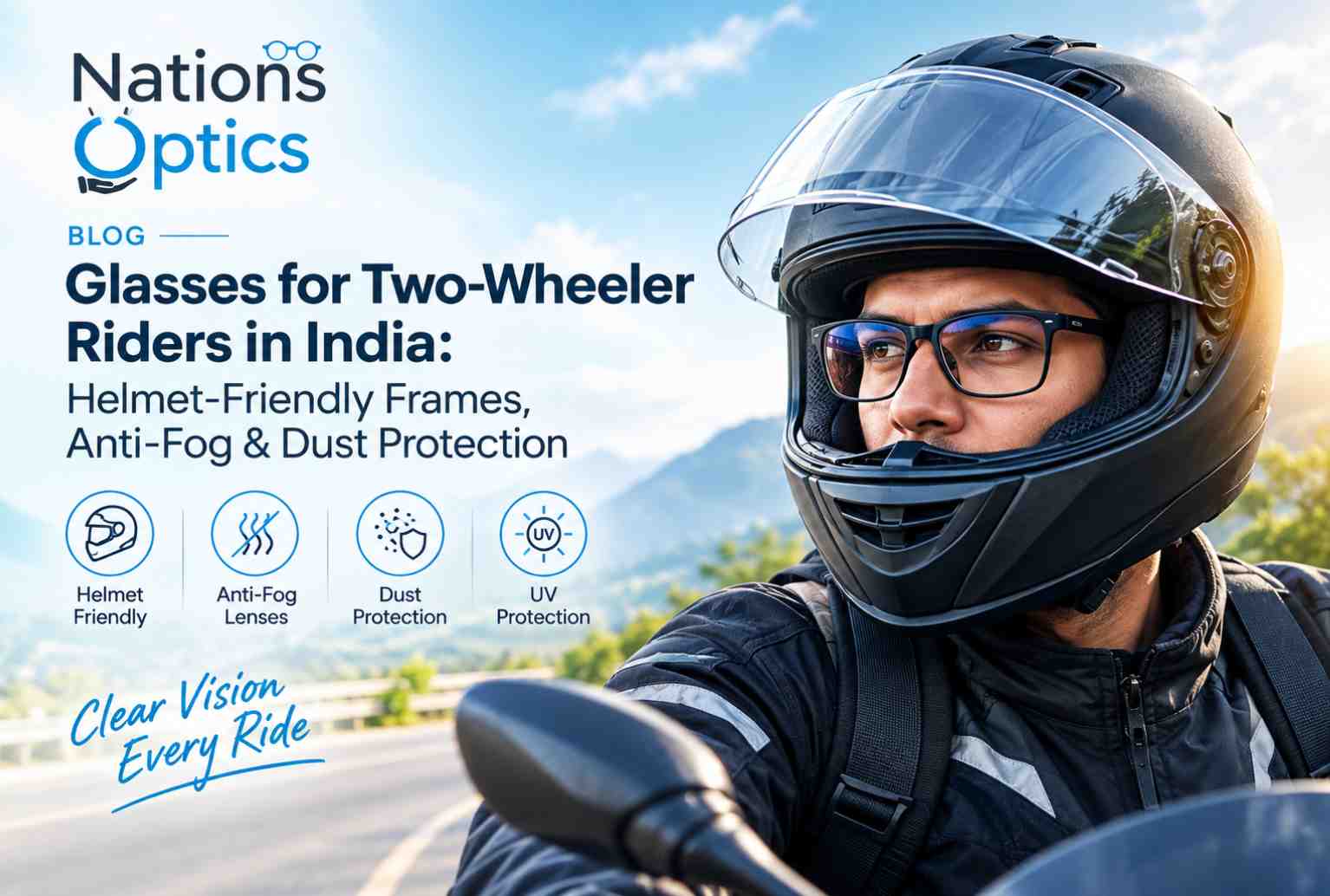
Glasses for Two-Wheeler Riders in India: Helmet-Friendly Frames, Anti-Fog & Dust Protection
Riding a two-wheeler in India means dealing with much more than traffic. Dust, wind, pollution, sunlight, rain, humidity and changing temperatures can all affect your eyes and your vision. For people who wear prescription glasses, there is another challenge: finding glasses that remain comfortable and secure under a motorcycle helmet.
So, what are the best glasses for bike riders in India? The right pair should be lightweight, comfortable, properly fitted and compatible with your helmet. Depending on your riding conditions, lens features such as UV protection, anti-reflective treatment and suitable lens materials can also improve the overall riding experience.
In this guide, we explain how to choose helmet-friendly glasses, prevent fogging, protect your eyes from dust and wind, and select the right frames and lenses for everyday two-wheeler riding.
Why Choosing the Right Glasses Matters for Bike Riders
When you ride a motorcycle or scooter, your glasses are exposed to constant movement, wind pressure and vibration. A frame that feels comfortable indoors may become uncomfortable after an hour on the road.
Poorly fitted spectacles can:
- Slide down your nose while riding
- Press against your ears under a helmet
- Create uncomfortable pressure points
- Move when you turn your head
- Become foggy in cold or humid conditions
- Allow wind and dust to reach your eyes
- Make helmet removal and wearing more difficult
- Affect clear vision when riding
This is why glasses for bike riders should be selected differently from frames based only on appearance. For regular riders, comfort, fit and lens performance should come before fashion alone.
What Are the Best Glasses for Bike Riders?
The best glasses for bike riders are generally lightweight, properly fitted frames that sit securely on the face without creating excessive pressure under the helmet.
Look for:
- A comfortable frame fit
- Slim and practical temples
- A secure nose fit
- Lightweight construction
- Correct frame width
- Lenses appropriate for your prescription
- Good optical clarity
- UV protection when appropriate
- Anti-reflective treatment for reduced glare
- A frame that works comfortably with your helmet
There is no single frame shape that is perfect for every rider. Your face shape, prescription, helmet design and riding habits all influence which frame will work best.
Helmet-Friendly Glasses: What Should You Look For?
One of the biggest concerns among riders is whether spectacles will fit comfortably underneath a helmet. Helmet-friendly glasses should sit naturally on your face without being squeezed aggressively between your head and helmet padding.
1. Choose a Properly Fitted Frame
A frame that is too wide may press against the sides of your helmet. A frame that is too narrow can create pressure around your temples. The frame should sit securely without constantly moving.
2. Consider Slimmer Temples
The arms of your spectacles pass between your head and helmet padding. Thick or bulky temples can become uncomfortable during longer rides. For many riders, a relatively slim and lightweight temple design can provide better comfort.
3. Avoid an Oversized Fit
Large fashion frames may look stylish but can be difficult to accommodate under certain helmet designs. When choosing spectacles that fit under a helmet, prioritize the correct frame width rather than simply choosing the largest lens area.
4. Check the Nose Fit
Your glasses should remain stable without requiring constant adjustment. A good nose fit can help prevent the spectacles from sliding when you ride over uneven roads.
5. Test Your Helmet With Your Glasses
Helmet designs differ considerably. If possible, wear your glasses while putting on your helmet and check:
- Temple pressure
- Nose pressure
- Frame movement
- Comfort around the ears
- Visibility
- Ease of putting on and removing the helmet
The best glasses that fit under a motorcycle helmet are the ones that work comfortably with your specific helmet and facial fit.
Can You Wear Prescription Glasses Under a Motorcycle Helmet?
Yes. Many riders wear prescription glasses under a motorcycle helmet every day. The important factors are proper frame size, comfortable temples and a secure fit.
If you need prescription lenses, don't sacrifice optical accuracy just to find a frame that looks sporty. Your prescription glasses should provide clear vision while remaining comfortable under your helmet.
For people who depend on their spectacles throughout the day, properly fitted power glasses for bike riders can be a practical solution for commuting and longer rides.
Anti-Fog Glasses for Bike Riders: Why Do Glasses Fog?
Fogging is one of the most frustrating problems for riders. When warm, humid air meets a cooler lens surface, tiny water droplets can form on the lenses. This can happen when:
- Riding during winter
- Riding in rain
- Wearing a full-face helmet
- Stopping at traffic signals
- Breathing inside a closed helmet
- Moving between different temperatures
Fogging can temporarily reduce visual clarity, which is especially inconvenient while riding.
Are Anti-Fog Glasses Worth It?
Anti-fog glasses for bike riders can be useful when fogging is a recurring problem. However, anti-fog performance depends on the lens treatment and environmental conditions.
If your lenses are not specifically treated for anti-fog performance, don't assume that any ordinary prescription glasses are automatically fog-resistant.
How to Stop Spectacles From Fogging While Riding
You can reduce fogging by:
- Improving helmet ventilation
- Keeping helmet vents unobstructed
- Using an appropriate anti-fog lens treatment
- Keeping lenses clean
- Avoiding touching lenses with oily fingers
- Allowing airflow when conditions permit
- Choosing a helmet with effective ventilation
If you frequently experience fogging, ask your optician about anti-fog prescription glasses or suitable anti-fog lens solutions.
Dust Protection Glasses for Bike Riders
Dust is another major concern on Indian roads. Construction areas, unpaved roads, traffic, dry weather and roadside debris can expose riders to dust and particles.
Dust protection glasses for bike riders can help reduce direct exposure, although ordinary spectacles should not be treated as a substitute for certified protective eyewear in hazardous environments.
How Do Glasses Help Against Road Dust?
A properly fitted pair of spectacles can provide some physical coverage around the eyes and reduce direct exposure to moving air and particles. However, the level of protection depends on frame design. Frames with a reasonably close fit around the face can be more useful for everyday riding than extremely open designs.
If you regularly ride through dusty roads, consider:
- A secure frame fit
- Adequate lens coverage
- Comfortable nose support
- Lightweight construction
- Durable lens material
- Easy-to-clean lenses
Glasses for Bike Riding in Pollution
Indian cities can experience significant traffic-related air pollution. While spectacles cannot filter polluted air like a respirator, they can provide some physical coverage around the eyes.
Glasses for bike riding in pollution should therefore be considered primarily for vision and basic eye coverage, not as a complete solution to air pollution exposure. If your eyes are frequently irritated while riding, consider reducing exposure where possible and using appropriate protective equipment for the conditions.
Wind Protection for Motorcycle Riders
At higher speeds, airflow can cause watery eyes, dryness, irritation, temporary discomfort and increased sensitivity.
Wind protection glasses for bikers can help reduce direct airflow to the eyes depending on the frame design. However, your helmet remains an important part of overall protection. Glasses and helmets should work together rather than being considered separate solutions.
Which Frame Shape Is Best for Bike Riders?
There is no universally “best” frame shape for riding. The ideal frame depends on your face, prescription and helmet.
| Frame type | What it offers riders | Keep in mind |
|---|---|---|
| Full-rim | A practical combination of lens support and everyday durability. Often a good choice for an everyday prescription frame. | Check that the rim width suits your helmet. |
| Half-rim | A lighter visual appearance; comfortable for some users. | The specific construction and lens choice matter more than the frame category alone. |
| Rimless | Lightweight and minimalist. | Durability and how securely it fits under the helmet are the main considerations. Discuss suitable lens material with your optician. |
Lightweight Glasses for Bikers: Why Weight Matters
A frame may feel comfortable for ten minutes but uncomfortable after a two-hour ride. That's why lightweight glasses for bikers can be particularly useful for regular commuters. Less weight can make spectacles feel less noticeable on the nose and ears, especially when combined with a properly fitted helmet.
But remember: the lightest frame is not automatically the best frame. Fit, weight, stability and prescription accuracy together matter more than weight alone.
What Lens Material Is Best for Bike Riders?
The appropriate lens material depends on your prescription, frame and lifestyle. Two commonly used materials include:
CR-39
CR-39 is a popular optical lens material known for good optical clarity and relatively light weight. It can be suitable for many everyday prescription eyewear applications.
Polycarbonate
Polycarbonate lenses are known for their impact resistance and lighter weight compared with traditional glass lenses. They can be an attractive option for people with active lifestyles, including riders.
At Nations Optics, lens selection should be based on your prescription, frame construction and intended use rather than choosing a material solely because it is marketed as a “riding lens.”
Should Bike Riders Use Anti-Reflective Lenses?
Anti-reflective treatment can help reduce reflections from lens surfaces and may make lenses appear clearer. For riders, this can be particularly relevant when dealing with bright surroundings, headlights and artificial lighting.
However, anti-reflective coating is not the same as anti-fog treatment. These are different lens features.
Anti-reflective
Reduces reflections from the lens surface. Helps with glare from headlights, street lights and bright surroundings.
Anti-fog
Helps reduce condensation-related fogging when warm, humid air meets a cooler lens. Useful in winter, rain and closed helmets.
What About Blue-Light Glasses for Bike Riders?
Blue-light filtering is primarily discussed in relation to digital screens and artificial light exposure. If you spend significant time using a phone or computer, you may consider blue-light lens options based on your personal needs.
But blue-light filtering should not be treated as a replacement for appropriate riding eyewear or UV protection. For outdoor riding, prioritize clear vision, correct prescription, UV protection where appropriate, fit and comfort.
Best Glasses for Night Bike Riding
Night riding requires particular attention to visual clarity. Avoid choosing dark or tinted lenses simply because they look sporty if you need maximum visibility after sunset. For night bike riding, clear prescription lenses are generally the practical choice.
Also keep your lenses clean. Scratches, dirt and smudges can become much more noticeable when headlights and street lights reflect across the lens.
Tips for Better Vision While Riding at Night
- Keep lenses clean
- Use the correct prescription
- Consider anti-reflective treatment
- Replace heavily scratched lenses
- Make sure your glasses fit securely
- Keep your helmet visor clean
- Avoid unnecessarily dark lenses at night
Glasses for Bike Riders in Summer, Winter and Monsoon
Different seasons create different riding challenges.
Summer
Hot weather can increase sweating and discomfort. Choose lightweight, stable frames and keep your lenses clean.
Monsoon
Rain and humidity can increase fogging and reduce visibility. Good helmet ventilation and suitable lens care become especially important.
Winter
Cold air combined with warm breath inside a helmet makes fogging more likely. This is when anti-fog solutions become particularly useful.
How to Choose Glasses for Daily Motorcycle Commuters
If you ride every day, use this simple checklist before buying:
- Check the frame width The frame should match your face instead of being excessively wide or narrow.
- Check the temple design Make sure the temples don't create excessive pressure under your helmet.
- Check the nose fit The glasses should stay in position without constant adjustment.
- Consider lens material Discuss CR-39, polycarbonate or other suitable options according to your prescription and frame.
- Think about your riding environment City traffic, dusty roads, highways and night riding may require different considerations.
- Consider lens treatments Anti-reflective and anti-fog options serve different purposes.
- Prioritize prescription accuracy Comfort is important, but clear and accurate vision comes first.
Common Mistakes Riders Make When Choosing Spectacles
Choosing a Frame Only for Its Appearance
A stylish frame isn't necessarily a good riding frame.
Buying an Oversized Frame
Oversized frames can interfere with helmet padding.
Ignoring Temple Thickness
Thick temples can create pressure points.
Wearing Dirty Lenses
Dust and fingerprints can reduce visual clarity.
Assuming Every Lens Is Anti-Fog
Anti-fog performance usually requires a specific treatment or product designed for that purpose.
Using Dark Lenses at Night
Tinted lenses can reduce the amount of light reaching your eyes and aren't generally appropriate simply because you are riding at night.
How to Keep Your Riding Glasses Clean
Regular cleaning is particularly important for riders because road dust and oil can quickly accumulate on lenses. Follow these basic steps:
- Rinse away loose dust when appropriate.
- Use a suitable lens-cleaning solution.
- Clean with a clean microfiber cloth.
- Avoid wiping dry, dusty lenses aggressively.
- Store glasses in a protective case.
- Avoid placing lenses directly on hard surfaces.
- Have scratched or damaged lenses assessed for replacement.
Proper care can help maintain optical clarity and extend the useful life of your eyewear.
Are Helmet-Friendly Glasses Only for Motorcyclists?
Not at all. The same principles can apply to scooter riders, motorcycle commuters, electric scooter users, bicycle riders, delivery riders, daily urban commuters and long-distance touring riders.
Anyone who wears spectacles while using a two-wheeler can benefit from a properly fitted, comfortable frame.
Where to Buy Glasses for Bike Riders Online?
When shopping for glasses for bike riders online, don't choose a frame based solely on its photograph. Pay attention to:
- Frame measurements
- Frame type
- Lens compatibility
- Prescription requirements
- Lens material
- Available lens treatments
- Return/exchange policies
- Warranty information
- Fit guidance
Nations Optics makes it easier to explore eyewear online while giving customers access to different frame styles and prescription lens options. You can also use the Nations Optics Face Try / AI face-size tool to help understand frame proportions before choosing your eyewear.
Why Choose Nations Optics for Your Everyday Eyewear?
At Nations Optics, eyewear is designed around practical everyday vision needs as well as personal style. You can explore prescription-compatible eyeglasses, different frame designs and lens options online.
- Frames starting from ₹499
- Lenses starting from ₹250
- 6-month warranty on your eyewear
Whether you're looking for helmet-friendly glasses, lightweight spectacles for bikers, prescription glasses for daily commuting or comfortable eyewear for two-wheeler riding, choose a frame that fits your face and works with your helmet.
Browse eyeglassesFinal Thoughts: Finding the Best Glasses for Bike Riders
The best glasses for bike riders in India aren't necessarily the most expensive or most heavily marketed. They are the glasses that give you the right combination of comfortable fit, secure positioning, helmet compatibility, appropriate lens material, clear prescription vision, suitable lens treatments, lightweight construction and easy maintenance.
For regular riders, small details such as temple thickness, frame width and nose fit can make a significant difference during long journeys.
If fogging is a recurring issue, investigate suitable anti-fog solutions. If dust and wind are concerns, look for a well-fitted frame that provides reasonable eye coverage. And if you ride at night, prioritize clear vision and avoid unnecessarily dark lenses.
Ultimately, the right eyewear should make riding more comfortable, not become another distraction. Choose your frame based on your face, prescription, helmet and riding conditions, and you'll be much more likely to find spectacles that work comfortably every day.
Frequently Asked Questions
What are the best glasses for bike riders?
The best glasses for bike riders are lightweight, properly fitted spectacles that remain secure and comfortable under your helmet. Slim temples, appropriate frame width and a good nose fit are particularly important.
Can I wear glasses under a motorcycle helmet?
Yes. Many people wear prescription glasses under motorcycle helmets. The key is choosing a frame that fits comfortably with the helmet without creating excessive pressure around the temples or ears.
Which glasses are best for wearing under a helmet?
Frames with a suitable width, comfortable nose fit and relatively slim temples are often easier to wear under helmets. Your individual helmet and facial shape should also be considered.
How do I stop my glasses from fogging under my helmet?
Improve helmet ventilation, keep vents clear and consider an appropriate anti-fog lens treatment or solution. Fogging can be more common in cold, humid conditions.
Are anti-fog glasses good for bike riders?
They can be useful for riders who regularly experience lens fogging. However, anti-fog performance depends on the specific lens treatment and environmental conditions.
How can I protect my eyes from dust while riding?
Properly fitted spectacles can provide some coverage against wind and airborne dust. For hazardous environments, use appropriate certified protective eyewear rather than relying on ordinary prescription glasses alone.
Are lightweight glasses better for bikers?
Lightweight glasses can improve comfort during long rides, but weight is only one factor. Proper fit, stability, lens material and helmet compatibility are equally important.
Can I wear prescription glasses while riding a bike?
Yes. Prescription glasses can be worn while riding provided they provide clear vision and fit comfortably with your helmet.
What type of glasses are best for night riding?
Clear prescription lenses are generally preferable for night riding. Keeping the lenses clean and considering an anti-reflective treatment can also help with visual comfort.
Are sunglasses suitable for riding a motorcycle?
Sunglasses can be useful during bright daytime conditions, provided they offer suitable UV protection and do not unnecessarily reduce visibility. Avoid dark lenses when riding at night.
What should I look for when buying glasses for bike riding online?
Check frame measurements, lens compatibility, prescription requirements, lens material, available treatments, warranty and return policies. Also consider whether the frame will fit comfortably underneath your helmet.