Clear Lens Glasses Without a Prescription: The 2026 Trend
Aug 21, 2026
By Rahul Jain
0 comment(s)
Trending in Eyewear · 2026
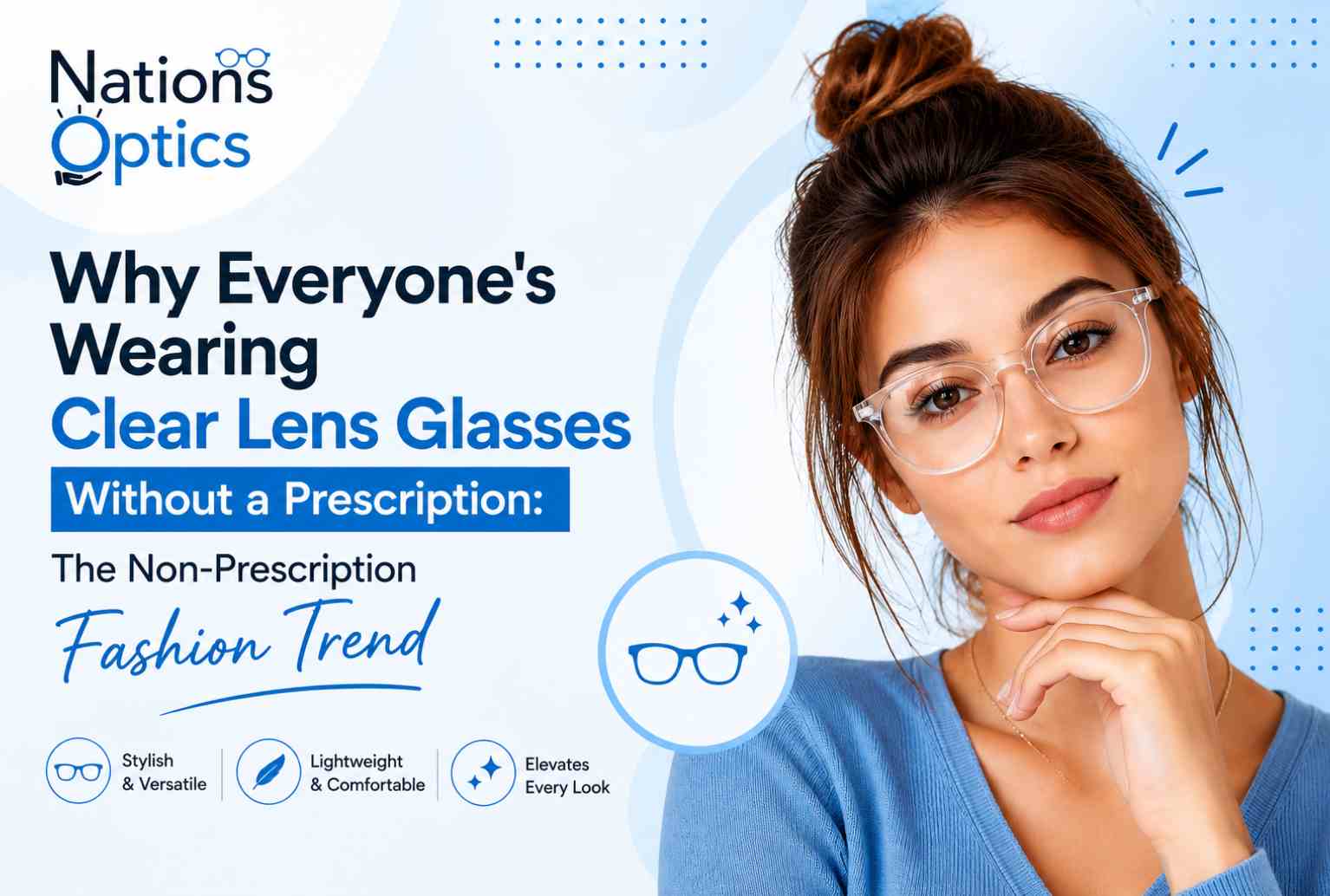
Why Everyone's Wearing Clear Lens Glasses Without a Prescription: The Non-Prescription Fashion Trend
Perfect vision, glasses on anyway. Here's why plain clear-lens frames have become one of the biggest accessory trends going.
Scroll through any fashion or lifestyle feed right now and you'll spot it constantly: people with clearly good eyesight wearing glasses anyway. Not sunglasses, not blue-light frames — plain, clear, non-prescription lenses in bold or minimalist frames, worn purely as an accessory. What used to signal "I need vision correction" now just as often signals "I have taste."
This guide breaks down where this trend actually came from, why it's spread so fast, which frame styles are leading it, and how to wear clear-lens glasses without it looking like a costume choice.
Non-Prescription Frames Fashion Eyewear Office-Core K-Beauty Influence Streetwear Styling
What Are Clear Lens (Non-Prescription) Glasses?
Clear lens glasses are exactly what they sound like — real frames with real, uncoated or lightly coated clear lenses that carry zero corrective power. They're not sunglasses, they're not tinted, and unlike zero-power blue light glasses, they're not necessarily marketed around any screen-comfort benefit either. The entire point is the frame itself: the shape, the color, the way it changes a face.
The person wearing them sees exactly as well with the glasses on as off. The lens is functionally decorative — there purely to complete the look of a real pair of glasses rather than being an empty frame or a costume prop.
Where This Trend Actually Came From
Clear-lens glasses as a styling choice didn't appear from nowhere — a few overlapping cultural threads fed into it:
K-pop & K-drama stylingY2K and 2000s office fashion revival"Nerdy chic" aesthetic on social mediaStreetwear brand collaborationsMinimalist and "quiet luxury" fashionCelebrity red carpet styling
Korean pop culture in particular has leaned heavily on clear, often oversized or geometric frames as part of a polished, intelligent-looking aesthetic for years — and as that influence spread globally through music, drama, and social media, the styling choice spread with it, eventually landing well outside its original cultural context as a broadly recognized fashion move.
Why This Trend Has Spread So Fast
1
Glasses Signal Something Without Saying Anything
A pair of well-chosen frames reads as intentional, put-together, and a little intellectual — a quiet visual cue that doesn't require any other styling effort. That's a lot of impact from one accessory.
2
Face-Framing Is a Real Styling Tool
Just like a good haircut or the right earrings, glasses change the proportions and focal points of a face on camera and in person — something short-form video content has made people much more conscious of.
3
Low Commitment, High Impact
Unlike a haircut or a tattoo, a pair of glasses can be put on or taken off entirely at will — a low-risk way to experiment with a new visual identity or "character" for a given outfit or occasion.
4
Eyewear Brands Leaned Into It
As demand grew, more eyewear brands began explicitly marketing clear-lens, zero-power frames as standalone fashion products rather than only offering them as an afterthought add-on to prescription orders — which made the trend easier to shop for directly.
The Aesthetics Driving the Trend
Office-Core
Structured rectangular or browline frames paired with tailored, muted-tone outfits — a polished, "put together at work" look.
Nerdy Chic / Academia
Round or geometric frames layered with knitwear, books, and a deliberately studious, intellectual aesthetic.
K-Beauty Minimalism
Clean, often oversized or thin-metal frames as part of a soft, polished, dewy-skin overall look.
Streetwear & Y2K Revival
Bold, oversized, or brightly colored frames as a statement piece within an otherwise casual, throwback outfit.
Which Frame Shapes Are Leading This Trend?
Rectangular & Browline
The go-to for the office-core and "smart" aesthetic — structured, clean, and easy to wear daily.
Round & Oval
Softer, more academic and vintage-leaning, popular within the nerdy-chic and retro revival aesthetics.
Oversized
A bigger statement, often paired with minimal outfits so the frame does the visual work on its own.
Geometric & Cat-Eye
More fashion-forward, distinctive shapes for people who want their eyewear choice to feel deliberate and unique.
How to Wear Clear Lens Glasses Without It Looking Like a Costume
- Choose a frame proportionate to your face rather than the largest, boldest option available
- Treat them like a real accessory — commit to wearing them the way you'd commit to a piece of jewelry, not as a prop for a single photo
- Match the frame's tone to your outfit's formality — structured frames for polished looks, softer shapes for casual ones
- Keep other accessories relatively simple so the glasses don't compete for attention
- Consider a lightly anti-reflective clear lens so the glasses don't look flat or overly glossy under photography or video lighting
A quick note on authenticity: there's no rule that says only people who need vision correction "get" to wear glasses. Eyewear has always sat somewhere between medical device and accessory — this trend just makes the accessory side of that history more visible than usual.
What to Look For When Buying Clear Lens Fashion Glasses
1
Confirm the lens is genuinely zero-power — some frames sold as "fashion glasses" may include mild magnification or distortion in cheaper lenses, which can cause eye strain over time even without a prescription.
2
Check lens quality, not just the frame — a well-made clear lens should be optically flat and distortion-free, since you'll be looking through it (and other people will be looking at it) for hours at a time.
3
Prioritize comfort as much as style — since there's no vision necessity driving the purchase, an uncomfortable frame has no upside to offset it.
4
Pick a shape that suits your face, not just what's trending — the same face-shape guidance that applies to prescription glasses applies here too.
Frequently Asked Questions
Is it okay to wear glasses if I don't need them?
Yes — there's no health or vision requirement to wear glasses. Clear, zero-power lenses don't correct or alter your vision, so wearing them purely for style has no functional downside as long as the lenses are genuinely optically flat.
Where did the trend of wearing glasses without a prescription come from?
It draws from several overlapping influences, including K-pop and K-drama styling, Y2K office fashion revival, "nerdy chic" social media aesthetics, and streetwear brand collaborations.
Are clear lens glasses the same as zero-power blue light glasses?
They're related but not identical — clear lens fashion glasses focus purely on style with no functional lens treatment, while zero-power blue light glasses add a light-filtering coating aimed at screen comfort.
Can wearing non-prescription glasses hurt my eyes?
Wearing a genuinely zero-power, optically flat lens doesn't harm your eyes. Poor-quality lenses with slight distortion could cause eye strain over long wear, which is why lens quality matters even without a prescription.
What frame shapes are trending for clear lens glasses right now?
Rectangular and browline frames for a polished "office-core" look, round and oval for a softer academic aesthetic, oversized for a statement look, and geometric or cat-eye shapes for something more distinctive.
How do I make sure clear lens glasses don't look like a costume?
Choose a proportionate frame for your face, treat them as a genuine accessory rather than a prop, match the frame's tone to your outfit, and keep other accessories simple so the glasses don't compete for attention.
Frames First, Prescription Optional
At Nations Optics, our frame styles work whether you need vision correction or you're simply here for the look.
- Clear, zero-power lens options
- Rectangular, round, oversized & geometric styles
- Genuinely optically flat, distortion-free lenses
- Prescription-ready if you need correction later
- Guidance based on your face shape
Clear lens glasses without a prescription aren't a gimmick or a fad that skipped straight past logic — they're the latest chapter in eyewear's long history of being just as much about identity and style as it is about vision correction. The frame has always done a lot of visual work on a face; this trend simply makes that fact explicit by removing the prescription from the equation entirely.
Whether you wear them for the K-drama-inspired polish, the nerdy-chic academic vibe, or simply because a particular pair looks great on you, the same rule applies as with any accessory: fit and proportion matter more than the trend itself. Find the shape that actually suits your face, and the rest tends to follow.
Exclusive Offers
Sitewide
33%
OFF
Flat 33% off on all products
Already applied on every price · no coupon needed
Auto-applied
10%
OFF
On orders ₹1,200 – ₹1,799
No coupon needed · saves automatically
Auto-applied
15%
OFF
On orders ₹1,800 – ₹3,199
No coupon needed · saves automatically
Best Deal 🔥
20%
OFF
On orders above ₹3,200
No coupon needed · saves automatically
Pay Advance
₹50
SAVED
Pay advance amount at checkout
Flat ₹50 off · pay balance on delivery
Pay Full ✓
₹100
SAVED
Pay full amount at checkout
Maximum saving · instant confirmation
N
Nations Optics Assistant
● Online
👋 Hi! I'm your Nations Optics assistant. Ask me anything about lenses, frames, or prescriptions!