
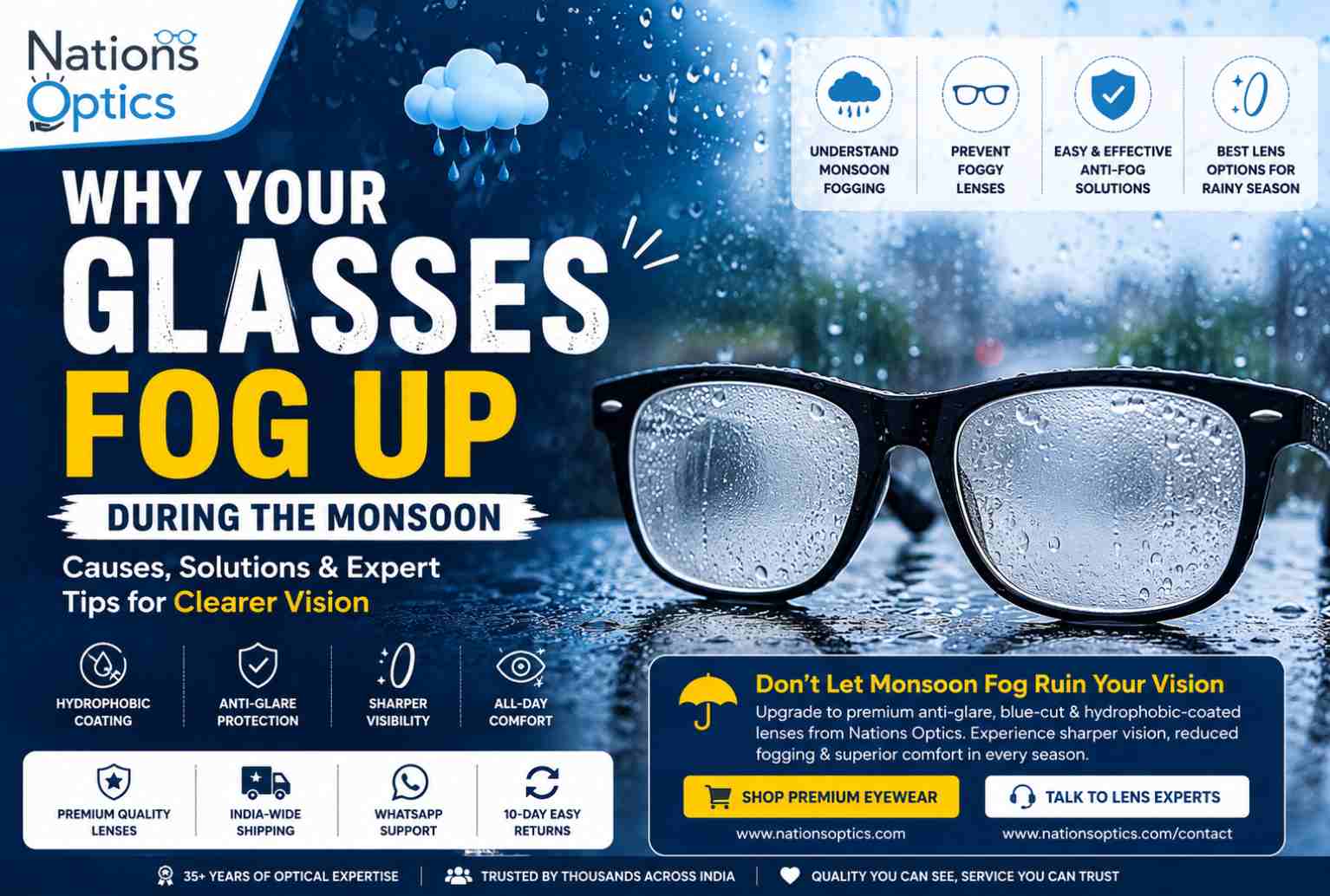
Why Your Glasses Fog Up During the Monsoon | Nations Optics
Jun 25, 2026
By Rahul Jain
0 comment(s)
Why Your Glasses Fog Up During the Monsoon (And 10 Easy Ways to Prevent It)
Complete SEO-Friendly Nations Optics Blog
Introduction
Monsoon season brings welcome relief from heat, but it also creates a common problem for eyeglass wearers: foggy lenses. High humidity, sudden temperature changes, rain, steam, and air-conditioned environments all contribute to condensation on glasses. This blog explains why fogging occurs and provides practical solutions to maintain clear vision.
Whether you wear prescription glasses, blue-cut lenses, progressive lenses, or sunglasses, fogging can reduce comfort, productivity, and safety. Understanding the science behind fog formation helps you choose better eyewear and lens coatings.
Why Glasses Fog Up
Fogging occurs when warm humid air comes into contact with a cooler lens surface. Tiny water droplets form and scatter light, creating the cloudy appearance. During monsoon months, humidity levels remain high, making condensation more frequent.
Common situations include entering an air-conditioned office after being outdoors, drinking hot beverages, cooking, traveling in cars, or walking in heavy rain.
10 Easy Ways to Prevent Fogging
- Keep lenses clean: Dirt and oils attract moisture.
- Wash with mild soap: A thin residue can reduce fog buildup.
- Use anti-fog sprays: Designed specifically for eyewear.
- Choose premium coatings: Advanced coatings improve lens performance.
- Carry a microfiber cloth: Quickly remove moisture.
- Avoid sudden temperature changes: Let glasses adjust gradually.
- Use hydrophobic coatings: Repel water droplets.
- Improve airflow: Properly fitted frames help.
- Store glasses correctly: Avoid extremely cold environments.
- Upgrade your lenses: Premium lenses often perform better in humid conditions.
Best Lens Options for Monsoon Weather
| Lens Type | Benefit |
|---|---|
| Anti-Glare Lenses | Reduce reflections and improve clarity |
| Blue Cut Lenses | Comfortable for digital users |
| Hydrophobic Coatings | Repel water effectively |
| Polycarbonate Lenses | Lightweight and durable |
| High Index Lenses | Thin and comfortable for strong prescriptions |
Common Mistakes
Many people wipe lenses with clothing, use harsh cleaners, or ignore damaged coatings. These habits can worsen lens performance. Always use lens-safe cleaning products and quality microfiber cloths.
Replacing worn coatings and maintaining your glasses regularly can improve visibility throughout the rainy season.
FAQ
Why do glasses fog more during monsoon?
Humidity levels are higher, increasing condensation on lenses.
Do anti-fog products work?
Yes, they can significantly reduce moisture buildup.
Can anti-glare coatings stop fogging?
Anti-glare coatings improve clarity, but dedicated anti-fog treatments are more effective.
Stay Fog-Free with Nations Optics
Upgrade to premium anti-glare, blue-cut, hydrophobic, and prescription lenses designed for comfort in every season.
Visit: https://www.nationsoptics.com
Exclusive Offers
Sitewide
33%
OFF
Flat 33% off on all products
Already applied on every price · no coupon needed
Auto-applied
10%
OFF
On orders ₹1,200 – ₹1,799
No coupon needed · saves automatically
Auto-applied
15%
OFF
On orders ₹1,800 – ₹3,199
No coupon needed · saves automatically
Best Deal 🔥
20%
OFF
On orders above ₹3,200
No coupon needed · saves automatically
Pay Advance
₹50
SAVED
Pay advance amount at checkout
Flat ₹50 off · pay balance on delivery
Pay Full ✓
₹100
SAVED
Pay full amount at checkout
Maximum saving · instant confirmation
N
Nations Optics Assistant
● Online
👋 Hi! I'm your Nations Optics assistant. Ask me anything about lenses, frames, or prescriptions!