Vision correction technology has evolved significantly over the years. From basic reading glasses to advanced progressive lenses, modern eyewear now offers solutions for every age group and lifestyle. However, many people still struggle to understand the difference between single vision lenses and multivision lenses such as bifocals and progressive lenses.
If you spend long hours on digital screens, frequently switch between reading and distance viewing, or experience age-related vision changes, choosing the correct lens type becomes extremely important. The wrong lens choice can lead to discomfort, headaches, eye strain, and blurry vision. This detailed guide by Nations Optics will help you understand everything about these lenses and determine which one suits your daily routine best.
What Are Single Vision Lenses?
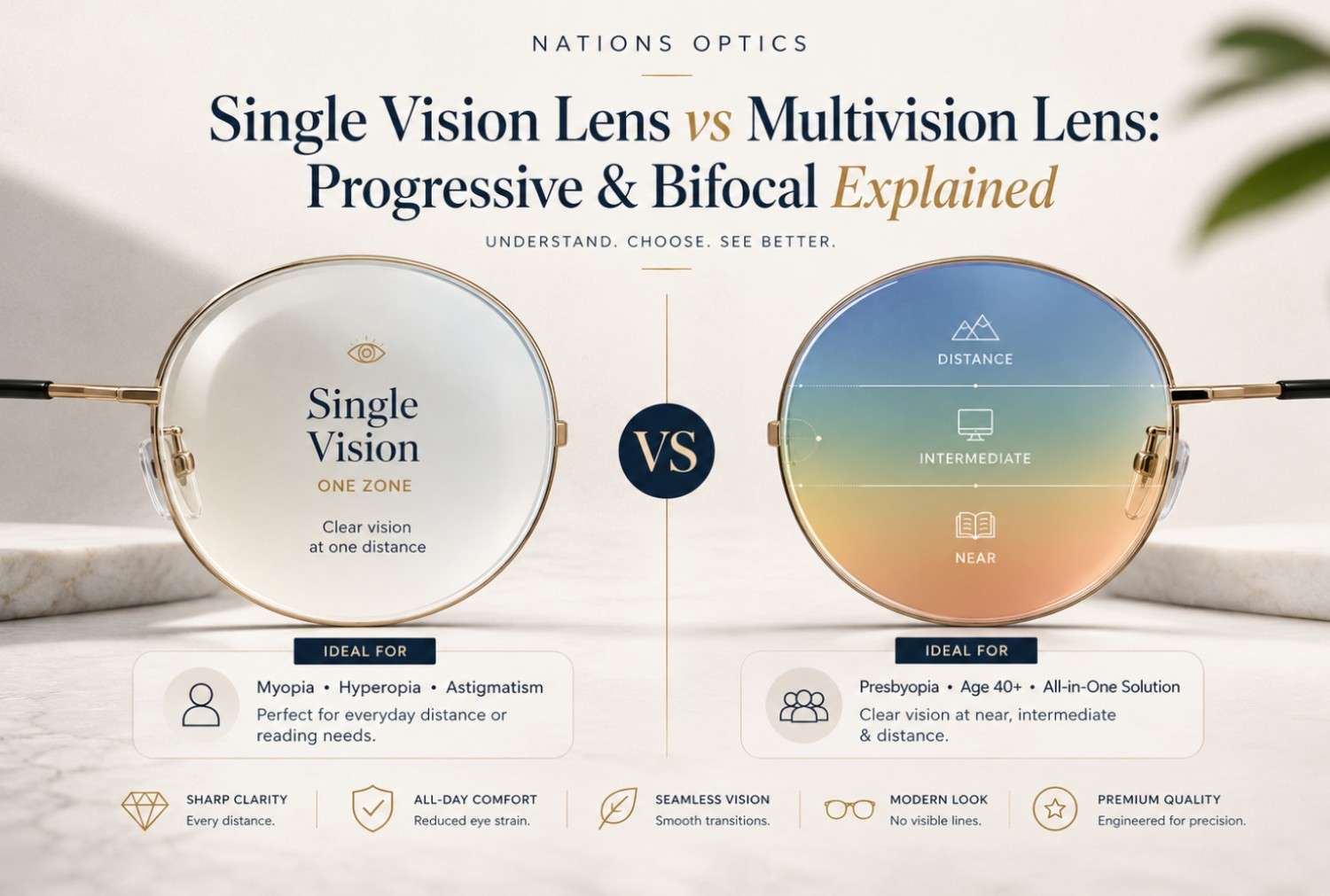
Single vision lenses are the most common type of eyeglass lenses. They are designed to correct one field of vision only. This means the entire lens contains a single prescription power throughout the surface. These lenses are generally prescribed for either distance vision, near vision, or intermediate vision.
People with nearsightedness, farsightedness, or astigmatism commonly use single vision lenses. If you only require correction for one activity, such as driving, reading, or computer work, single vision lenses are usually the ideal choice.
Benefits of Single Vision Lenses
• Clear and sharp vision at one specific distance
• Lightweight and easy to adapt to
• Budget-friendly option for everyday use
• Ideal for students, professionals, and first-time eyeglass users
• Available in premium coatings and thinner lens options
Single vision lenses are especially popular among younger users because they typically do not require multiple prescription zones. They also offer a wider field of view compared to multivision lenses, making them comfortable for prolonged wear.
What Are Multivision Lenses?
Multivision lenses are designed for people who need correction for multiple viewing distances. These lenses combine different prescription powers into a single lens so users can see clearly at near, intermediate, and far distances without switching glasses.
The two main types of multivision lenses are bifocal lenses and progressive lenses. These are commonly recommended for individuals experiencing presbyopia, an age-related condition that makes near objects difficult to focus on.
Understanding Bifocal Lenses
Bifocal lenses contain two separate prescription areas within one lens. Typically, the upper part is used for distance vision, while the lower section is designed for reading or close-up work.
The visible line separating the two powers is one of the main characteristics of bifocal lenses. This line allows quick switching between near and far vision but can sometimes feel abrupt to first-time users.
Advantages of Bifocal Lenses
• Convenient solution for both reading and distance vision
• More affordable than progressive lenses
• Easy access to reading zone
• Helpful for users transitioning from reading glasses
Although bifocal lenses are practical, they do not include intermediate vision correction. This can sometimes create difficulty when using computers or viewing objects at medium distances.
Understanding Progressive Lenses
Progressive lenses are the most advanced form of multivision lenses. Unlike bifocals, progressive lenses do not contain visible lines. Instead, they offer a smooth transition between different prescription strengths for distance, intermediate, and near vision.
These lenses are highly preferred by modern users because they provide a natural viewing experience while maintaining a clean and premium appearance.
Benefits of Progressive Lenses
• Seamless transition between multiple viewing distances
• No visible bifocal line for a premium look
• Ideal for digital screen users and professionals
• Reduces the need for multiple glasses
• Provides modern and aesthetically pleasing eyewear
Why PD is Mandatory for Progressive Lenses
Progressive lenses require highly accurate fitting measurements to provide clear vision at all distances. One of the most important measurements is the PD (Pupillary Distance), which determines the exact alignment of your pupils with the lens design.
Unlike single vision lenses, progressive lenses contain multiple viewing zones for distance, intermediate, and near vision. If the PD measurement is inaccurate, the viewing zones may not align correctly with the eyes, leading to blurry vision, dizziness, headaches, eye strain, and difficulty adapting to the lenses.
At Nations Optics, we strongly recommend accurate PD measurements for all progressive lens orders to ensure maximum visual comfort and proper lens performance.
Benefits of accurate PD fitting for progressive lenses:
• Proper alignment of progressive viewing zones
• Better reading and computer viewing comfort
• Smooth transition between near and distance vision
• Reduced distortion and adaptation problems
• Enhanced clarity and all-day visual comfort
For the best progressive lens experience, customers should always provide an accurate PD measurement during the ordering process.
Progressive lenses may require a short adaptation period because the eyes need time to adjust to the changing lens powers. However, once adapted, they provide exceptional convenience and comfort.
Single Vision vs Progressive vs Bifocal: Key Differences
| Feature | Single Vision | Bifocal | Progressive |
|---|---|---|---|
| Vision Correction | One distance only | Near & Distance | Near, Intermediate & Distance |
| Visible Lines | No | Yes | No |
| Adaptation Time | Very Easy | Moderate | May Take Few Days |
| Best For | Single-use correction | Reading + Distance | All-day multi-distance use |
| Appearance | Simple | Traditional | Modern & Premium |
| Computer Usage | Limited | Average | Excellent |
| PD Requirement | Recommended | Recommended | Mandatory for accurate fitting |
Which Lens Type Is Right for You?
The ideal lens choice depends entirely on your age, lifestyle, prescription, and daily activities.
If you only need vision correction for one purpose such as driving or reading, single vision lenses are the most practical option. They are comfortable, affordable, and easy to wear.
If you frequently switch between reading and distance viewing, bifocal lenses may provide better convenience. They are especially useful for users who want a simple and cost-effective multivision solution.
For users seeking the most advanced and natural vision experience, progressive lenses are undoubtedly the best choice. They eliminate the need for carrying multiple glasses and provide seamless viewing across all distances.
Why Buy Lenses from Nations Optics?
At Nations Optics, we focus on delivering premium-quality eyewear solutions with advanced lens technology. Whether you need single vision, bifocal, or progressive lenses, our collection includes lightweight materials, anti-glare coatings, blue light protection, UV protection, and ultra-clear optics for maximum comfort.
Our experts carefully guide customers in selecting the ideal lenses based on prescription needs and daily lifestyle. We believe eyewear should not only improve vision but also enhance comfort, confidence, and style.
With affordable pricing, premium craftsmanship, and a wide variety of frame styles, Nations Optics has become a trusted destination for quality eyewear online.
Upgrade Your Vision with Nations Optics
Discover premium eyeglasses and advanced lens solutions designed for modern lifestyles. Whether you need single vision, bifocal, or progressive lenses, Nations Optics offers the perfect balance of clarity, comfort, and style.
Shop Eyewear Collection