Round vs Oval Face: Which Glasses Suit You? Complete Guide
Sep 19, 2026
By Rahul Jain
0 comment(s)
Frame Guide
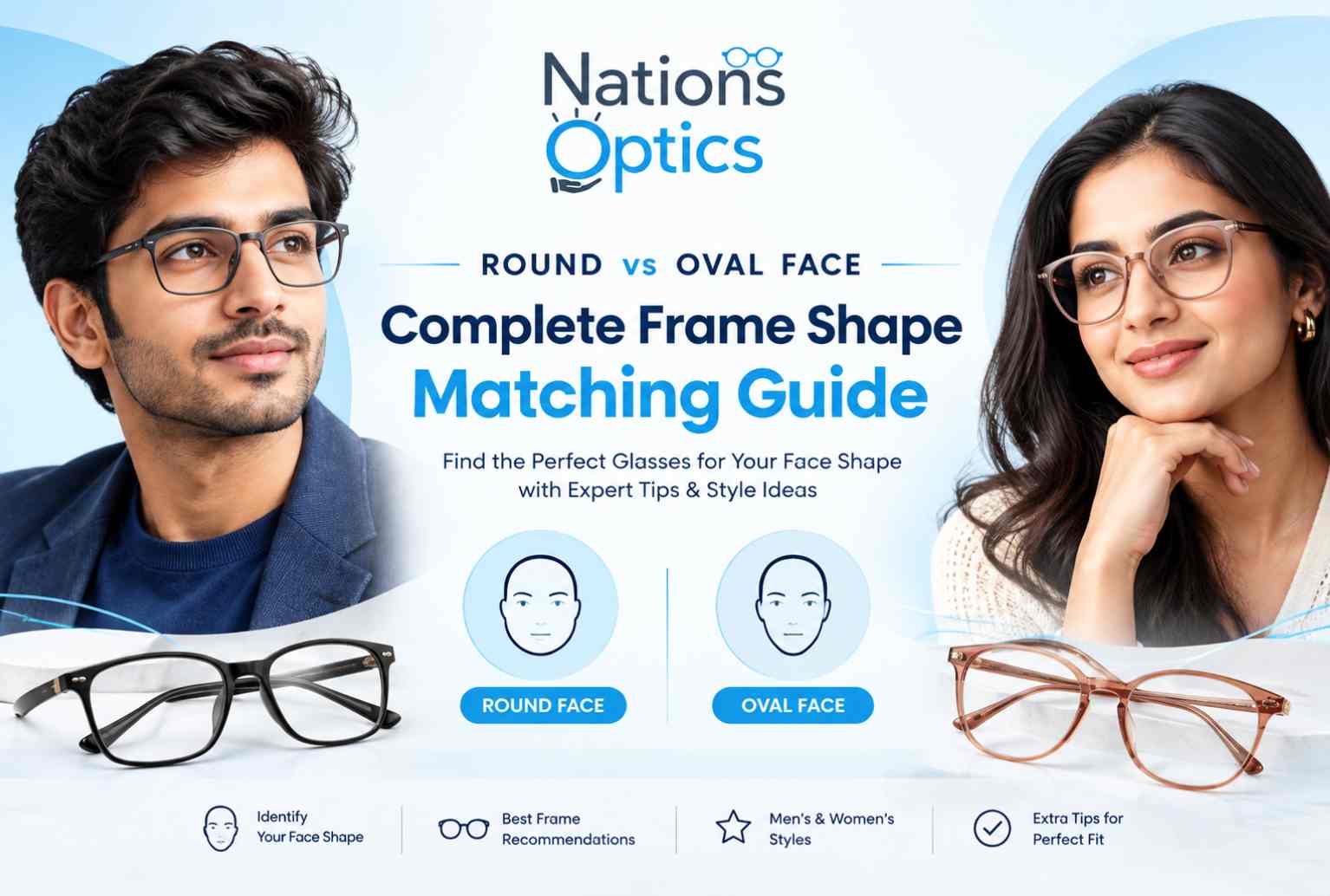
Round vs Oval Face: Complete Frame Shape Matching Guide
They can look similar at a glance — but round and oval faces call for different thinking when it comes to frames.
Have you ever looked at a pair of glasses online and wondered, "What glasses suit my face?" You're not alone. Choosing eyeglasses is about more than finding a frame you like. The right frame should work with your face shape, facial proportions, personal style, prescription needs, and everyday lifestyle.
Among the most common face shapes are round and oval. While they can look similar at first glance, their proportions are different, and those differences can influence which eyeglass frames create the most balanced appearance. If you're searching for glasses for a round face, glasses for an oval face, or simply trying to understand how to choose glasses based on face shape, this guide will help.
Round Face Oval Face Frame Proportions Face Try / AI Tool Men & Women's Styles
What Glasses Suit My Face?
The best place to start is by identifying your face shape. Face shape doesn't determine a single "correct" frame — instead, it helps you understand how different frame shapes interact with your facial proportions. The goal isn't to make your face conform to a particular shape; glasses should fit comfortably and complement your natural features.
When choosing eyeglasses, consider:
- Face length
- Face width
- Cheekbone width
- Jawline shape
- Forehead width
- Frame width & height
- Bridge fit
- Personal style and prescription requirements
How to Identify Your Face Shape
Stand in front of a mirror with your hair pulled away from your face and look at the overall outline rather than individual features — or take a straight-on photo with a neutral expression. Look at four measurements:
1. Forehead Width
Is your forehead relatively wide or narrow?
2. Cheekbone Width
Are your cheekbones the widest part of your face?
3. Jaw Width
Is your jaw rounded, angular, or relatively straight?
4. Face Length
Is your face noticeably longer than it is wide?
These observations can help you determine whether your face is closer to round, oval, square, heart-shaped, diamond, or oblong.
Round Face: How to Identify It
Common Characteristics
- Fuller-looking cheeks
- Rounded jawline
- Soft facial angles
- Similar face width and length
- Cheekbones that may appear prominent
- A relatively smooth facial outline
That doesn't mean you need to avoid rounded frames completely. However, if your goal is to introduce more visual definition, certain frame shapes can create stronger contrast with rounded facial features.
What Glasses Suit a Round Face?
Frames with stronger angles can create contrast against softer facial contours.
1
Square Glasses
A popular option for round faces because their angular lines contrast with rounded facial features, creating a more structured appearance.
2
Rectangular Glasses
Their horizontal lines can add definition and may visually emphasize the width of the frame rather than the roundness of the face.
3
Geometric Glasses
Hexagonal, angular, and other geometric designs can introduce additional structure while giving your eyewear a contemporary look.
4
Cat-Eye Frames
Works particularly well for a more expressive look — the upward outer corners create a different visual direction from rounded contours.
5
Slightly Wider Frames
A frame appropriately wider than the broadest part of the face can sometimes create balance — but proper fit always matters more than width alone.
What should I avoid with a round face? There's no universal rule against any shape. But if your goal is contrast, extremely small or very round frames may reinforce the rounded appearance. Round face + very round frame = softer overall look; round face + angular frame = stronger visual contrast. Ultimately, if you love round glasses, you can absolutely wear them.
What Glasses Suit an Oval Face?
Common Characteristics
- Face length greater than face width
- Balanced forehead and jaw proportions
- Slightly curved jawline
- Cheekbones somewhat wider than forehead or jaw
- Smooth facial contours
Because oval faces tend to have balanced proportions, they can accommodate a wide range of frame styles — which is why searches for "glasses for oval face" often produce so many different recommendations.
1
Square Frames
Can add definition to an oval face while maintaining a balanced appearance.
2
Rectangular Frames
A versatile choice providing a structured look without overwhelming natural proportions.
3
Round Frames
Unlike with a round face, round frames can create a softer, harmonious appearance on an oval face — yes, round glasses generally do suit an oval face, provided the frame is correctly sized.
4
Aviator Frames
Their distinctive shape can complement oval proportions and add personality without overpowering the face.
5
Cat-Eye Frames
Works well for a fashionable, expressive style.
6
Geometric Frames
A good option for a modern eyewear aesthetic.
Round Face vs Oval Face: What's the Difference?
| Feature | Round Face | Oval Face |
|---|---|---|
| Overall shape | More rounded | Longer than wide |
| Facial angles | Softer | Generally balanced |
| Face length | Similar to width | Greater than width |
| Jawline | Rounded | Softly curved |
| Frame approach | Angular frames can add contrast | Many frame shapes can work |
| Popular options | Square, rectangular, geometric | Square, rectangular, round, aviator, cat-eye |
The important point is that face shape is only one part of frame selection. Two people with the same face shape may look completely different in the same pair of glasses because their facial dimensions, bridge width, eye position, and personal style differ.
How to Choose Glasses Based on Face Shape
1
Identify your face shape — round, oval, square, heart-shaped, diamond, or oblong.
2
Consider contrast — decide whether you want your glasses to contrast with or complement your facial contours.
3
Check frame width — the frame should be proportioned to your face; too narrow feels restrictive, too wide can look oversized.
4
Check the bridge — it should sit comfortably and keep the frame stable, regardless of how attractive the frame looks.
5
Check lens height — particularly important for certain prescription types, including progressive lenses.
6
Consider your prescription — lens material, lens thickness, pupillary distance, and frame construction all affect which frames work.
What Glasses Make a Round Face Look Longer?
Frames with angular shapes, rectangular proportions, strong horizontal lines, or slightly taller structured silhouettes can create a different visual balance from the rounded contours of the face. However, glasses don't physically change your facial proportions — they simply change how the overall combination of face and eyewear is perceived.
"The better question isn't 'Can I wear round glasses?' It's 'What look do I want my glasses to create?'"
Face Shape Isn't the Only Thing That Matters
One of the biggest mistakes when buying glasses online is choosing a frame based solely on face shape. Your face shape can help narrow down your options, but other factors are equally important:
- Frame Size — look for a frame that fits your face rather than simply following a generic shape recommendation
- Frame Width — the frame should sit comfortably without excessive pressure at the temples
- Bridge Fit — should remain stable without causing discomfort
- Eye Position — your eyes should be positioned appropriately within the lenses
- Prescription — strong prescriptions may require particular frame and lens combinations
- Lifestyle — computer work vs. driving can call for different lens requirements
Which Frame Shape Is Best for Each Face?
For a round face, if your goal is more definition, consider starting with: Square → Rectangular → Geometric → Cat-eye.
For an oval face, you have considerable flexibility: Square → Rectangular → Round → Aviator → Cat-eye → Geometric.
But remember: there is no universally "best" frame shape for every face. Your actual measurements and personal preference should determine the final choice.
Glasses by Face Shape and Gender
Round Face — Men
Square eyeglasses, rectangular eyeglasses, geometric frames, browline-inspired shapes, and structured full-rim frames tend to add the most structure.
Round Face — Women
Cat-eye frames, square frames, rectangular frames, geometric frames, and oversized structured frames offer expressive contrast options.
Oval Face — Men
Rectangular frames, square frames, aviators, round frames, geometric frames, and semi-rimless frames all work — the choice depends on classic, professional, minimalist, or contemporary preference.
Oval Face — Women
Cat-eye frames, round frames, square frames, rectangular frames, geometric frames, and aviator-inspired styles are all versatile options.
You can use frame shape, colour, material, and size to create very different looks even when the underlying face shape remains the same.
How to Find the Perfect Glasses for Your Face
- Identify your face shape
- Measure your current glasses
- Determine your preferred frame style
- Compare frame width with your facial width
- Consider your prescription requirements
- Check bridge and temple fit
- Consider the lens type you need
- Use a virtual or AI-based face-try tool when available
- Compare several frame shapes rather than choosing the first one you like
- Prioritize comfort and optical fit alongside appearance
Choosing Glasses Online: What Should You Check?
Buying eyeglasses online can be convenient, but shoppers often worry about whether the frame will suit their face. Before ordering, check:
- Frame measurements — lens width, bridge width, and temple length where available
- Product images — front, side, and multiple-angle photographs
- Frame construction — full rim, semi-rimless, or rimless
- Lens compatibility — make sure the frame works with your required lens type
- Prescription requirements — accurate pupillary distance matters especially for progressive lenses
- Virtual try-on — use a face-try feature if available to preview how frames look on you
At Nations Optics, choosing eyewear isn't just about selecting a frame from a catalogue. If you're unsure what glasses suit your face, you can explore different frame shapes and use our Face Try / AI face-size tool to understand frame proportions before ordering, alongside prescription eyewear options based on your individual lens requirements.
Frequently Asked Questions
What glasses suit my face?
It depends on your face shape, facial proportions, frame size, prescription, and personal style. Round faces often pair well with angular frames for contrast, while oval faces can accommodate many different frame shapes.
What glasses suit a round face?
Square, rectangular, geometric, and some cat-eye frames can provide contrast against rounded facial contours. Correct frame size is equally important.
What glasses suit an oval face?
Oval faces can work well with square, rectangular, round, aviator, cat-eye, and geometric frames, provided the frame is appropriately sized.
Are square glasses good for round faces?
Yes — square glasses can provide angular contrast against the softer contours of a round face, making them a popular option.
Do round glasses suit an oval face?
Yes. Round glasses can complement the balanced proportions of an oval face, provided the frame is correctly sized.
What glasses make a round face look slimmer?
Angular or structured frames can create visual contrast and may make the face appear more elongated or defined. They don't physically change facial proportions.
Can I wear glasses that don't traditionally match my face shape?
Absolutely. Face-shape recommendations are guidelines, not rules. Personal style and comfort are important parts of choosing eyewear.
Not Sure What Suits You?
Use the Nations Optics Face Try / AI face-size tool to preview frame proportions before you order — and explore our full range of shapes and styles.
- Square, rectangular, round, cat-eye & geometric shapes
- AI-powered Face Try tool for proportion guidance
- Full-rim, semi-rimless & rimless constructions
- Options for every prescription requirement
- Styles for men and women across every face shape
Finding the right glasses isn't about following a strict list of rules. If you have a round face, square, rectangular, and geometric frames can introduce definition. If you have an oval face, you have the flexibility to explore round, square, rectangular, aviator, cat-eye, and geometric styles.
But face shape is only the starting point. The right pair should also fit your facial measurements, sit comfortably, work with your prescription, and match your personal style. Your face doesn't need to fit the glasses. The glasses should fit you.
Exclusive Offers
Sitewide
33%
OFF
Flat 33% off on all products
Already applied on every price · no coupon needed
Auto-applied
10%
OFF
On orders ₹1,200 – ₹1,799
No coupon needed · saves automatically
Auto-applied
15%
OFF
On orders ₹1,800 – ₹3,199
No coupon needed · saves automatically
Best Deal 🔥
20%
OFF
On orders above ₹3,200
No coupon needed · saves automatically
Pay Advance
₹50
SAVED
Pay advance amount at checkout
Flat ₹50 off · pay balance on delivery
Pay Full ✓
₹100
SAVED
Pay full amount at checkout
Maximum saving · instant confirmation
N
Nations Optics Assistant
● Online
👋 Hi! I'm your Nations Optics assistant. Ask me anything about lenses, frames, or prescriptions!