
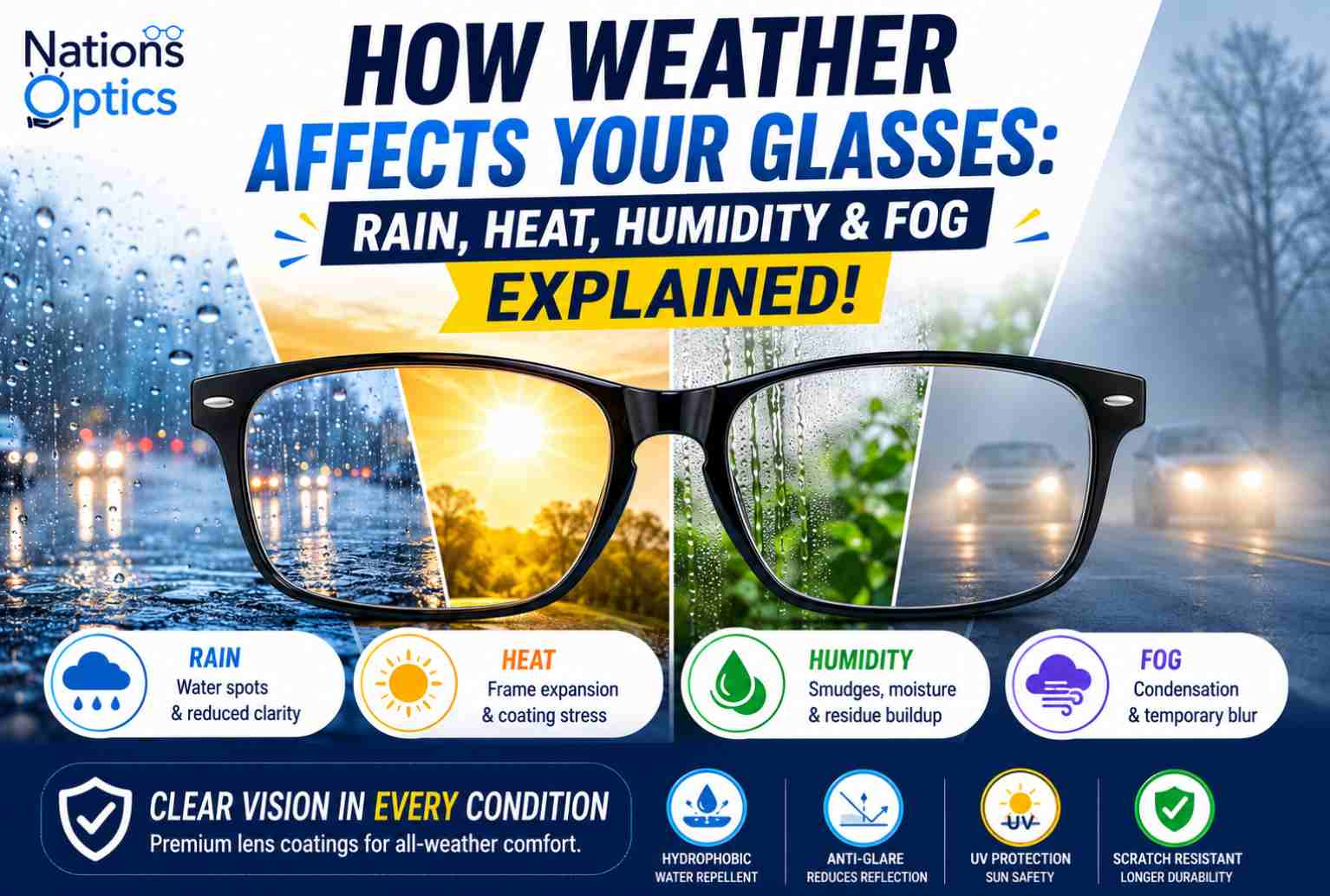
How Weather Affects Your Glasses: Rain, Heat, Humidity & Fog
Jun 19, 2026
By Rahul Jain
0 comment(s)
How Weather Affects Your Glasses: Rain, Heat, Humidity & Fog Explained
Discover how different weather conditions impact your eyewear and learn which lens technologies help keep your vision clear, comfortable, and protected throughout the year.
Most people think about weather's effect on their clothes, vehicles, or travel plans, but very few consider how weather affects their glasses. Whether you're walking in the rain, driving through fog, dealing with summer heat, or experiencing high humidity, environmental conditions can significantly influence your visual comfort and eyewear performance.
Modern prescription glasses are designed to provide clear vision, but weather-related factors can impact lens clarity, create unwanted reflections, cause fogging, and increase maintenance requirements. Understanding these challenges can help you choose the right lens coatings and eyewear solutions for every season.
SEO Keywords: How Weather Affects Your Glasses, Rain and Glasses, Foggy Glasses Solutions, Hydrophobic Lens Coating, Anti Glare Lenses, Photochromic Lenses, Humidity Effects on Glasses, Weather and Eyewear, Prescription Glasses Care, Nations Optics.
Why Weather Has a Bigger Impact on Glasses Than You Think
Your glasses are constantly exposed to changing environmental conditions. Unlike many personal accessories, eyewear sits directly in front of your eyes, making any weather-related issue immediately noticeable.
Temperature changes, moisture levels, UV exposure, wind, and airborne particles all interact with lens surfaces. The result can be foggy lenses, water spots, glare, smudges, and reduced visual comfort.
The good news is that modern lens technologies such as anti-glare coatings, hydrophobic coatings, scratch-resistant layers, and photochromic lenses can help address many of these challenges.
Rain and Your Glasses: Why Visibility Drops So Quickly
Rain is one of the most common weather conditions that affects eyewear users. Even light rain can leave water droplets on lenses, creating distortion and reducing visual clarity.
When water accumulates on lens surfaces, light scatters differently, making it harder to see clearly. This can be especially problematic when driving, walking through busy streets, or participating in outdoor activities.
Common Problems During Rainy Weather
- Water droplets blocking vision
- Frequent lens cleaning
- Increased glare from headlights
- Reduced contrast and clarity
- Difficulty reading signs and screens
Travel Tip: Hydrophobic lens coatings help water bead up and roll off lenses more easily, reducing water buildup and making rainy-day vision more comfortable.
For people who spend time outdoors or commute regularly, hydrophobic coatings can significantly improve convenience during wet weather.
Heat and High Temperatures: The Hidden Threat to Eyewear
Many people underestimate the impact of heat on glasses. While modern lenses and frames are designed to withstand normal temperatures, prolonged exposure to extreme heat can affect both comfort and durability.
For example, leaving glasses inside a parked car during summer can expose them to temperatures far higher than those encountered during normal daily use.
Potential Effects of Excessive Heat
- Frame warping
- Lens coating stress
- Reduced frame adjustment accuracy
- Increased wear and tear
Lightweight polycarbonate lenses are particularly popular because they offer durability while remaining comfortable for daily wear.
To protect your eyewear, always store glasses in a protective case and avoid leaving them in direct sunlight for extended periods.
Humidity and Moisture: Why Your Glasses Feel Dirtier
Humidity affects more than just your comfort—it can also impact your eyewear experience.
In humid environments, moisture combines with dust particles, skin oils, and environmental contaminants. This often causes lenses to appear dirty faster than usual.
People living in coastal regions or tropical climates frequently notice that their glasses require cleaning more often due to humidity-related residue buildup.
Challenges Caused by Humidity
- More frequent smudging
- Lens residue buildup
- Reduced visual clarity
- Moisture accumulation
- Frequent cleaning requirements
Oleophobic coatings can help reduce fingerprint and oil buildup, while hydrophobic coatings assist with moisture management.
Why Glasses Fog Up
Fogging occurs when warm air meets a cooler lens surface. This causes moisture in the air to condense into tiny droplets that temporarily block vision.
Most eyewear users have experienced this when stepping into an air-conditioned room from a hot outdoor environment or wearing glasses while drinking a hot beverage.
Common Fogging Situations
- Entering buildings during winter
- Moving between air-conditioned and outdoor environments
- Cooking near hot steam
- Wearing face masks
- Exercising outdoors
Fogging is temporary but can be frustrating and even dangerous if it occurs while driving or walking in crowded areas.
Anti-fog solutions and premium lens coatings can help reduce condensation and improve visibility.
Bright Sunlight and UV Exposure
Sunny weather presents a different set of challenges for eyewear users.
Strong sunlight increases brightness levels and exposes eyes to ultraviolet radiation. Long-term UV exposure can contribute to visual discomfort and eye health concerns.
Benefits of UV Protection Lenses
- Protection from harmful UV rays
- Improved outdoor comfort
- Reduced squinting
- Better visual clarity
- Enhanced everyday eye protection
Many premium prescription lenses include built-in UV protection, making them a valuable choice for daily wear.
Photochromic Lenses: Built for Changing Weather
One of the most practical lens technologies for unpredictable weather is photochromic lenses.
These lenses automatically adjust their tint based on UV exposure. They remain clear indoors and darken outdoors, helping users adapt to changing light conditions without switching between multiple pairs of glasses.
Why They're Ideal for Weather Changes
- Automatic light adaptation
- UV protection
- Reduced glare outdoors
- Convenient indoor-outdoor transitions
- Travel-friendly solution
Photochromic lenses are particularly useful for commuters, travelers, and people who frequently move between indoor and outdoor environments.
Anti-Glare Coatings Improve Visibility Year-Round
Weather conditions often amplify reflections and glare.
Rainy roads, bright sunlight, wet surfaces, and nighttime driving can all create distracting reflections that reduce visual comfort.
Anti-glare coatings help minimize these reflections and improve visual clarity in a variety of conditions.
Benefits of Anti-Glare Lenses
- Reduced reflections
- Sharper vision
- Improved nighttime visibility
- Better screen viewing comfort
- Enhanced appearance of lenses
Best Lens Features for Different Weather Conditions
| Weather Condition | Recommended Lens Feature |
|---|---|
| Rain | Hydrophobic Coating |
| High Humidity | Oleophobic Coating |
| Bright Sunlight | Photochromic Lenses + UV Protection |
| Night Driving | Anti-Glare Coating |
| Daily Wear | Scratch Resistant Coating |
| Travel | Photochromic + Anti-Glare Combination |
Why Nations Optics Lenses Are Ready for Every Season
At Nations Optics, we understand that weather conditions change throughout the year. That's why our lens options are designed to help customers enjoy clear and comfortable vision regardless of the environment.
- Photochromic Grey Lenses
- Anti-Glare Blue Block Lenses
- Polycarbonate Lens Options
- Scratch Resistant Technologies
- UV Protection Features
- Custom Prescription Solutions
Whether you're dealing with rainy mornings, sunny afternoons, humid weather, or foggy conditions, premium lenses can make a noticeable difference in comfort and performance.
Final Thoughts
Weather affects your glasses more than most people realize. Rain can reduce visibility, humidity can increase smudges, heat can affect eyewear durability, and fog can temporarily block vision.
Fortunately, modern lens technologies provide practical solutions. Hydrophobic coatings, anti-glare treatments, photochromic lenses, and UV protection can help improve comfort and clarity throughout the year.
By choosing the right lens features for your lifestyle, you can enjoy clearer vision and spend less time worrying about weather-related eyewear challenges.
Be Ready for Every Weather Condition
Don't let rain, heat, humidity, or fog affect your vision. Explore premium prescription lenses with advanced coatings designed to keep your glasses clearer, cleaner, and more comfortable every day.
Clear Vision in Every Season Starts with the Right Lenses.
Explore Premium Lens SolutionsExclusive Offers
Sitewide
33%
OFF
Flat 33% off on all products
Already applied on every price · no coupon needed
Auto-applied
10%
OFF
On orders ₹1,200 – ₹1,799
No coupon needed · saves automatically
Auto-applied
15%
OFF
On orders ₹1,800 – ₹3,199
No coupon needed · saves automatically
Best Deal 🔥
20%
OFF
On orders above ₹3,200
No coupon needed · saves automatically
Pay Advance
₹50
SAVED
Pay advance amount at checkout
Flat ₹50 off · pay balance on delivery
Pay Full ✓
₹100
SAVED
Pay full amount at checkout
Maximum saving · instant confirmation
N
Nations Optics Assistant
● Online
👋 Hi! I'm your Nations Optics assistant. Ask me anything about lenses, frames, or prescriptions!