
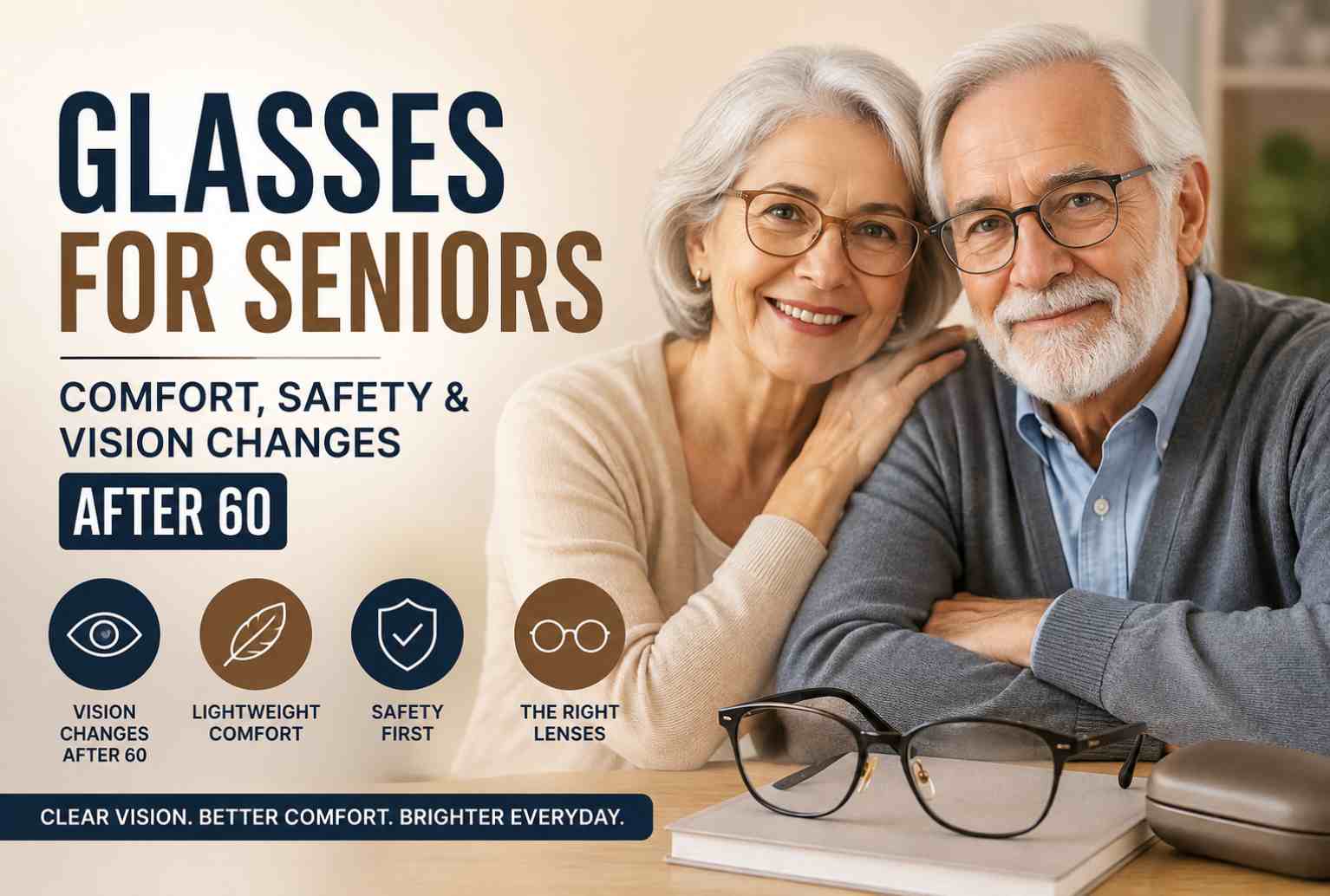
Glasses for Seniors: Best Lenses & Frames After 60
Aug 5, 2026
By Rahul Jain
0 comment(s)
Eyewear for Every Life Stage
Glasses for Seniors: Comfort, Safety & Vision Changes After 60
Vision after 60 isn't just about a stronger prescription — it's about comfort, safety, and staying independent. Here's how to choose the right eyewear.
As we age, our eyesight changes naturally. After the age of 60, many people experience blurry vision, trouble reading small text, increased sensitivity to light, and challenges with night driving. Choosing the right glasses for seniors is no longer just about style — it's about comfort, safety, and maintaining independence.
Whether you're looking for the best eyeglasses for seniors, comfortable reading glasses, or prescription eyewear that adapts to changing vision, understanding age-related vision problems can help you make the right decision.
Presbyopia
Cataracts
Night Driving
Progressive Lenses
Anti-Glare
Why Vision Changes After 60
Our eyes undergo several natural changes with age. The lens inside the eye becomes less flexible, making it difficult to focus on nearby objects. Many seniors also notice increased glare, reduced contrast sensitivity, and slower adaptation to changes in lighting.
Common age-related vision problems include:
Presbyopia
Cataracts
Dry eyes
Glaucoma
Age-related macular degeneration
Light sensitivity
Night vision difficulty
These changes make it essential to choose eyeglasses for older adults that provide comfort, protection, and clear vision.
Common Symptoms Seniors Experience
- Blurry vision while reading
- Frequent headaches
- Eye strain after digital devices
- Difficulty driving at night
- Increased glare from headlights
- Trouble recognizing faces at a distance
- Needing brighter light for reading
- Dry or irritated eyes
The right senior vision glasses can significantly reduce these problems and improve everyday comfort.
Best Glasses for Seniors: What Features Matter Most?
When choosing the best glasses after 60, comfort and functionality should come first.
1
Lightweight Frames
Heavy frames create pressure on the nose and ears, especially during extended wear. Titanium, TR90, and premium acetate provide reduced pressure, better comfort for long hours, improved durability, and easier adjustment.
2
Comfortable Nose Pads
Soft, adjustable nose pads help distribute weight evenly and prevent discomfort — ideal for seniors who wear glasses throughout the day.
3
Anti-Glare Coating
Reduces glare from headlights, screens, and bright sunlight — especially useful for elderly drivers and people sensitive to bright light.
4
UV Protection
Shields the eyes from harmful sunlight and helps reduce the risk of age-related eye problems.
5
Scratch-Resistant Coating
Durable lenses with scratch-resistant coatings ensure longer-lasting eyewear and better clarity over time.
Best Lenses for Seniors
Different lens types serve different needs.
Vision Changes After 60 and Driving Safety
Many seniors experience difficulties driving at night due to glare and reduced contrast sensitivity. The best glasses for elderly drivers should include:
- Anti-glare coating
- UV protection
- High-contrast lenses
- Lightweight frames
- Scratch-resistant coating
These features help improve visibility and increase confidence on the road.
Glasses for Specific Age-Related Conditions
Cataracts
Cataracts can make vision cloudy and increase light sensitivity. Helpful options include:
- Anti-reflective coatings
- Photochromic lenses
- Larger frames for a wider field of view
- High-contrast lenses
Macular Degeneration
Affects central vision and makes everyday tasks more difficult. Helpful options include:
- Magnifying reading glasses
- High-contrast lenses
- Blue-light filtering lenses
- Customized prescription lenses
Always consult an eye specialist before purchasing new glasses if you have cataracts, macular degeneration, or another diagnosed eye condition — your optician can tailor lens features to your specific needs.
How to Choose Glasses for Seniors
Choosing comfortable eyewear for elderly people involves more than selecting a stylish frame.
By Face Shape
Round Faces
Rectangular frames
Square Faces
Oval frames
Oval Faces
Most frame styles
Heart-Shaped Faces
Rimless or lightweight frames
By Lifestyle Needs
Ask yourself: Do you spend long hours reading? Do you drive frequently? Do you use digital devices often? Do you spend time outdoors? Your answers determine the ideal lens type and coatings.
Comfort and Fit
- Sits comfortably on the nose
- Does not slip
- Feels lightweight
- Provides a wide field of vision
Senior Eye Care Tips
In addition to wearing the right glasses, seniors should follow these eye care habits:
- Schedule regular eye exams
- Wear UV-protection glasses outdoors
- Eat foods rich in vitamins A, C, and E
- Stay hydrated
- Limit screen exposure
- Use proper lighting while reading
- Clean glasses regularly
Good eye care combined with quality eyewear can help maintain healthy vision after 60.
Modern Eyewear Trends for Seniors
Today's senior eyewear is more stylish and functional than ever before.
Rimless glasses
Lightweight titanium frames
Transparent frames
Classic rectangular styles
Oversized reading glasses
Flexible TR90 frames
Modern designs offer both comfort and elegance without compromising on vision correction.
Frequently Asked Questions
What glasses are best for seniors over 60?
Lightweight frames with anti-glare, UV protection, and scratch-resistant coatings, paired with reading, bifocal, or progressive lenses depending on your specific vision needs.
Are progressive lenses good for seniors?
Yes — they provide seamless correction across near, intermediate, and distance vision without visible lines, making them convenient for daily wear.
What glasses help with night driving for seniors?
Anti-glare coating, UV protection, high-contrast lenses, lightweight frames, and scratch-resistant coating all help improve visibility and confidence while driving at night.
What glasses are best for cataracts?
Anti-reflective coatings, photochromic lenses, larger frames for a wider field of view, and high-contrast lenses — always in consultation with an eye specialist.
How often should seniors get an eye exam?
Regular eye exams are recommended for older adults, since vision and eye health can change more quickly with age — follow your eye-care professional's recommended schedule.
Comfortable, Safe Eyewear for Every Stage of Life
At Nations Optics, we help you find lightweight, comfortable glasses with the right lens features for your changing vision.
- Reading, bifocal & progressive lens options
- Anti-glare, UV & scratch-resistant coatings
- Lightweight titanium & TR90 frames
- Guidance based on your exact prescription
- Support choosing frames for comfort and fit
Finding the best glasses for seniors means balancing comfort, safety, and vision needs. As eyesight changes after 60, choosing the right combination of frames, lenses, and coatings becomes essential for maintaining independence and quality of life.
Whether you need reading glasses, progressive lenses, or comfortable prescription eyewear for everyday use, investing in high-quality glasses can improve your vision and protect your eyes for years to come.
Exclusive Offers
Sitewide
33%
OFF
Flat 33% off on all products
Already applied on every price · no coupon needed
Auto-applied
10%
OFF
On orders ₹1,200 – ₹1,799
No coupon needed · saves automatically
Auto-applied
15%
OFF
On orders ₹1,800 – ₹3,199
No coupon needed · saves automatically
Best Deal 🔥
20%
OFF
On orders above ₹3,200
No coupon needed · saves automatically
Pay Advance
₹50
SAVED
Pay advance amount at checkout
Flat ₹50 off · pay balance on delivery
Pay Full ✓
₹100
SAVED
Pay full amount at checkout
Maximum saving · instant confirmation
N
Nations Optics Assistant
● Online
👋 Hi! I'm your Nations Optics assistant. Ask me anything about lenses, frames, or prescriptions!