
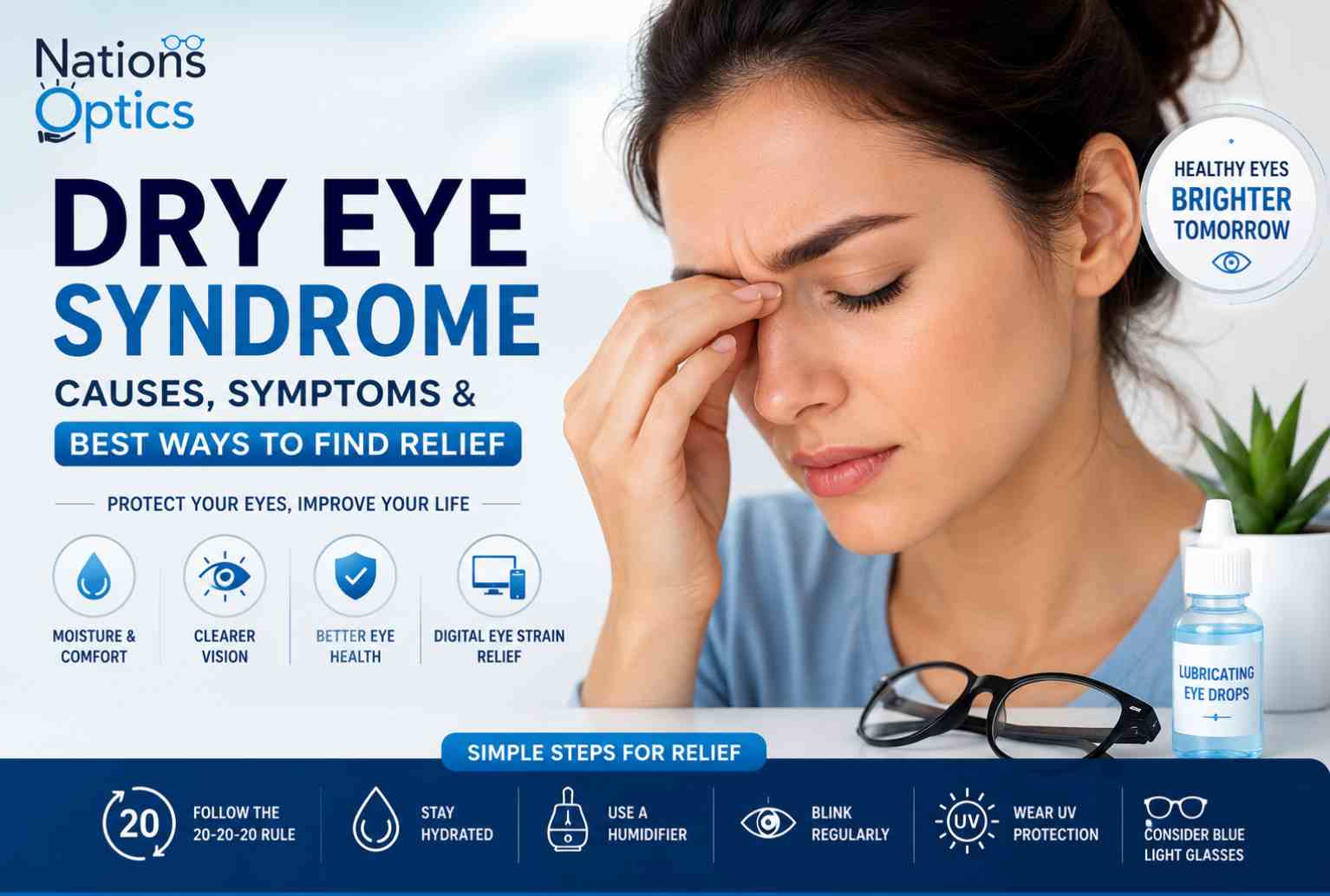
Dry Eye Syndrome: Causes, Symptoms & Best Ways to Find Relief
Jun 6, 2026
By Rahul Jain
0 comment(s)
Dry Eye Syndrome: Causes, Symptoms & Best Ways to Find Relief
Discover the causes, symptoms, treatment options, and prevention strategies for Dry Eye Syndrome. Learn how to keep your eyes comfortable, healthy, and protected in today's digital world.
Do your eyes often feel dry, itchy, irritated, or tired after a long day? If so, you may be experiencing Dry Eye Syndrome, one of the most common eye conditions affecting millions of people worldwide. Dry Eye Syndrome occurs when your eyes do not produce enough tears or when tears evaporate too quickly, resulting in inadequate lubrication of the eye surface. :contentReference[oaicite:0]{index=0}
Although it may seem like a minor inconvenience, untreated dry eye can affect your daily comfort, productivity, and even vision quality. With increased screen time, air-conditioned environments, pollution, and changing lifestyles, Dry Eye Syndrome is becoming increasingly common among people of all ages. :contentReference[oaicite:1]{index=1}
Did You Know?
Dry eye disease affects a significant portion of adults and is increasingly linked to prolonged digital device usage, reduced blinking, and environmental conditions. :contentReference[oaicite:2]{index=2}
Dry eye disease affects a significant portion of adults and is increasingly linked to prolonged digital device usage, reduced blinking, and environmental conditions. :contentReference[oaicite:2]{index=2}
What Is Dry Eye Syndrome?
Dry Eye Syndrome, also known as Dry Eye Disease, develops when the tear film that protects and lubricates the eyes becomes unstable. This can happen because the eyes do not produce enough tears or because tears evaporate too quickly. The resulting tear film instability can lead to inflammation and damage to the eye surface. :contentReference[oaicite:3]{index=3}
Tears play an essential role in maintaining eye comfort, clear vision, and protection against irritants and infections. Without adequate tear quality and quantity, the eyes can become irritated and uncomfortable. :contentReference[oaicite:4]{index=4}
Common Symptoms of Dry Eye Syndrome
Symptoms may range from mild irritation to persistent discomfort that affects everyday activities.
- Burning sensation in the eyes
- Stinging or itching
- Redness
- Blurred vision
- Eye fatigue
- Sensitivity to light
- Gritty or sandy feeling
- Watery eyes
- Difficulty wearing contact lenses
- Discomfort while reading or using screens
Many people are surprised to learn that watery eyes can actually be a symptom of dry eye. Irritation can trigger excessive reflex tearing, but these tears often do not provide adequate lubrication. :contentReference[oaicite:5]{index=5}
What Causes Dry Eye Syndrome?
Dry Eye Syndrome is a multifactorial condition, meaning multiple factors may contribute simultaneously. :contentReference[oaicite:6]{index=6}
1. Excessive Screen Time
Smartphones, computers, and tablets reduce blink frequency. Less blinking means tears evaporate faster, causing dryness and discomfort. :contentReference[oaicite:7]{index=7}
2. Aging
Tear production naturally decreases with age, making older adults more susceptible to dry eyes. :contentReference[oaicite:8]{index=8}
3. Environmental Factors
Air conditioning, heaters, wind, smoke, pollution, and low humidity can accelerate tear evaporation. :contentReference[oaicite:9]{index=9}
4. Contact Lens Use
Long-term contact lens wear may increase dryness and irritation in some individuals. :contentReference[oaicite:10]{index=10}
5. Medical Conditions
Autoimmune diseases, diabetes, thyroid disorders, and hormonal changes may contribute to dry eye development. :contentReference[oaicite:11]{index=11}
6. Certain Medications
Antihistamines, antidepressants, decongestants, and some blood pressure medications can reduce tear production. :contentReference[oaicite:12]{index=12}
Who Is Most at Risk?
- Office workers
- Students
- Frequent smartphone users
- People over 50
- Contact lens wearers
- Individuals with autoimmune diseases
- People exposed to dry environments
- Those with prolonged screen exposure
Modern lifestyles have significantly increased dry eye risk among younger adults and students due to heavy digital device use. :contentReference[oaicite:13]{index=13}
Best Ways to Find Relief from Dry Eyes
Use Artificial Tears
Lubricating eye drops are often the first line of treatment and help restore moisture to the eye surface. Preservative-free artificial tears may be especially beneficial for frequent use. :contentReference[oaicite:14]{index=14}
Follow the 20-20-20 Rule
Every 20 minutes, look at something 20 feet away for at least 20 seconds. This reduces digital eye strain and encourages blinking.
Increase Blink Awareness
Many people blink less while using screens. Consciously blinking more often can help maintain tear film stability. :contentReference[oaicite:15]{index=15}
Stay Hydrated
Proper hydration supports tear production and overall eye health. :contentReference[oaicite:16]{index=16}
Use a Humidifier
Adding moisture to indoor air can reduce tear evaporation and improve comfort.
Wear Blue Light Glasses
Blue light filtering lenses may help reduce digital eye strain and improve screen comfort during prolonged device use.
Eye Care Tip:
Take regular breaks from screens, blink consciously, and ensure proper lighting while working to reduce eye strain and dryness.
Advanced Treatment Options
For moderate to severe dry eye cases, eye care professionals may recommend additional treatments:
- Prescription eye drops
- Anti-inflammatory treatments
- Punctal plugs
- Warm compress therapy
- Meibomian gland treatments
- IPL (Intense Pulsed Light) therapy
Treatment depends on the underlying cause and severity of the condition. Modern therapies increasingly focus on addressing root causes rather than only relieving symptoms. :contentReference[oaicite:17]{index=17}
Can Dry Eye Syndrome Be Prevented?
While not all cases can be prevented, several habits can significantly reduce risk:
- Limit continuous screen time
- Take frequent visual breaks
- Wear UV-protective sunglasses outdoors
- Stay hydrated
- Eat foods rich in Omega-3 fatty acids
- Get regular eye exams
- Avoid smoking and excessive smoke exposure
- Maintain proper indoor humidity
Preventive care often plays a major role in long-term eye comfort and health. :contentReference[oaicite:18]{index=18}
When Should You See an Eye Doctor?
If symptoms persist despite using artificial tears and lifestyle adjustments, consult an eye care professional. Early diagnosis can help prevent complications and identify any underlying health conditions contributing to dry eye. Chronic dry eye may sometimes indicate eyelid disease, autoimmune disorders, or other medical concerns. :contentReference[oaicite:19]{index=19}
Conclusion
Dry Eye Syndrome is more than occasional irritation—it is a common eye condition that can affect comfort, productivity, and quality of life. Fortunately, most cases can be effectively managed through proper eye care, healthy lifestyle habits, and professional treatment when necessary.
Whether your symptoms are caused by digital screens, environmental conditions, aging, or underlying health issues, taking proactive steps can significantly improve eye comfort and vision quality.
At Nations Optics, we believe healthy vision begins with awareness and prevention. Explore our premium eyewear solutions, blue light lenses, and vision care products designed to help you see clearly and stay comfortable every day.
Exclusive Offers
Sitewide
33%
OFF
Flat 33% off on all products
Already applied on every price · no coupon needed
Auto-applied
10%
OFF
On orders ₹1,200 – ₹1,799
No coupon needed · saves automatically
Auto-applied
15%
OFF
On orders ₹1,800 – ₹3,199
No coupon needed · saves automatically
Best Deal 🔥
20%
OFF
On orders above ₹3,200
No coupon needed · saves automatically
Pay Advance
₹50
SAVED
Pay advance amount at checkout
Flat ₹50 off · pay balance on delivery
Pay Full ✓
₹100
SAVED
Pay full amount at checkout
Maximum saving · instant confirmation
N
Nations Optics Assistant
● Online
👋 Hi! I'm your Nations Optics assistant. Ask me anything about lenses, frames, or prescriptions!