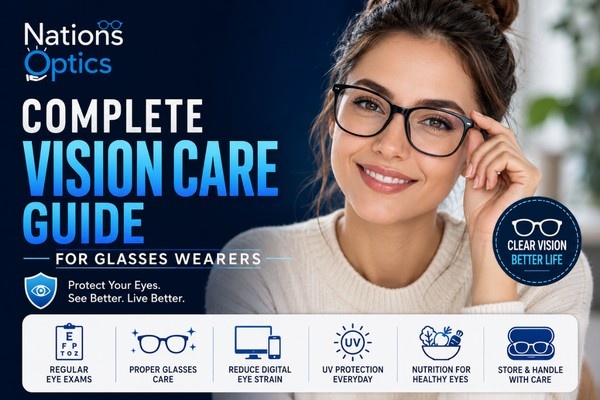
Complete Vision Care Guide for Glasses Wearers
Jun 2, 2026
By Rahul Jain
0 comment(s)
Complete Vision Care Guide for Glasses Wearers
Discover everything you need to know about maintaining healthy vision, caring for your prescription glasses, protecting your eyes from digital strain, and maximizing the lifespan of your eyewear with this complete vision care guide from Nations Optics.
For millions of people worldwide, prescription glasses are more than just a vision correction tool—they are an essential part of daily life. Whether you wear glasses for myopia, hyperopia, astigmatism, or presbyopia, proper vision care goes beyond simply putting on your frames every morning.
Healthy vision requires regular eye exams, proper eyewear maintenance, digital eye protection, UV defense, and healthy lifestyle habits. Yet many glasses wearers unknowingly make mistakes that can affect both their eyesight and the longevity of their eyewear.
This comprehensive vision care guide covers everything glasses wearers need to know to keep their eyes healthy and their eyewear performing at its best.
Quick Fact: More than 75% of adults require some form of vision correction, making proper eyewear care and eye health maintenance more important than ever.
Why Vision Care Matters for Glasses Wearers
Many people assume that wearing prescription glasses automatically protects their vision. While corrective lenses help improve visual clarity, they do not eliminate the need for ongoing eye care.
Vision can change gradually due to age, lifestyle, screen exposure, environmental factors, and underlying health conditions. Without regular monitoring, outdated prescriptions may contribute to headaches, eye strain, blurred vision, and reduced visual performance.
Comprehensive vision care helps ensure your prescription remains accurate while allowing eye care professionals to identify potential problems early.
Schedule Regular Eye Exams
One of the most important habits for glasses wearers is scheduling routine eye examinations. Eye exams do much more than update prescriptions—they also assess overall eye health and help detect conditions before symptoms appear.
How Often Should You Get an Eye Exam?
- Adults (18-60): Every 1-2 years
- Adults over 60: Annually
- Children and teens: As recommended by an eye care professional
- Individuals with eye conditions: More frequent monitoring may be required
Regular eye exams can help identify cataracts, glaucoma, retinal disorders, dry eye syndrome, and other vision-related issues at an early stage.
Keep Your Prescription Up to Date
Wearing outdated prescription glasses can force your eyes to work harder than necessary. Many people continue wearing old prescriptions without realizing their vision has changed.
Common signs you may need a new prescription include:
- Frequent headaches
- Blurry vision
- Difficulty reading
- Eye fatigue
- Squinting to see clearly
- Trouble focusing on screens
- Poor night vision
Updating your prescription ensures optimal visual performance and everyday comfort.
How to Properly Clean Your Glasses
Proper cleaning is essential for maintaining lens clarity and preventing scratches. Many people unintentionally damage their lenses using tissues, clothing, or harsh cleaning products.
Best Practices for Cleaning Glasses
- Rinse lenses with lukewarm water first
- Use lens-safe cleaning solution
- Clean with a microfiber cloth
- Dry gently without excessive pressure
- Store glasses safely when not in use
Pro Tip: Avoid using paper towels, tissues, or shirt sleeves, as these materials can create micro-scratches on lens coatings over time.
Consistent cleaning improves vision quality and helps extend the lifespan of your eyewear investment.
Protect Your Eyes from Digital Eye Strain
Modern lifestyles involve extensive screen use. Whether working on a computer, scrolling through a smartphone, or watching television, prolonged digital exposure can contribute to digital eye strain.
Common symptoms include:
- Dry eyes
- Eye fatigue
- Blurred vision
- Headaches
- Neck and shoulder tension
- Difficulty focusing
Follow the 20-20-20 Rule
Every 20 minutes, look at something 20 feet away for at least 20 seconds. This simple technique helps relax eye muscles and reduce visual fatigue.
Blue light filtering lenses may also improve comfort for individuals who spend several hours daily in front of digital screens.
The Importance of UV Protection
Many glasses wearers focus solely on vision correction and overlook UV protection. However, prolonged exposure to ultraviolet rays can contribute to long-term eye health concerns.
UV exposure has been linked to:
- Cataracts
- Macular degeneration
- Photokeratitis
- Corneal damage
Investing in sunglasses with 100% UV protection is one of the simplest ways to safeguard your eyes outdoors.
For convenience, many individuals choose prescription sunglasses or photochromic lenses that automatically adapt to changing light conditions.
Choose the Right Lens Technology
Today's lenses offer far more than simple vision correction. Advanced lens technologies can significantly improve comfort, durability, and visual performance.
Popular Lens Options
- Anti-reflective coatings
- Blue light filtering lenses
- Scratch-resistant coatings
- Photochromic lenses
- High-index lenses
- Progressive lenses
- Polarized sunglasses
Selecting the right lens technology depends on your prescription, lifestyle, work environment, and visual needs.
Store Your Glasses Correctly
Proper storage is often overlooked but plays a major role in protecting eyewear.
To avoid accidental damage:
- Always use a hard protective case
- Store glasses with lenses facing upward
- Avoid placing them in hot vehicles
- Keep them away from direct heat sources
- Never place glasses face-down on surfaces
These simple habits can prevent scratches, frame warping, and costly repairs.
Support Eye Health Through Nutrition
Healthy vision starts from within. A balanced diet provides essential nutrients that support long-term eye health.
Vision-Friendly Nutrients
- Vitamin A
- Vitamin C
- Vitamin E
- Omega-3 fatty acids
- Lutein
- Zeaxanthin
- Zinc
Foods such as leafy greens, carrots, citrus fruits, salmon, eggs, nuts, and colorful vegetables can contribute to healthier eyes.
Staying hydrated also helps maintain tear production and reduce dry eye symptoms.
When Should You Replace Your Glasses?
Even high-quality eyewear eventually needs replacement. Over time, lenses accumulate scratches, coatings wear down, and frames may lose alignment.
Consider replacing your glasses if:
- Your prescription has changed
- Lenses are heavily scratched
- Frames are bent or damaged
- You experience recurring discomfort
- Your visual needs have evolved
Modern lens technologies and frame designs often provide significant improvements in comfort and performance compared to older eyewear.
Healthy Daily Habits for Glasses Wearers
Small daily habits can make a major difference in maintaining clear vision and extending the life of your eyewear.
- Clean lenses daily
- Take regular screen breaks
- Wear UV-protective sunglasses outdoors
- Schedule routine eye exams
- Store glasses properly
- Stay hydrated
- Eat vision-supporting foods
- Update prescriptions when necessary
Combining these practices creates a strong foundation for lifelong eye health.
Conclusion
Proper vision care involves much more than wearing prescription glasses. From maintaining lens cleanliness and protecting your eyes from digital strain to scheduling routine eye exams and choosing advanced lens technologies, every step contributes to healthier vision and improved quality of life.
At Nations Optics, we believe that clear vision is the foundation of confidence, productivity, and everyday comfort. Whether you're looking for premium prescription glasses, blue light lenses, progressive lenses, or UV-protective eyewear, investing in quality vision care today helps ensure healthier eyesight for years to come.
Take care of your eyes, protect your eyewear, and enjoy a lifetime of clear, comfortable vision.
Exclusive Offers
Sitewide
33%
OFF
Flat 33% off on all products
Already applied on every price · no coupon needed
Auto-applied
10%
OFF
On orders ₹1,200 – ₹1,799
No coupon needed · saves automatically
Auto-applied
15%
OFF
On orders ₹1,800 – ₹3,199
No coupon needed · saves automatically
Best Deal 🔥
20%
OFF
On orders above ₹3,200
No coupon needed · saves automatically
Pay Advance
₹50
SAVED
Pay advance amount at checkout
Flat ₹50 off · pay balance on delivery
Pay Full ✓
₹100
SAVED
Pay full amount at checkout
Maximum saving · instant confirmation
N
Nations Optics Assistant
● Online
👋 Hi! I'm your Nations Optics assistant. Ask me anything about lenses, frames, or prescriptions!