Can You Use Old Prescription for New Glasses? | Vision Guide 2026
May 27, 2026
By Rahul Jain
0 comment(s)
VISION CARE & EYEWEAR GUIDE
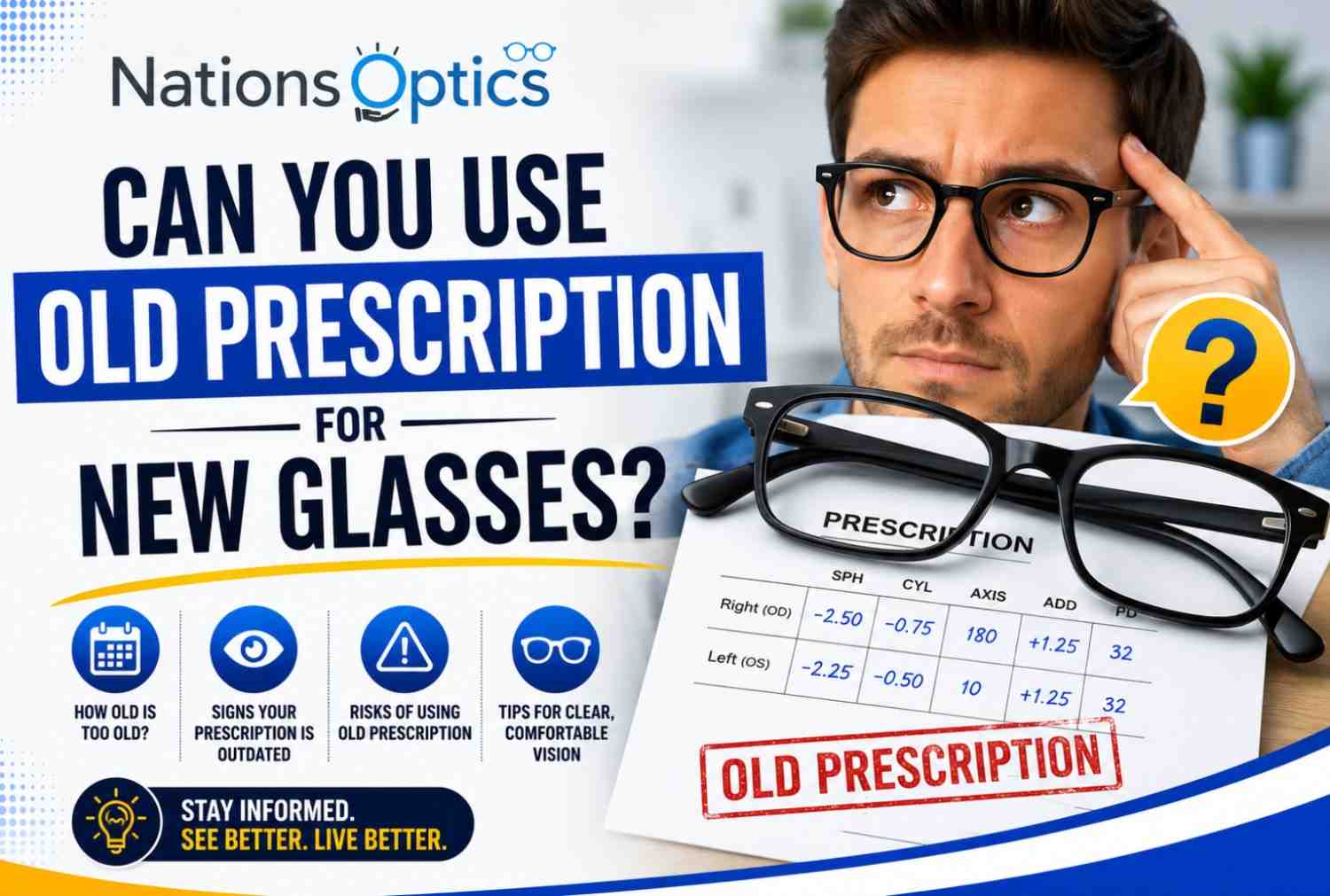
Can You Use Old Prescription for New Glasses?
Learn when it is safe to reuse an old eyeglass prescription, the risks of outdated lenses, and how changing vision can affect your daily life and eye comfort.
Many people wonder whether they can use an old prescription when ordering new glasses online. It is one of the most common questions among eyewear buyers — especially when prescriptions seem “close enough” or vision changes appear minor.
While reusing an older prescription may sometimes work temporarily, it is important to understand how vision changes over time and when an updated prescription becomes necessary for clear and comfortable vision.
Using an outdated prescription may lead to headaches, blurry vision, eye strain, dizziness, and reduced visual comfort — especially for digital screen users and progressive lens wearers.
How Long Does an Eyeglass Prescription Last?
Eyeglass prescriptions are not designed to last forever. Vision naturally changes over time due to age, lifestyle habits, screen usage, and overall eye health.
Adults
Most adult prescriptions are valid for 1–2 years depending on eye health and vision stability.
Children
Children’s vision changes more rapidly, so yearly eye exams are usually recommended.
Progressive Lens Users
People using progressive lenses often require more frequent updates for comfortable vision.
Can You Use an Old Prescription for New Glasses?
In some situations, an older prescription may still work — particularly if your vision has remained stable and the prescription is only slightly outdated.
However, if you notice any changes in clarity or eye comfort, it is usually best to get an updated eye examination before purchasing new glasses.
When an Old Prescription May Still Work
- Your prescription is less than 1 year old
- Your vision feels clear and comfortable
- You are ordering a backup pair of glasses
- You do not experience headaches or eye strain
- Your prescription has historically remained stable
When You Should Avoid Using an Old Prescription
- You experience blurry vision
- You frequently get headaches
- Your screen time has increased significantly
- You struggle with night driving
- Your prescription is several years old
- You wear progressive or multifocal lenses
Signs Your Prescription is Outdated
Vision changes can happen gradually, making it difficult to notice when your prescription becomes outdated. Here are some common warning signs:
- Frequent headaches
- Eye strain after screen use
- Squinting to focus clearly
- Blurry or distorted vision
- Difficulty reading small text
- Dizziness or discomfort
- Poor night vision
- Frequent changes in focus
If you experience any of these symptoms regularly, it may be time for an updated eye exam.
Why Vision Changes Over Time
Several factors can affect your eyesight over time:
- Aging and natural eye changes
- Increased screen exposure
- Digital eye strain
- Lifestyle habits
- Medical conditions
- Long hours of reading or computer work
Today’s digital lifestyles place more strain on the eyes than ever before, making regular prescription updates increasingly important.
Risks of Using Outdated Prescriptions
Using glasses with an incorrect prescription can affect both comfort and visual performance.
Eye Strain
Your eyes work harder to focus when lens power is inaccurate.
Headaches
Incorrect prescriptions can trigger frequent headaches and discomfort.
Poor Focus
Blurred or distorted vision affects reading, driving, and screen use.
Progressive Lens Problems
Outdated progressive prescriptions can create adaptation difficulties.
Can Old Glasses Damage Your Eyes?
Old glasses usually do not permanently damage your eyes, but they can create visual discomfort and reduce your ability to see clearly.
Wearing outdated prescriptions for long periods may increase:
- Eye fatigue
- Neck strain
- Focus issues
- Digital eye strain symptoms
- Reading discomfort
Ordering Glasses Online with an Old Prescription
Many online eyewear stores allow customers to upload existing prescriptions while ordering glasses online. However, accuracy is extremely important for comfortable vision.
Before placing an order, make sure:
- Your prescription is still relatively current
- Your PD (Pupillary Distance) is accurate
- Your lens requirements have not changed
- You choose the correct lens type
Why PD Measurement Matters
Even with a correct prescription, inaccurate Pupillary Distance measurements can affect lens alignment and visual comfort.
This becomes even more important for:
- Progressive lenses
- High-index lenses
- Blue light glasses
- Premium prescription eyewear
Best Time to Update Your Prescription
Experts generally recommend scheduling regular eye exams every 1–2 years, depending on your age and eye health.
You should update your prescription sooner if:
- Your vision changes suddenly
- You spend long hours on screens
- You frequently experience headaches
- Your current glasses feel uncomfortable
- You notice blurry vision while driving
Modern Lens Options for Better Vision
Updating your prescription is also a great opportunity to explore advanced lens technologies designed for modern lifestyles.
Blue Light Lenses
Help reduce digital eye strain caused by screen exposure.
Progressive Lenses
Provide smooth vision correction at multiple distances.
Photochromic Lenses
Automatically adjust to changing light conditions.
High Index Lenses
Offer thinner and lighter lenses for stronger prescriptions.
Upgrade Your Vision with Premium Eyewear
Explore high-quality prescription glasses, progressive lenses, blue light protection, and smart eyewear solutions designed for modern lifestyles.
Shop Now at Nations OpticsFrequently Asked Questions
Can I use a 2-year-old prescription for new glasses?
Possibly, if your vision has remained stable. However, updated eye exams are recommended for the best visual accuracy.
Can old glasses damage your eyes?
Old glasses usually do not permanently damage your eyes, but they can cause discomfort, headaches, and blurry vision.
How often should I update my eyeglass prescription?
Most people should update prescriptions every 1–2 years depending on age and eye health.
Is PD important when ordering glasses online?
Yes. Accurate Pupillary Distance measurements are essential for proper lens alignment and visual comfort.
Can AI help analyze prescriptions online?
Modern AI tools can help scan prescriptions, estimate PD measurements, and improve online eyewear shopping experiences.
Exclusive Offers
Sitewide
33%
OFF
Flat 33% off on all products
Already applied on every price · no coupon needed
Auto-applied
10%
OFF
On orders ₹1,200 – ₹1,799
No coupon needed · saves automatically
Auto-applied
15%
OFF
On orders ₹1,800 – ₹3,199
No coupon needed · saves automatically
Best Deal 🔥
20%
OFF
On orders above ₹3,200
No coupon needed · saves automatically
Pay Advance
₹50
SAVED
Pay advance amount at checkout
Flat ₹50 off · pay balance on delivery
Pay Full ✓
₹100
SAVED
Pay full amount at checkout
Maximum saving · instant confirmation
N
Nations Optics Assistant
● Online
👋 Hi! I'm your Nations Optics assistant. Ask me anything about lenses, frames, or prescriptions!