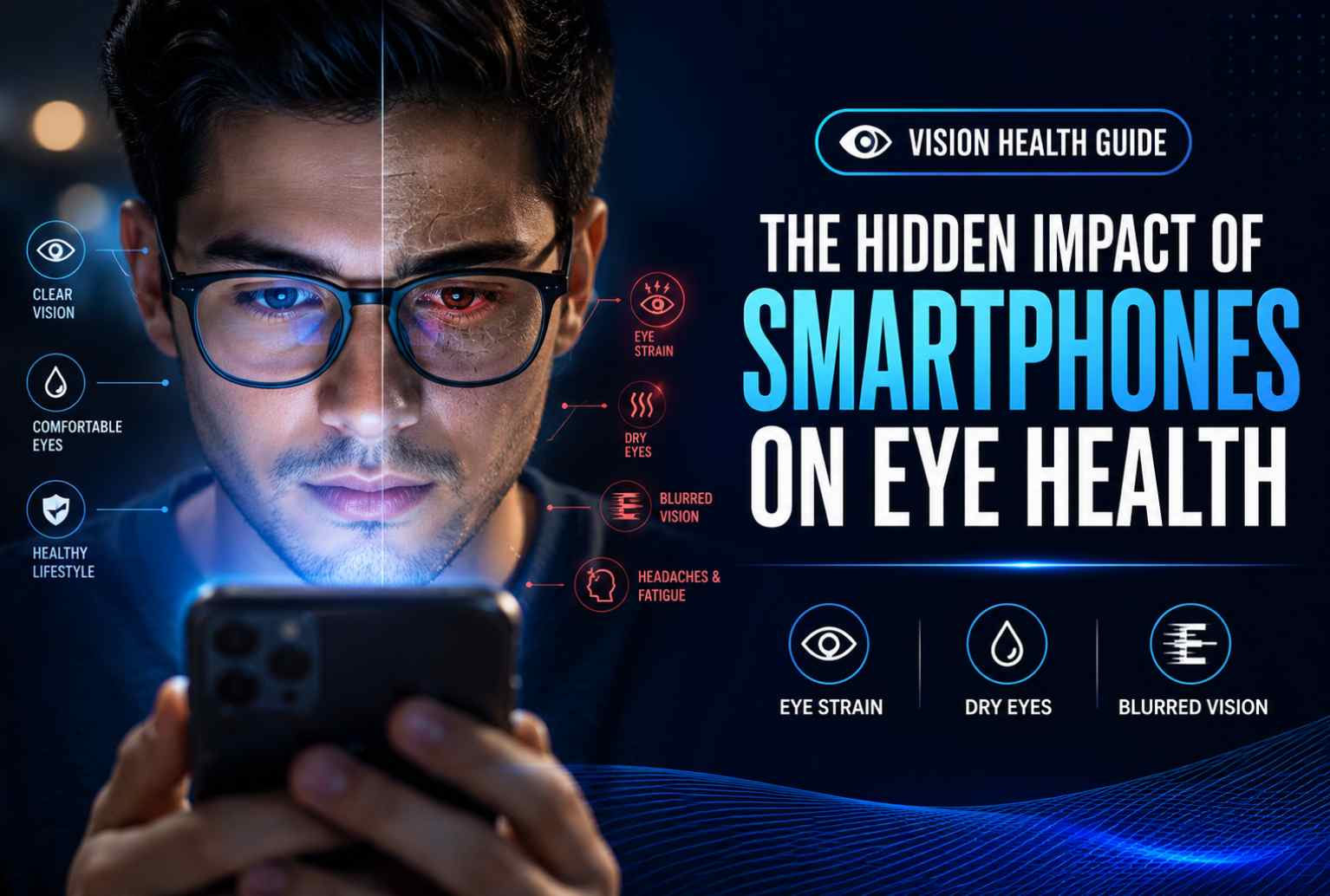
The Hidden Impact of Smartphones on Eye Health
Jun 1, 2026
By Rahul Jain
0 comment(s)
The Hidden Impact of Smartphones on Eye Health
Discover how excessive smartphone usage affects your eyes, causes digital eye strain, impacts sleep quality, and what you can do to protect your vision in today's screen-driven world.
Smartphones have become an essential part of modern life. From communication and entertainment to work and online shopping, these powerful devices help us stay connected every day. However, while smartphones offer convenience and productivity, they also bring an often-overlooked concern: their impact on eye health.
Many people spend between 4 to 10 hours daily looking at smartphone screens. Whether scrolling through social media, watching videos, replying to emails, or reading news articles, prolonged screen exposure can place significant strain on the eyes. Over time, this may lead to discomfort, reduced visual performance, and even long-term vision-related issues.
Did You Know?
The average person checks their smartphone over 90 times per day, exposing their eyes to thousands of minutes of close-up screen viewing every week.
The average person checks their smartphone over 90 times per day, exposing their eyes to thousands of minutes of close-up screen viewing every week.
Understanding the hidden effects of smartphones on vision is the first step toward protecting your eyes and maintaining healthy eyesight for years to come.
What Happens to Your Eyes When You Use a Smartphone?
When using a smartphone, your eyes continuously focus on a small screen positioned at a short viewing distance. Unlike looking at distant objects, close-up viewing requires the eye muscles to work harder to maintain focus.
Extended smartphone use also reduces blinking frequency. Normally, people blink around 15 to 20 times per minute. During screen use, blinking may decrease by nearly 50%, causing tears to evaporate more quickly and resulting in dry, irritated eyes.
Combined with screen glare, brightness variations, and blue light exposure, these factors contribute significantly to eye fatigue and visual discomfort.
Digital Eye Strain: The Most Common Smartphone-Related Problem
One of the most common consequences of prolonged smartphone use is Digital Eye Strain, also known as Computer Vision Syndrome. This condition occurs when the eyes become tired after extended periods of screen exposure.
Common Symptoms Include:
- Blurred vision
- Eye fatigue
- Dry or watery eyes
- Burning sensation
- Headaches
- Neck and shoulder pain
- Difficulty focusing
- Increased sensitivity to light
While digital eye strain may not cause permanent vision damage, it can significantly affect daily comfort, productivity, and overall quality of life.
The Role of Blue Light Exposure
Smartphone screens emit blue light, a high-energy visible light naturally present in sunlight. While moderate blue light exposure is normal, excessive exposure from digital devices may contribute to visual discomfort.
Blue light scatters more easily than other visible light wavelengths, making it harder for the eyes to focus. This increased visual effort can contribute to eye strain, fatigue, and discomfort during extended smartphone use.
Eye Care Tip:
Consider using blue light filtering lenses or enabling your phone's night mode to reduce exposure during evening hours.
Although research continues regarding the long-term effects of blue light, reducing unnecessary exposure remains a practical strategy for improving visual comfort.
How Smartphones Affect Sleep and Eye Recovery
Smartphone use before bedtime can interfere with healthy sleep patterns. Blue light exposure suppresses melatonin production, the hormone responsible for regulating sleep cycles.
Poor sleep quality doesn't only affect energy levels—it can also impact eye health. During sleep, the eyes recover from daily visual stress. Insufficient rest may worsen symptoms of eye strain, dryness, and fatigue.
Experts recommend avoiding smartphone use for at least one hour before bedtime to promote better sleep and support eye recovery.
Can Smartphones Increase Myopia Risk?
Myopia, commonly known as nearsightedness, is becoming increasingly common worldwide. Researchers believe that extended near-work activities, including smartphone use, may contribute to its development and progression, especially in children and teenagers.
Spending long hours focusing on close objects can place continuous stress on the visual system. Combined with reduced outdoor activity, this may increase the likelihood of developing myopia.
Parents should encourage balanced screen habits and ensure children spend sufficient time outdoors to support healthy visual development.
Signs That Smartphone Use Is Affecting Your Vision
Many people ignore early warning signs of vision-related problems caused by excessive screen use. Recognizing symptoms early can help prevent worsening discomfort.
- Frequent headaches after screen use
- Difficulty focusing on distant objects
- Persistent dry eyes
- Blurred or double vision
- Increased eye sensitivity
- Frequent rubbing of the eyes
- Eye redness after prolonged smartphone use
If these symptoms persist, scheduling a comprehensive eye examination is highly recommended.
How to Protect Your Eyes from Smartphone-Related Strain
1. Follow the 20-20-20 Rule
Every 20 minutes, look at an object at least 20 feet away for 20 seconds. This simple habit relaxes focusing muscles and reduces eye fatigue.
2. Increase Blink Frequency
Make a conscious effort to blink regularly while using your smartphone. Blinking helps maintain tear film stability and prevents dryness.
3. Adjust Screen Brightness
Match screen brightness to your surrounding environment. Extremely bright or dim screens force the eyes to work harder.
4. Use Blue Light Protection
Blue light filtering lenses and screen protectors may help reduce visual discomfort during extended digital device usage.
5. Maintain Proper Viewing Distance
Hold smartphones approximately 16 to 24 inches away from your eyes whenever possible.
6. Wear Appropriate Prescription Eyewear
If you wear prescription glasses, ensure your prescription is up-to-date. Specialized digital lenses can provide additional comfort during screen use.
7. Take Regular Screen Breaks
Limiting continuous screen exposure allows your eyes to rest and recover throughout the day.
The Importance of Regular Eye Exams
Regular eye examinations play a critical role in maintaining long-term eye health. Eye care professionals can detect vision changes early and recommend appropriate solutions, including prescription glasses, digital lenses, or protective coatings.
Even if your vision appears normal, routine eye exams help identify hidden issues before they become more serious problems.
For individuals who spend several hours daily on smartphones, annual eye checkups are especially important.
Conclusion
Smartphones have transformed the way we communicate, learn, and work, but excessive usage can have a significant impact on eye health. From digital eye strain and dry eyes to sleep disruption and increased myopia risk, prolonged screen exposure presents challenges that should not be ignored.
Fortunately, protecting your vision doesn't require giving up technology. By adopting healthy screen habits, using quality prescription eyewear, taking regular breaks, and scheduling routine eye exams, you can enjoy the benefits of modern devices while keeping your eyes comfortable and healthy.
At Nations Optics, we believe that clear vision is essential for everyday life. Explore our range of premium prescription glasses, blue light lenses, and advanced vision solutions designed to support healthier digital lifestyles.
Exclusive Offers
Sitewide
33%
OFF
Flat 33% off on all products
Already applied on every price · no coupon needed
Auto-applied
10%
OFF
On orders ₹1,200 – ₹1,799
No coupon needed · saves automatically
Auto-applied
15%
OFF
On orders ₹1,800 – ₹3,199
No coupon needed · saves automatically
Best Deal 🔥
20%
OFF
On orders above ₹3,200
No coupon needed · saves automatically
Pay Advance
₹50
SAVED
Pay advance amount at checkout
Flat ₹50 off · pay balance on delivery
Pay Full ✓
₹100
SAVED
Pay full amount at checkout
Maximum saving · instant confirmation
N
Nations Optics Assistant
● Online
👋 Hi! I'm your Nations Optics assistant. Ask me anything about lenses, frames, or prescriptions!