
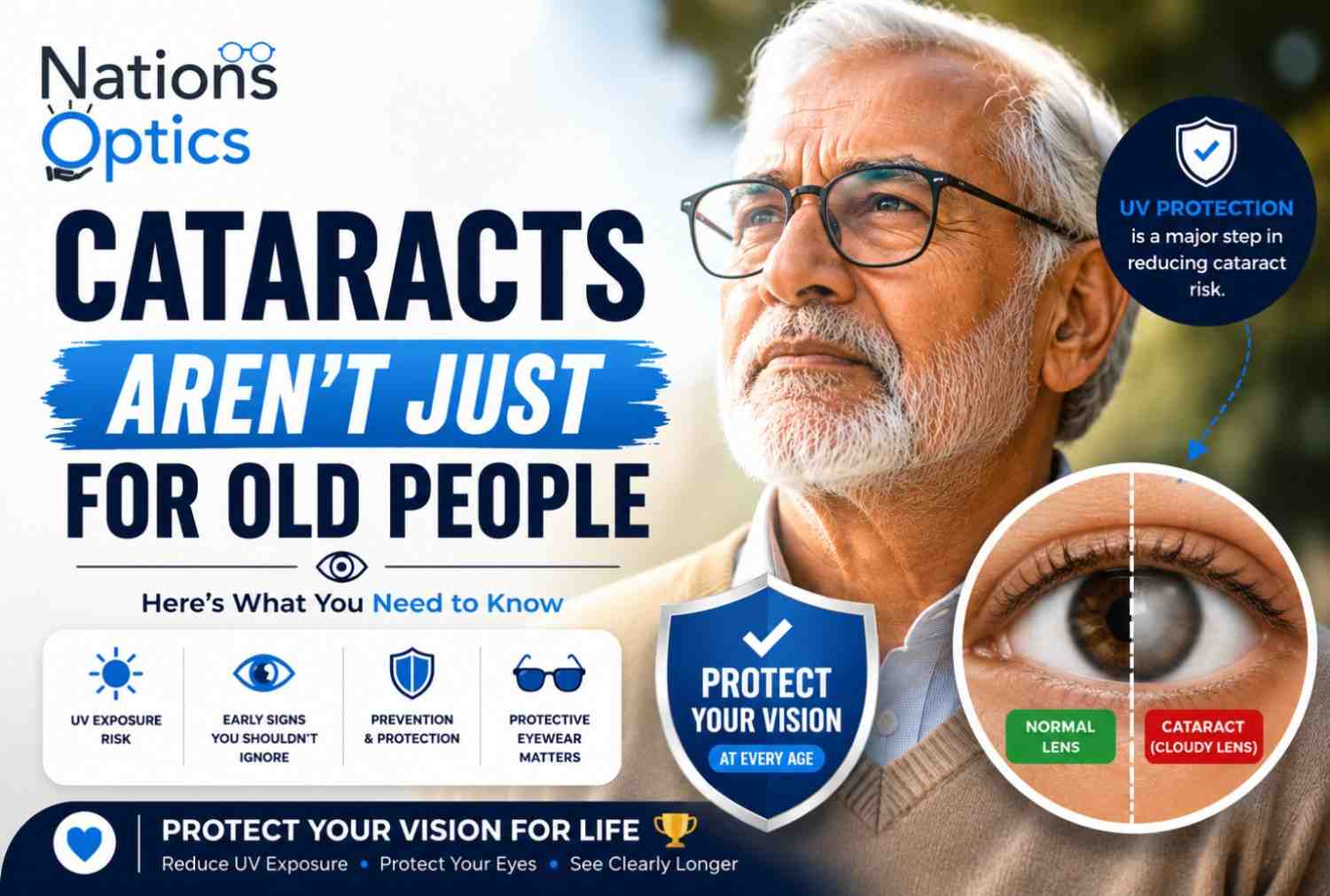
When most people hear the word cataract, they immediately think of aging and retirement. While cataracts are certainly more common among older adults, they are not exclusively an age-related condition. In fact, cataracts can develop in younger adults, and in some cases even children, due to various environmental, genetic, and lifestyle factors.
Understanding the causes, symptoms, and prevention strategies for cataracts is essential for protecting your vision throughout life. One often-overlooked factor is long-term exposure to ultraviolet (UV) radiation, which has been associated with an increased risk of cataract development. This makes quality eyewear more than a fashion accessory—it becomes an important tool for eye protection.
Did You Know?
According to global health research, prolonged exposure to UV radiation may contribute to a significant percentage of cataract cases worldwide. Wearing proper UV-protective eyewear can help reduce unnecessary exposure and support long-term eye health.
According to global health research, prolonged exposure to UV radiation may contribute to a significant percentage of cataract cases worldwide. Wearing proper UV-protective eyewear can help reduce unnecessary exposure and support long-term eye health.
What Are Cataracts?
A cataract occurs when the natural lens inside the eye becomes cloudy. Under normal conditions, this lens is transparent and helps focus light onto the retina, allowing you to see clearly. When proteins inside the lens begin to break down and clump together, vision can gradually become blurry, hazy, or distorted.
Cataracts typically develop slowly and may not cause noticeable symptoms in the early stages. As the condition progresses, everyday activities such as reading, driving, or recognizing faces can become increasingly difficult.
Can Young Adults Really Get Cataracts?
Yes. Although cataracts are most commonly associated with aging, younger individuals can develop them as well. These are often referred to as early-onset cataracts or premature cataracts.
Several factors can accelerate the clouding of the eye's natural lens, including prolonged UV exposure, diabetes, smoking, eye injuries, certain medications, and genetic predisposition. Modern lifestyles may also increase risk factors due to extended outdoor activities without proper eye protection.
Common Causes of Early Cataracts
Understanding what contributes to cataract formation can help individuals make informed decisions about eye care and prevention.
- Excessive UV Exposure: Long-term exposure to sunlight without UV protection may damage proteins in the eye's lens.
- Smoking: Tobacco use increases oxidative stress throughout the body, including the eyes.
- Diabetes: Elevated blood sugar levels can contribute to lens changes over time.
- Eye Injuries: Trauma can trigger cataract development months or even years later.
- Steroid Medications: Prolonged use of corticosteroids may increase cataract risk.
- Genetics: Family history can influence susceptibility to cataracts.
The Connection Between UV Exposure and Cataracts
One of the most significant environmental risk factors for cataracts is ultraviolet radiation. Just as UV rays can damage your skin, they can also affect delicate eye structures.
Over time, UV exposure may contribute to oxidative damage within the eye's lens. This damage can accelerate protein breakdown, eventually leading to cloudiness and vision impairment. Individuals who spend significant time outdoors—including drivers, athletes, travelers, construction workers, and outdoor enthusiasts—may face increased exposure.
The risk isn't limited to bright summer days. UV rays can penetrate clouds and reflect off surfaces such as water, sand, roads, and snow, exposing the eyes year-round.
Early Warning Signs of Cataracts
Cataracts often develop gradually, making them easy to overlook during the early stages. Recognizing symptoms early can help you seek professional eye care before vision becomes significantly affected.
- Blurred or cloudy vision
- Increased sensitivity to light
- Difficulty driving at night
- Halos around lights
- Frequent prescription changes
- Fading or yellowing of colors
- Double vision in one eye
If you experience any of these symptoms, scheduling a comprehensive eye examination is recommended.
How to Reduce Your Risk
While not every cataract can be prevented, there are several evidence-based steps you can take to support long-term eye health and potentially reduce your risk.
- Wear UV400 protective sunglasses outdoors.
- Choose photochromic lenses that adapt to changing light conditions.
- Avoid smoking and tobacco products.
- Maintain healthy blood sugar levels.
- Eat antioxidant-rich foods such as leafy greens and colorful fruits.
- Schedule regular comprehensive eye exams.
- Use protective eyewear during sports and hazardous activities.
Why UV-Protective Eyewear Matters
Many people invest in skincare products to protect themselves from UV damage but overlook their eyes entirely. Quality eyewear with proper UV protection acts as a protective barrier against harmful ultraviolet rays.
Modern lens technologies provide multiple benefits beyond vision correction. Photochromic lenses automatically darken outdoors and become clear indoors, offering convenient UV protection throughout the day. Anti-glare coatings can further enhance visual comfort, especially for individuals who spend long hours working on digital devices.
For people who wear prescription glasses, prescription sunglasses and transition lenses offer an excellent combination of visual clarity and eye protection.
Protecting Your Eyes Starts Today
Cataracts are often thought of as an inevitable part of aging, but many of the factors that contribute to lens damage begin much earlier in life. Taking proactive steps today can help support healthier vision for years to come.
Whether you're in your twenties, thirties, or beyond, protecting your eyes from excessive UV exposure should be part of your everyday routine. Investing in high-quality eyewear is a simple yet effective way to support your long-term eye health while enjoying clearer, more comfortable vision.
Protect Your Vision with NationsOptics
Discover premium UV-protective eyewear, Photo Grey Transition lenses, Prescription Sunglasses, and Anti-Glare Blue Block lenses designed to keep your eyes comfortable and protected every day.
Shop Premium Eyewear