
Common Eye Diseases & Warning Signs | Nations Optics
Jun 11, 2026
By Rahul Jain
0 comment(s)
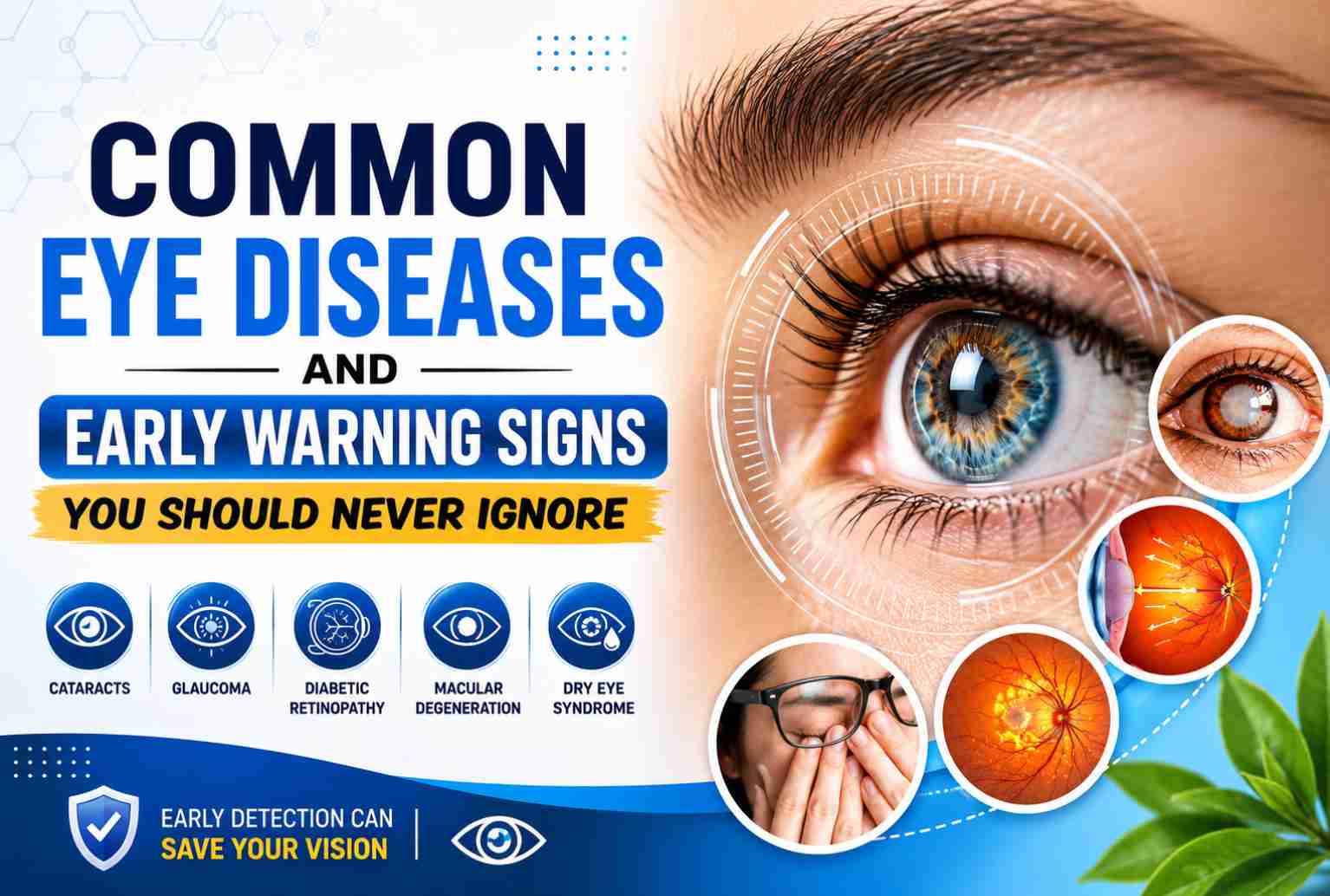
Common Eye Diseases and Early Warning Signs You Should Never Ignore
Protect your vision by recognizing the symptoms of serious eye diseases before permanent damage occurs.
Your eyes are among the most important organs in your body, yet millions of people ignore early symptoms of eye diseases until significant vision loss occurs. Many serious eye conditions develop gradually and often without pain, making regular eye examinations essential for preserving healthy vision.
According to leading eye health organizations, conditions such as cataracts, glaucoma, diabetic retinopathy, and age-related macular degeneration (AMD) are among the most common causes of vision impairment worldwide. Early diagnosis and treatment can significantly reduce the risk of permanent vision loss. :contentReference[oaicite:0]{index=0}
Key Takeaway: Blurred vision, eye pain, flashes of light, sudden vision loss, and difficulty seeing at night should never be ignored. These symptoms may indicate serious underlying eye diseases requiring immediate medical attention.
Why Early Detection of Eye Diseases Matters
Many eye diseases progress silently. In some cases, one healthy eye compensates for the affected eye, making symptoms difficult to notice. Conditions like glaucoma are often referred to as the "silent thief of sight" because permanent damage may occur before symptoms become obvious. :contentReference[oaicite:1]{index=1}
Routine comprehensive eye exams can identify diseases before noticeable vision loss occurs. Early intervention not only preserves eyesight but also improves overall quality of life.
1. Cataracts
Cataracts occur when the natural lens of the eye becomes cloudy, resulting in blurred or hazy vision. Cataracts are one of the most common age-related eye conditions and a leading cause of vision impairment worldwide. :contentReference[oaicite:2]{index=2}
Early Warning Signs
- Blurred or cloudy vision
- Increased sensitivity to light
- Difficulty seeing at night
- Colors appearing faded or yellow
- Frequent prescription changes
Risk Factors
- Age over 60
- Diabetes
- Smoking
- Excessive UV exposure
- Family history
Modern cataract surgery is highly successful and can restore clear vision in most patients.
2. Glaucoma
Glaucoma damages the optic nerve, often due to increased pressure inside the eye. Since vision loss from glaucoma is irreversible, early detection is critical. :contentReference[oaicite:3]{index=3}
Early Warning Signs
- Gradual loss of peripheral vision
- Tunnel vision in advanced stages
- Eye pain or pressure
- Halos around lights
- Sudden severe headache with vision changes
Medical Emergency: Sudden eye pain, nausea, vomiting, and blurred vision may indicate acute angle-closure glaucoma and require immediate treatment. :contentReference[oaicite:4]{index=4}
Who Is Most at Risk?
- People over age 40
- Family history of glaucoma
- Diabetes patients
- Individuals with high eye pressure
3. Diabetic Retinopathy
Diabetic retinopathy occurs when high blood sugar damages blood vessels in the retina. It is one of the leading causes of blindness among adults with diabetes. :contentReference[oaicite:5]{index=5}
Early Warning Signs
- Blurred vision
- Floaters or dark spots
- Fluctuating vision
- Difficulty seeing colors
- Dark areas in vision
Prevention Tips
- Maintain healthy blood sugar levels
- Control blood pressure
- Get annual dilated eye exams
- Exercise regularly
- Avoid smoking
Many people experience no symptoms during the early stages, making regular eye exams especially important for individuals with diabetes. :contentReference[oaicite:6]{index=6}
4. Age-Related Macular Degeneration (AMD)
AMD affects the macula, the central part of the retina responsible for detailed vision. It is one of the leading causes of vision loss in people over 65. :contentReference[oaicite:7]{index=7}
Early Warning Signs
- Straight lines appearing wavy
- Blurred central vision
- Dark spots in central vision
- Difficulty reading
- Reduced color intensity
Risk Factors
- Age over 50
- Smoking
- Family history
- High blood pressure
- Obesity
Prompt treatment can slow progression and help preserve vision. :contentReference[oaicite:8]{index=8}
5. Dry Eye Syndrome
Dry Eye Syndrome occurs when your eyes do not produce enough tears or the tears evaporate too quickly.
Symptoms
- Burning sensation
- Eye redness
- Foreign body sensation
- Blurred vision
- Watery eyes
Extended screen time, aging, and environmental factors significantly contribute to dry eye symptoms.
6. Retinal Detachment
Retinal detachment is a serious condition where the retina separates from the back of the eye. Immediate treatment is necessary to prevent permanent blindness. :contentReference[oaicite:9]{index=9}
Warning Signs
- Sudden flashes of light
- Large increase in floaters
- Shadow or curtain over vision
- Sudden vision loss
Seek emergency eye care immediately if these symptoms appear.
Comparison of Common Eye Diseases
| Eye Disease | Main Symptoms | Risk Group | Treatment |
|---|---|---|---|
| Cataracts | Cloudy vision, glare | Older adults | Surgery |
| Glaucoma | Peripheral vision loss | 40+ years | Medication, Surgery |
| Diabetic Retinopathy | Blurred vision, floaters | Diabetes patients | Laser, Injections |
| AMD | Central vision loss | 65+ years | Medication, Monitoring |
| Retinal Detachment | Flashes, floaters | High-risk individuals | Emergency Surgery |
Tips to Maintain Healthy Vision
- Schedule comprehensive eye exams annually.
- Wear UV-protective sunglasses outdoors.
- Maintain healthy blood sugar and blood pressure.
- Follow the 20-20-20 rule during screen use.
- Eat eye-friendly foods rich in Vitamins A, C, E, and Omega-3.
- Avoid smoking and excessive alcohol consumption.
- Use high-quality prescription lenses when needed.
Protect Your Vision Before It's Too Late
Many eye diseases develop silently and become noticeable only after irreversible damage has occurred. Recognizing the early warning signs and scheduling regular eye examinations can help preserve your vision for years to come. If you experience blurred vision, flashes of light, eye pain, or sudden vision changes, consult an eye care professional immediately.
Nations Optics is committed to helping you maintain clear, comfortable vision with premium prescription lenses and advanced vision care solutions.
Exclusive Offers
Sitewide
33%
OFF
Flat 33% off on all products
Already applied on every price · no coupon needed
Auto-applied
10%
OFF
On orders ₹1,200 – ₹1,799
No coupon needed · saves automatically
Auto-applied
15%
OFF
On orders ₹1,800 – ₹3,199
No coupon needed · saves automatically
Best Deal 🔥
20%
OFF
On orders above ₹3,200
No coupon needed · saves automatically
Pay Advance
₹50
SAVED
Pay advance amount at checkout
Flat ₹50 off · pay balance on delivery
Pay Full ✓
₹100
SAVED
Pay full amount at checkout
Maximum saving · instant confirmation
N
Nations Optics Assistant
● Online
👋 Hi! I'm your Nations Optics assistant. Ask me anything about lenses, frames, or prescriptions!