
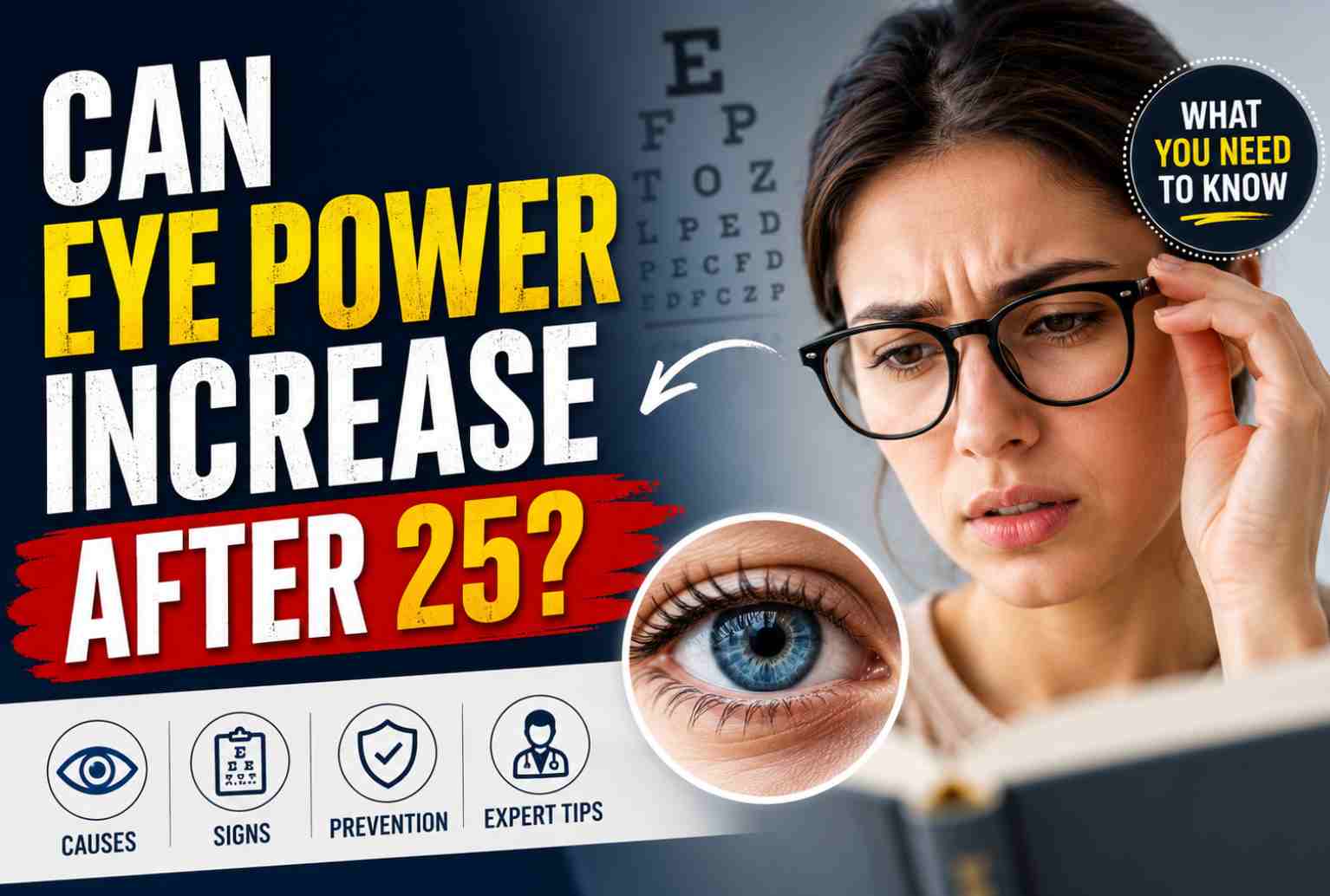
Can Eye Power Increase After 25? Causes, Symptoms & Prevention Guide
Jun 30, 2026
By Rahul Jain
0 comment(s)
Eye Health Guide
Can Eye Power Increase After 25? Causes, Prevention & Expert Advice
Vision often stabilises in early adulthood, but not for everyone. Here's why your prescription can still change after 25, what's normal, and how to protect your eyesight long term.
Many people assume that once they reach their mid-twenties, their eyesight becomes permanent and their glasses prescription will never change again. While vision often does stabilise during early adulthood, this isn't the case for everyone. If you've recently noticed blurry vision, frequent headaches, or difficulty reading road signs, you may be wondering whether your eye power is increasing.
The good news: changes in vision after 25 are relatively common and aren't always a sign of a serious eye condition. Still, understanding why they happen is essential for protecting your long-term eye health.
01Why Adult Vision Can Change Over Time
Your eyes keep responding to your environment throughout life. Although the rapid eye growth of childhood usually stops by the late teens or early twenties, your visual system is still shaped by genetics, daily habits, overall health, and natural aging.
Modern lifestyles play a big role too. Many adults spend eight to ten hours a day on computers, smartphones, or screens. Combined with stress, poor sleep, and limited outdoor time, these habits can affect visual comfort and sometimes shift your prescription. Changes rarely happen overnight, they develop gradually, which makes them easy to overlook until everyday tasks become harder.
02Does Eyesight Get Worse After 25?
For many people, vision stays relatively stable for years. Others experience gradual changes because of genetics, lifestyle, or age-related shifts in the eye. Small prescription changes every few years are considered normal, they don't necessarily mean your eyes are unhealthy, and often just reflect natural adjustments in how the eye focuses light.
Some adults notice distant objects becoming blurrier; others struggle with small text or feel strain after long hours on screens. Eye specialists recommend a comprehensive eye examination every one to two years, even if you don't currently wear glasses, to catch changes early and spot eye diseases before symptoms become severe.
03Common Reasons Your Vision May Be Changing
Genetics
If a parent has high myopia, astigmatism, or other refractive errors, your prescription is more likely to keep changing. It can't be altered, but regular exams keep it updated.
Digital Eye Strain
Screens don't permanently increase eye power, but long exposure can make existing problems more noticeable, causing fatigue, dryness, and blur.
Lifestyle Habits
Poor sleep, dehydration, smoking, alcohol, and an unhealthy diet all reduce visual comfort. Good nutrition and rest help your eyes work efficiently.
Medical Conditions
Diabetes, high blood pressure, thyroid disorders, cataracts, glaucoma, and keratoconus can all affect your prescription, sometimes rapidly.
Common symptoms of digital eye strain include:
Blurred vision
Dry eyes
Headaches
Difficulty focusing
Eye fatigue
Neck & shoulder pain
20·20·20
Every 20 minutes, look at something 20 feet away for 20 seconds. A simple habit that meaningfully reduces screen-related eye strain.
Helpful nutrients for healthy vision include Vitamin A, C and E, Zinc, Omega-3 fatty acids, Lutein, and Zeaxanthin.
See a professional promptly if your prescription changes rapidly within a short period, it may point to an underlying medical condition that needs attention.
04Can Vision Change After 25 Even If It Was Stable Before?
Yes. Even after years of an unchanged prescription, your vision can still shift after 25. Many adults notice subtle signs first, squinting while driving at night, a computer screen that's harder to read, or holding the phone farther away.
These changes don't always mean worsening eyesight. Sometimes the focusing muscles simply tire after long hours of close work; in other cases, age-related changes in the lens gradually affect focusing ability. The key is catching changes early, rather than waiting until they disrupt daily life.
05Eye Prescription Changes by Age
Your prescription reflects how your eyes focus light onto the retina. As you age, different parts of the eye undergo small changes.
YOUR 20s
Most prescriptions stabilise. Those with progressive myopia or visually demanding jobs may still see small increases.
YOUR 30s
Longer screen hours make eye strain more common, though permanent prescription changes stay relatively small for most.
YOUR 40s
The eye's natural lens becomes less flexible (presbyopia), making small text harder to read. Many need reading glasses or progressive lenses.
AFTER 50
Age-related conditions like cataracts, glaucoma, and macular degeneration become more common, often without early symptoms. Routine exams matter more than ever.
06Why Is My Eye Power Increasing?
If your prescription keeps changing, several factors may be responsible. Excessive near work, long hours of reading, studying, designing, programming, or office work, places continuous demand on your focusing muscles and can reveal previously unnoticed refractive errors.
Stress contributes too, as muscle tension and fatigue can cause temporary blur. Dry eyes are another overlooked cause: reduced tear production affects the eye's surface and makes vision fluctuate through the day. Hormonal changes, pregnancy, diabetes, and certain medications may also temporarily affect your prescription. Because so many factors overlap, an eye exam is the most reliable way to find the exact cause.
07Can You Prevent Your Eye Number from Increasing?
Genetics can't be controlled, but healthy habits help slow unnecessary changes and improve comfort:
- Schedule regular comprehensive eye examinations to catch small changes early.
- Limit continuous screen time; set your monitor at eye level, keep good posture, and blink often.
- Wear sunglasses with full UV protection outdoors to reduce cataract risk.
- Eat eye-friendly foods, leafy greens, carrots, sweet potatoes, eggs, salmon, walnuts, citrus, and berries.
- Get adequate sleep so your eyes recover from daily strain.
08When Should You Visit an Eye Doctor?
Gradual changes are often normal, but some symptoms need immediate attention. Book an exam if you experience:
Sudden blurred vision
Double vision
Eye pain
Frequent headaches
Flashes of light
Many new floaters
Trouble seeing at night
Rapid prescription change
Early diagnosis greatly improves the chances of treating many eye conditions successfully.
09Frequently Asked Questions
Is it normal for eyesight to change after 25?
Yes. Many adults experience small prescription changes due to genetics, lifestyle, aging, or underlying health conditions.
Can screen time permanently damage eyesight?
Current evidence suggests screens mainly cause digital eye strain rather than permanent increases in eye power, though prolonged use can worsen symptoms without healthy habits.
Does wearing glasses make eyesight weaker?
No. The correct prescription helps you see clearly and reduces strain. Glasses do not weaken your eyesight.
How often should adults have an eye examination?
Most adults should have a comprehensive exam every one to two years. Those with diabetes, high myopia, or existing conditions may need more frequent checkups.
Can eye exercises reduce prescription power?
Eye exercises may improve focusing flexibility and relieve strain, but they cannot eliminate refractive errors such as myopia, hyperopia, or astigmatism.
10Conclusion
Changes in eyesight after 25 are more common than many realise. Your vision may stay stable for years, but genetics, screen use, natural aging, lifestyle, and certain medical conditions can all influence your prescription over time.
The best protection is staying proactive: schedule regular exams, wear the correct prescription, eat a balanced diet rich in eye-friendly nutrients, protect your eyes from UV, and practise healthy screen habits. Clear vision isn't only about seeing better today, it's about preserving your eyesight for the future. If your current glasses no longer give the clarity they once did, don't ignore the signs.
Time for an updated prescription?
Already have a recent eye test? Upload your prescription and let our AI Rx reader do the rest, then find frames made for your eyes.
Shop Prescription GlassesExclusive Offers
Sitewide
33%
OFF
Flat 33% off on all products
Already applied on every price · no coupon needed
Auto-applied
10%
OFF
On orders ₹1,200 – ₹1,799
No coupon needed · saves automatically
Auto-applied
15%
OFF
On orders ₹1,800 – ₹3,199
No coupon needed · saves automatically
Best Deal 🔥
20%
OFF
On orders above ₹3,200
No coupon needed · saves automatically
Pay Advance
₹50
SAVED
Pay advance amount at checkout
Flat ₹50 off · pay balance on delivery
Pay Full ✓
₹100
SAVED
Pay full amount at checkout
Maximum saving · instant confirmation
N
Nations Optics Assistant
● Online
👋 Hi! I'm your Nations Optics assistant. Ask me anything about lenses, frames, or prescriptions!