
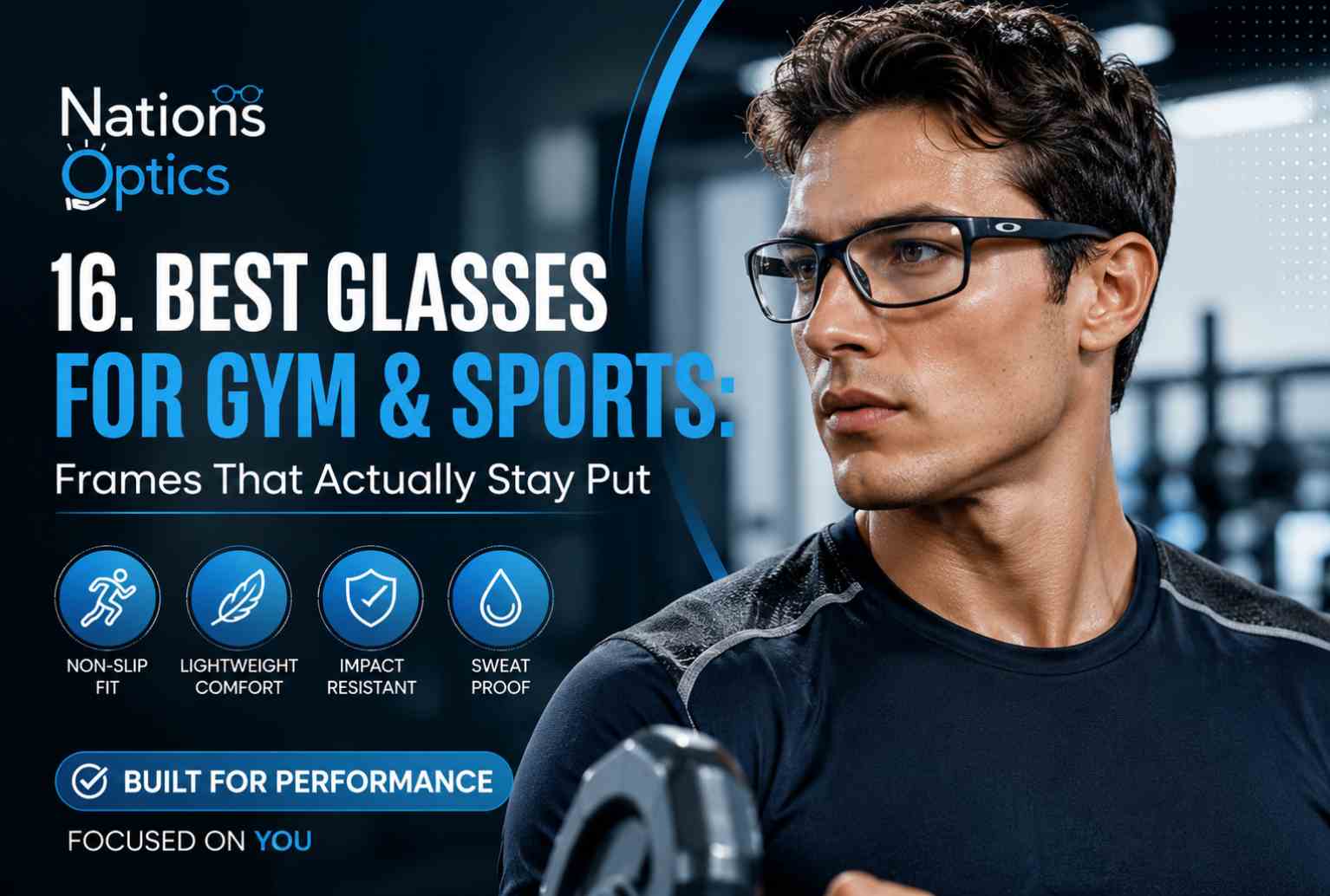
Best Glasses for Gym & Sports: Frames That Won't Slide or Break
Aug 8, 2026
By Rahul Jain
0 comment(s)
Active Lifestyle Eyewear
Best Glasses for Gym & Sports: Frames That Actually Stay Put
Sliding down mid-set, fogging up mid-run, or falling off during a sprint — regular glasses aren't built for movement. Here's what is.
If you wear prescription glasses and you're active — lifting, running, playing a sport, or just getting through a sweaty gym session — you already know the problem. Regular everyday frames slide down your nose, bounce with every step, fog up the moment your heart rate climbs, and are one bad moment away from snapping or getting lost on the court.
The good news is that sports and gym-specific eyewear exists to solve exactly this. This guide covers what actually makes glasses stay put during exercise, which frame materials and features matter most, and how to choose the right pair for your specific sport.
TR90 Frames Anti-Slip Grip Polycarbonate Lenses Sports Straps Anti-Fog Coating
Why Regular Glasses Don't Work for Exercise
Everyday eyeglasses are designed for sitting, walking, and mostly static environments. Once you introduce sweat, rapid head movement, and impact, several problems show up quickly.
Common Problems During Workouts
- Glasses sliding down a sweaty nose
- Frames bouncing during running or jumping
- Lenses fogging up during intense effort
- Frames slipping off entirely during fast movement
- Increased risk of breakage on impact
- Discomfort under helmets or headgear
- Smudged, sweat-streaked lenses
- Pressure points becoming painful over a long session
What Makes Glasses Actually Stay Put
1
Flexible, Lightweight Frame Material
TR90 is the standard for sports eyewear — a flexible, memory-retaining plastic that bends under pressure and springs back to shape instead of snapping. It's also significantly lighter than acetate or metal, which matters over a long run or workout.
2
Grippy Nose Pads and Temple Tips
Rubberized, textured nose pads and temple tips grip skin even when wet with sweat, which is the single biggest factor in whether glasses slide during a workout. Smooth plastic or metal surfaces lose grip almost immediately once sweat gets involved.
3
A Wraparound or Close-Fit Frame
Frames that curve slightly around the temple sit more securely than flat-fronted styles, and also reduce wind and glare entering from the sides — useful for running and cycling.
4
Impact-Resistant Lenses
Polycarbonate lenses are the standard choice for sports eyewear because of their high impact resistance and light weight — important for any sport involving balls, contact, or a fall risk.
5
Anti-Fog Coating
Heavy breathing and body heat cause fogging fast during intense effort. An anti-fog lens treatment keeps moisture from forming a visible layer, so your vision stays clear mid-set or mid-run.
6
A Sports Strap or Retention System
An adjustable strap that goes around the back of the head adds a second layer of security beyond the frame fit alone — especially useful for contact sports, cycling, or any activity with sudden direction changes.
Best Glasses for Specific Sports and Activities
Gym & Weightlifting
Prioritize a snug, low-bounce fit and grippy nose pads — you'll be looking down and moving your head frequently during lifts. Anti-fog coating helps during high-intensity sets.
Running
Lightweight TR90 frames with a wraparound fit reduce bounce and wind irritation. Consider polarized or tinted lenses for outdoor runs to cut glare.
Cycling
A close, wraparound fit with UV protection and anti-fog coating is essential — cycling combines speed, wind, and sun exposure all at once.
Basketball & Contact Sports
Impact-resistant polycarbonate lenses and a secure strap matter most here, since sudden contact and fast direction changes are common.
Yoga & Pilates
Lightweight frames with strong grip matter more than impact resistance — you'll be inverted or moving your head through a wide range of positions.
Swimming
Regular prescription glasses aren't suitable in water — consider prescription swim goggles instead, which are purpose-built for underwater use.
Frame Materials Compared for Active Use
| Material | Why It Works for Sports |
|---|---|
| TR90 | Extremely flexible, lightweight, resists snapping under pressure or impact |
| Polycarbonate (lenses) | High impact resistance, lightweight — the standard for sports lenses |
| Silicone-tipped temples | Grips skin even when wet, reduces slipping during sweat-heavy activity |
| Rubberized nose pads | Prevents sliding without needing to constantly push glasses back up |
Avoid rigid metal or brittle acetate frames for high-intensity activity — they don't flex under pressure and are more likely to bend out of shape or snap on impact.
Do You Need a Sports Strap?
Skip the Strap If:
You're doing gym workouts, yoga, or light activity where a well-fitted, grippy frame is usually secure enough on its own.
Add a Strap If:
You play contact sports, cycle, run trails, or do any activity involving sudden direction changes, falls, or high-speed movement where losing your glasses is a real risk.
Prescription Sports Glasses vs Prescription Inserts
1
Direct prescription sports frames — the lenses are ground directly into the sports frame itself. Simplest option for most people and sports.
2
Prescription insert clips — a small prescription lens clip mounted inside a larger sports frame or goggle, common for skiing, swimming goggles, and some cycling eyewear.
3
Daily contact lenses — many active people prefer switching to daily disposable contacts during sports, then wearing regular glasses the rest of the day. Worth discussing with your eye-care provider if sports eyewear isn't practical for your activity.
Good to know: If your prescription is strong, ask about high-index lenses for your sports frame — standard lenses can be too thick and heavy for a lightweight sports build, defeating the purpose of a lighter frame.
Frequently Asked Questions
What frame material is best for gym glasses?
TR90 is the top choice — it's lightweight, flexible, and resists snapping under pressure or impact, unlike rigid acetate or metal frames.
How do I stop my glasses from sliding during workouts?
Look for rubberized or silicone-tipped nose pads and temple tips, which grip skin even when sweaty — this matters more than frame weight alone.
Do I need special lenses for sports glasses?
Polycarbonate lenses are recommended for impact resistance, and an anti-fog coating helps keep vision clear during intense effort.
Can I wear regular glasses to the gym?
You can, but they're more likely to slide, fog up, or get damaged during high-intensity movement. Sports-specific frames solve these issues directly.
Should I get prescription sports glasses or wear contacts?
Both work well. Prescription sports frames are convenient for regular activity; daily disposable contacts are a good alternative for sports where any eyewear is impractical, like swimming.
Prescription Eyewear Built for Movement
At Nations Optics, we help you find sports-ready frames and lenses matched to your prescription and activity level.
- Lightweight, flexible TR90 frame options
- Impact-resistant polycarbonate lenses
- Anti-fog & anti-reflective coatings
- High-index lenses for stronger prescriptions
- Guidance based on your sport and prescription
Staying active shouldn't mean constantly pushing your glasses back up your nose or worrying about them flying off mid-workout. The right combination of frame material, grip, lens type, and — where needed — a retention strap can make prescription eyewear feel like it's barely there, even during your most intense sessions.
Whether you're in the gym three times a week or training for a specific sport, matching your eyewear to your activity is worth the investment in both comfort and confidence.
Exclusive Offers
Sitewide
33%
OFF
Flat 33% off on all products
Already applied on every price · no coupon needed
Auto-applied
10%
OFF
On orders ₹1,200 – ₹1,799
No coupon needed · saves automatically
Auto-applied
15%
OFF
On orders ₹1,800 – ₹3,199
No coupon needed · saves automatically
Best Deal 🔥
20%
OFF
On orders above ₹3,200
No coupon needed · saves automatically
Pay Advance
₹50
SAVED
Pay advance amount at checkout
Flat ₹50 off · pay balance on delivery
Pay Full ✓
₹100
SAVED
Pay full amount at checkout
Maximum saving · instant confirmation
N
Nations Optics Assistant
● Online
👋 Hi! I'm your Nations Optics assistant. Ask me anything about lenses, frames, or prescriptions!