
Photochromic vs Tinted Lenses: Which One Is Better for Your Eyes? | Nations Optics
Mar 26, 2026
By Saksham Dhiman
0 comment(s)
Sunglasses always include tinted lenses, but when choosing lenses for prescription glasses, deciding between Photochromic (Transitions) and Tinted Coating can be confusing. Both protect your eyes from sunlight, but they function in different ways. This guide explains how each lens works so you can choose the best option for your lifestyle.
01 What Are Photochromic Lenses?
Photochromic lenses automatically adjust to changing light conditions. They darken when exposed to ultraviolet (UV) rays from sunlight and become clear again when you move indoors.
These lenses contain special molecules that react to UV radiation. This allows one pair of glasses to function as both regular eyeglasses and sunglasses.
- Darkens within about 30–60 seconds
- Returns to clear in approximately 2–5 minutes
- React to UV light intensity
- May not fully darken inside cars because windshields block UV rays
02 What Is Tinted Coating?
Tinted coating is a permanent color applied to a lens. Unlike photochromic lenses, tinted lenses do not change with light conditions. They maintain the same shade indoors and outdoors.
Solid Tint
The entire lens has the same color intensity. This style is common for prescription sunglasses.
Gradient Tint
The lens is darker at the top and lighter at the bottom. This design helps reduce glare while still allowing clear vision for reading or driving.
Tinted lenses provide consistent shading, making them ideal for outdoor activities and driving.
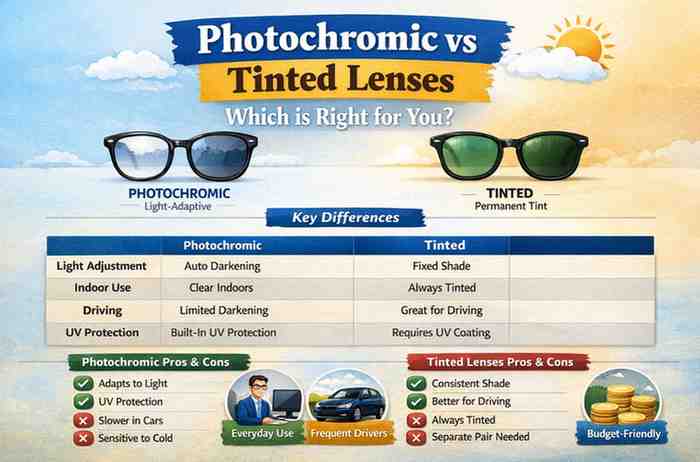
03 Key Differences
| Feature | Photochromic | Tinted |
|---|---|---|
| Light Adjustment | Automatically changes | Fixed shade |
| Indoor Use | Clear indoors | Always tinted |
| Outdoor Performance | Adapts to sunlight | Consistent glare reduction |
| Driving | Limited reaction inside cars | Works well |
| UV Protection | Usually built in | Added as a coating |
04 Photochromic Lenses: Pros & Cons
- Convenient for both indoor and outdoor use
- No need to carry separate sunglasses
- Automatic light adjustment
- Typically include UV protection
- May react slowly in very hot weather
- May not fully darken inside vehicles
05 Tinted Lenses: Pros & Cons
- Consistent glare protection
- Better performance for driving
- Available in many color options
- More affordable than photochromic lenses
- Not comfortable indoors
- Usually requires a separate pair of glasses
06 Tint Colors & Benefits
| Tint Color | Best Use | Benefit |
|---|---|---|
| Grey | Everyday outdoor use | Natural color perception |
| Brown | Driving and sports | Improves contrast |
| Green | Outdoor activities | Balanced vision |
| Yellow | Low light conditions | Improves clarity |
07 Which Option Is Right for You?
The best choice depends on your daily activities and environment.
- Daily commuters may benefit from photochromic lenses.
- Drivers often prefer tinted lenses.
- Outdoor sports users may prefer tinted lenses with specific colors.
- Office workers benefit from photochromic convenience.
08 UV Protection Explained
Tint darkness does not automatically mean UV protection. A dark lens without UV protection may actually allow more harmful rays into the eye.
- Photochromic lenses typically include UV400 protection.
- Tinted lenses require UV coating.
- Clear lenses can also include UV protection.
09 Cost Considerations
Tinted lenses are generally more affordable. Photochromic lenses cost more due to their advanced technology, but they may eliminate the need for a second pair of sunglasses.
10 Frequently Asked Questions
Do photochromic lenses work while driving?
Most car windshields block UV light, so the lenses may not fully darken.
How long do photochromic lenses last?
The transition effect usually lasts about 2–3 years.
Can tinted lenses be used with prescriptions?
Yes, tinted coatings can be applied to most prescription lenses.
11 The Nations Optics Verdict
Both photochromic and tinted lenses are excellent options depending on your needs. Photochromic lenses are ideal for convenience and everyday use, while tinted lenses provide consistent outdoor protection and style options.
Need Help Choosing the Right Lenses?
Visit Nations Optics and speak with our experts to find the perfect lens for your lifestyle.
Explore Our Lenses
Sunglasses always include tinted lenses, but when choosing lenses for prescription glasses, deciding between Photochromic (Transitions) and Tinted Coating can be confusing. Both protect your eyes from sunlight, but they function in different ways. This guide explains how each lens works so you can choose the best option for your lifestyle.
01 What Are Photochromic Lenses?
Photochromic lenses automatically adjust to changing light conditions. They darken when exposed to ultraviolet (UV) rays from sunlight and become clear again when you move indoors.
These lenses contain special molecules that react to UV radiation. This allows one pair of glasses to function as both regular eyeglasses and sunglasses.
- Darkens within about 30–60 seconds
- Returns to clear in approximately 2–5 minutes
- React to UV light intensity
- May not fully darken inside cars because windshields block UV rays
02 What Is Tinted Coating?
Tinted coating is a permanent color applied to a lens. Unlike photochromic lenses, tinted lenses do not change with light conditions. They maintain the same shade indoors and outdoors.
Solid Tint
The entire lens has the same color intensity. This style is common for prescription sunglasses.
Gradient Tint
The lens is darker at the top and lighter at the bottom. This design helps reduce glare while still allowing clear vision for reading or driving.
Tinted lenses provide consistent shading, making them ideal for outdoor activities and driving.
03 Key Differences
| Feature | Photochromic | Tinted |
|---|---|---|
| Light Adjustment | Automatically changes | Fixed shade |
| Indoor Use | Clear indoors | Always tinted |
| Outdoor Performance | Adapts to sunlight | Consistent glare reduction |
| Driving | Limited reaction inside cars | Works well |
| UV Protection | Usually built in | Added as a coating |
04 Photochromic Lenses: Pros & Cons
- Convenient for both indoor and outdoor use
- No need to carry separate sunglasses
- Automatic light adjustment
- Typically include UV protection
- May react slowly in very hot weather
- May not fully darken inside vehicles
05 Tinted Lenses: Pros & Cons
- Consistent glare protection
- Better performance for driving
- Available in many color options
- More affordable than photochromic lenses
- Not comfortable indoors
- Usually requires a separate pair of glasses
06 Tint Colors & Benefits
| Tint Color | Best Use | Benefit |
|---|---|---|
| Grey | Everyday outdoor use | Natural color perception |
| Brown | Driving and sports | Improves contrast |
| Green | Outdoor activities | Balanced vision |
| Yellow | Low light conditions | Improves clarity |
07 Which Option Is Right for You?
The best choice depends on your daily activities and environment.
- Daily commuters may benefit from photochromic lenses.
- Drivers often prefer tinted lenses.
- Outdoor sports users may prefer tinted lenses with specific colors.
- Office workers benefit from photochromic convenience.
08 UV Protection Explained
Tint darkness does not automatically mean UV protection. A dark lens without UV protection may actually allow more harmful rays into the eye.
- Photochromic lenses typically include UV400 protection.
- Tinted lenses require UV coating.
- Clear lenses can also include UV protection.
09 Cost Considerations
Tinted lenses are generally more affordable. Photochromic lenses cost more due to their advanced technology, but they may eliminate the need for a second pair of sunglasses.
10 Frequently Asked Questions
Do photochromic lenses work while driving?
Most car windshields block UV light, so the lenses may not fully darken.
How long do photochromic lenses last?
The transition effect usually lasts about 2–3 years.
Can tinted lenses be used with prescriptions?
Yes, tinted coatings can be applied to most prescription lenses.
11 The Nations Optics Verdict
Both photochromic and tinted lenses are excellent options depending on your needs. Photochromic lenses are ideal for convenience and everyday use, while tinted lenses provide consistent outdoor protection and style options.
Need Help Choosing the Right Lenses?
Visit Nations Optics and speak with our experts to find the perfect lens for your lifestyle.
Explore Our LensesExclusive Offers
Sitewide
33%
OFF
Flat 33% off on all products
Already applied on every price · no coupon needed
Auto-applied
10%
OFF
On orders ₹1,200 – ₹1,799
No coupon needed · saves automatically
Auto-applied
15%
OFF
On orders ₹1,800 – ₹3,199
No coupon needed · saves automatically
Best Deal 🔥
20%
OFF
On orders above ₹3,200
No coupon needed · saves automatically
Pay Advance
₹50
SAVED
Pay advance amount at checkout
Flat ₹50 off · pay balance on delivery
Pay Full ✓
₹100
SAVED
Pay full amount at checkout
Maximum saving · instant confirmation
N
Nations Optics Assistant
● Online
👋 Hi! I'm your Nations Optics assistant. Ask me anything about lenses, frames, or prescriptions!